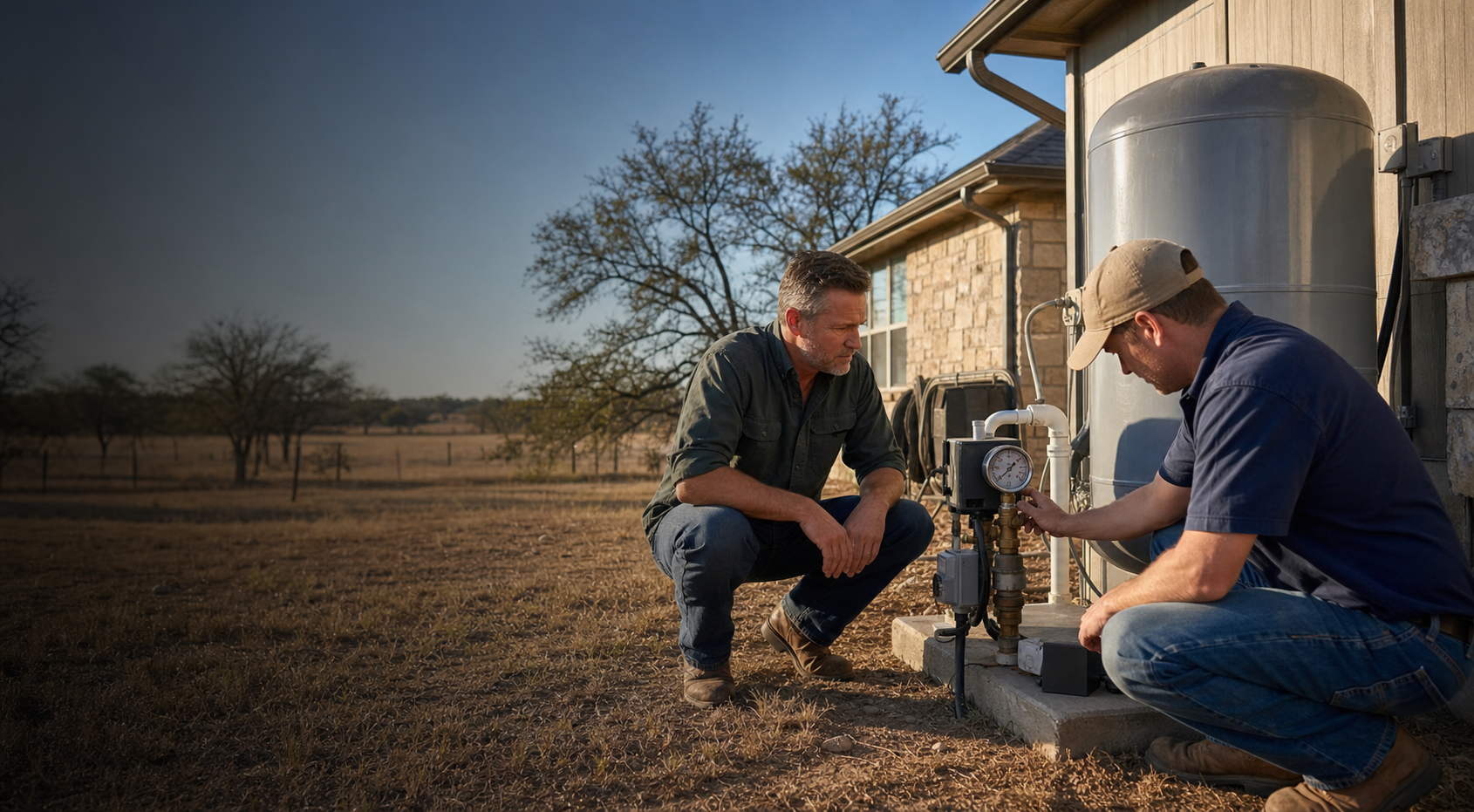
Texas Private Well Problems
Check Valve Failure in a Private Well System in Texas
When a Texas well holds pressure at shutoff and then quietly loses it, the check valve is one of the first suspects. It is not the only one. A leaking line, tired pressure tank, worn pump, loose fitting, or low-yield well can create the same late-night pump kicks and sputtering faucets.
Quick Answer
What it usually means
The system is not holding pressure after the pump stops. The leak-back may be at the check valve, but the same gauge drop can come from a yard line, tank tee, drop pipe, or pressure tank problem.
Most common symptoms
The gauge drifts down with no water running, the pump clicks on at odd times, the first faucet spits air, or pressure takes a few seconds to recover after sitting overnight.
What to inspect first
Write down cut-in and cut-out pressure, time how fast the gauge falls, look for wet spots around the tank and wellhead, and note recent freezes, lightning, pump pulls, or heavy outdoor use.
When to stop guessing
If the pump is cycling every few minutes, pulling air, losing prime, or tripping controls, pause the part-swapping and get a pressure-holding diagnosis before the repair bill grows.
What a Check Valve Does in a Private Well System
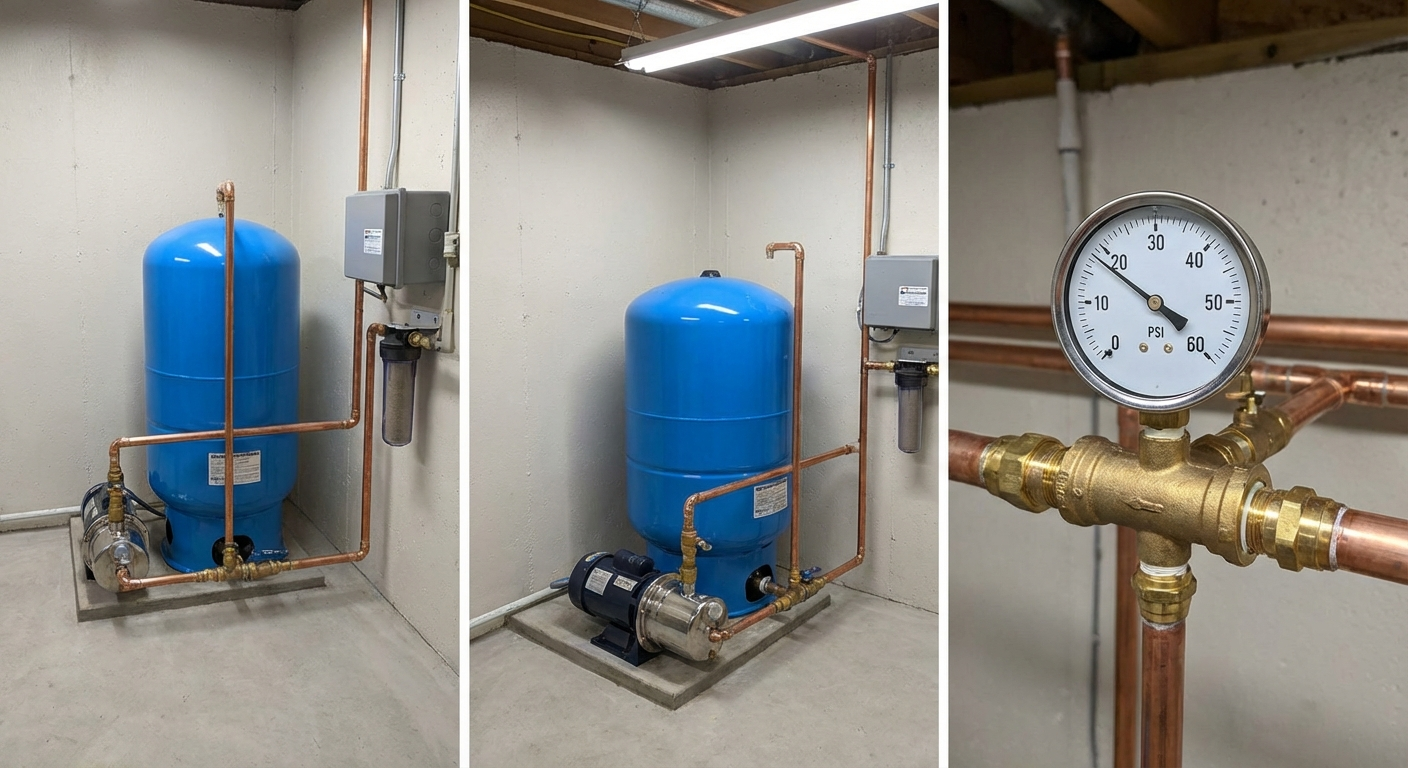
A check valve has a plain job: let water move toward the house and stop it from sliding backward when the pump shuts off. On a private well, that little one-way stop is part of what keeps the pressure tank charged between uses. If it does not seal, pressure can bleed back toward the well and the pump has to rebuild the same pressure again.
That is why the symptom can feel strange. Nobody is in the shower. No hose is open. The gauge still drops, or the pump starts while the house is quiet. A bad valve can do that, but so can a buried leak between the well and the house, a worn foot valve on an older setup, a cracked fitting in the well, or a pressure tank that is no longer giving the system any cushion.
Common Signs of Check Valve Failure
The pressure gauge falls with every fixture off. After the pump reaches cut-out pressure, watch the gauge without using water. A slow fall over an hour tells a different story than a drop from 60 to 40 psi in a few minutes. The speed of the fall helps separate seepage, a larger leak, and control problems.
The pump starts when the house is idle. A system that re-pressurizes itself at midnight or while everyone is gone may be losing water backward through a valve. It may also be reacting to a small leak at a hydrant, filter housing, tank tee, softener bypass, or underground line. If the cycling is frequent, compare the pattern with our guide to well pump short cycling in Texas.
The first faucet spits or hesitates. Air at first use can show up after water drains back or after the pump pulls the water level down too far. One burp at a faucet is not proof of a check valve problem. It is a clue to write down with the gauge behavior, recent weather, and any water-quality change.
Pressure recovery feels uneven. If the pump runs but pressure comes back slowly, the check valve may be making the system repeat work it already did. When the same complaint includes weak flow or no water at fixtures, also review well pump runs but no water in Texas and well pressure switch problems in Texas.
Do not diagnose this from one symptom. A check valve failure is a pressure-holding problem. The useful question is where the pressure is going after shutoff: back down the well, out through a leak, into a failed tank setup, or into a pump system that is already under strain.
What Usually Causes a Check Valve to Fail
Sand, grit, iron, and scale. Texas wells can carry very different water from county to county. A sandy Gulf Coast well, an iron-heavy East Texas system, and a hard-water Hill Country setup do not wear parts the same way. Debris can keep the valve from seating cleanly or slowly chew up the sealing surface.
Years of hard cycling. A valve that opens and closes all day behind a weak pressure tank or aggressive irrigation use is not living an easy life. If the tank air charge is wrong or the switch setting is odd, the valve may be blamed for a failure chain that started elsewhere.
Freeze damage and pump-house abuse. Exposed plumbing, shallow lines, PVC repairs, vibration, and old fittings all matter. After a hard freeze or recent pump work, the bad spot may be a cracked fitting beside the valve instead of the valve itself.
Downhole wear. If the valve is near the pump or tied into the drop pipe, the field diagnosis may involve pulling equipment. That is when pump age, wire condition, pipe condition, and well recovery all become part of the same conversation.
Texas Conditions That Change the Diagnosis
Acreage wells in Texas often have thin records. One owner replaced a tank. Another added a filter. A third ran a line to a shop or barn. By the time pressure loss shows up, nobody is completely sure what is buried between the wellhead and the house. That history matters as much as the name of the part.
Summer demand also changes the read. Lawn watering, livestock troughs, guests, pool top-offs, and drought can push a marginal system into behavior that looks like a valve failure. A weekend cabin with one bathroom is a different load than a ranch house with outbuildings and irrigation. If the bigger decision is whether to keep repairing the existing system or plan for a future well, the Pre-Drill Intelligence Report can help compare nearby well depth and planning conditions. If you are still gathering facts, the TurnkeyWells Free Well Check is the cleaner first step.
What to Inspect Before Replacing the Valve
Start with notes a well professional can actually use. Record the pressure switch cut-in and cut-out numbers. Time the gauge for 10 minutes after shutoff with all fixtures closed. Check the tank tee, pressure relief valve, filter housings, hose bibs, cattle trough lines, and the ground between the well and the house. If there is a shutoff valve that isolates the house from the well equipment, ask the professional whether it can be used during diagnosis.
Also write down what changed right before the problem started. Lightning, a pump pull, a freeze, a new filter, heavy irrigation, or muddy water after a restart can point away from a simple valve swap. TurnkeyWells does not provide medical advice. For water-safety concerns, use certified lab testing, follow local health department guidance where appropriate, and work with qualified water well or water treatment professionals.
What a Well Professional Should Check
A qualified water well professional should watch the system build pressure, hold pressure after shutoff, and restart under normal demand. The visit should include tank air charge, switch behavior, visible leaks, amp draw when appropriate, and whether the system loses pressure with the house side isolated. Those checks are what keep a simple service call from turning into a guessing contest.
If the evidence points downhole, the next step may involve the drop pipe, pump check, wire condition, and signs that the well is drawing down during use. Replacing an easy-to-reach valve will not fix a cracked drop pipe, a tired pump, or a well that cannot recover under current demand.
Buyer and Seller Angle
In a Texas real estate deal, pressure loss is not just a plumbing nuisance. It raises questions about repair history, hidden lines, pump wear, and whether the well file matches what is actually on the property. Buyers want to know if they are looking at a small part, a buried leak, or a tired system. Sellers need something better than “the pressure just drops sometimes” if they want to avoid last-minute credits and friction.
This is the kind of issue that belongs in stronger due diligence around the TREC Form 61-0 Texas water disclosure guide. A documented repair followed by stable pressure is one story. A property with repeated cycling, weak records, and no clear diagnosis is another.
Do Not Let a Pressure-Loss Clue Turn Into the Wrong Repair Bill
A failed check valve can cause real trouble. It can also get blamed for trouble that starts somewhere else. The cheapest repair is usually the one based on a clean pressure test, not the one based on a hunch at the tank.
TurnkeyWells helps Texas property owners review well records, organize the likely next steps, and connect with qualified local help when field work is needed. Before one suspected valve turns into a pump replacement conversation, get the whole pressure story in order.
Get the Bigger Pressure Story Before You Approve a Check Valve or Pump Repair
TurnkeyWells helps Texas property owners organize records, understand the likely cause of pressure loss, and connect them with qualified local help when field work is needed.
Start with a Free Well CheckNeed help with this pressure-loss issue?
Contact TurnkeyWells and we can help review the issue and connect you with licensed local help.
Tell us what the system is doing, where the Texas property is located, and whether this is for a home, land purchase, listing, or active repair situation. TurnkeyWells can help review the issue, organize the next step, and connect you with a licensed water well professional in your area when field work is needed.
TurnkeyWells helps organize records, explain likely next steps, and connect customers with qualified local help. TurnkeyWells is not the drilling or repair contractor.