Texas Private Well Problems
Brown, Rusty, or Orange Well Water in Texas
Brown or rusty well water in Texas usually points to iron, manganese, sediment, corrosion, or a sudden change inside the well system. Sometimes it is mostly a staining problem. Sometimes it is the first sign that the well, plumbing, or surrounding drainage needs attention before anyone keeps drinking it.
Quick Answer
Most likely cause
Iron, manganese, disturbed sediment, rust inside plumbing, or storm-related well contamination.
What to ask first
Did the color appear suddenly, after heavy rain, after pump or plumbing work, or only in hot water?
What to test first
Start with total coliform bacteria, nitrates, pH, total dissolved solids, iron, and manganese through a certified lab.
When to move faster
If the water changed after flooding or comes with odor, slime, cloudy water, or pressure issues, stop guessing and test before drinking.
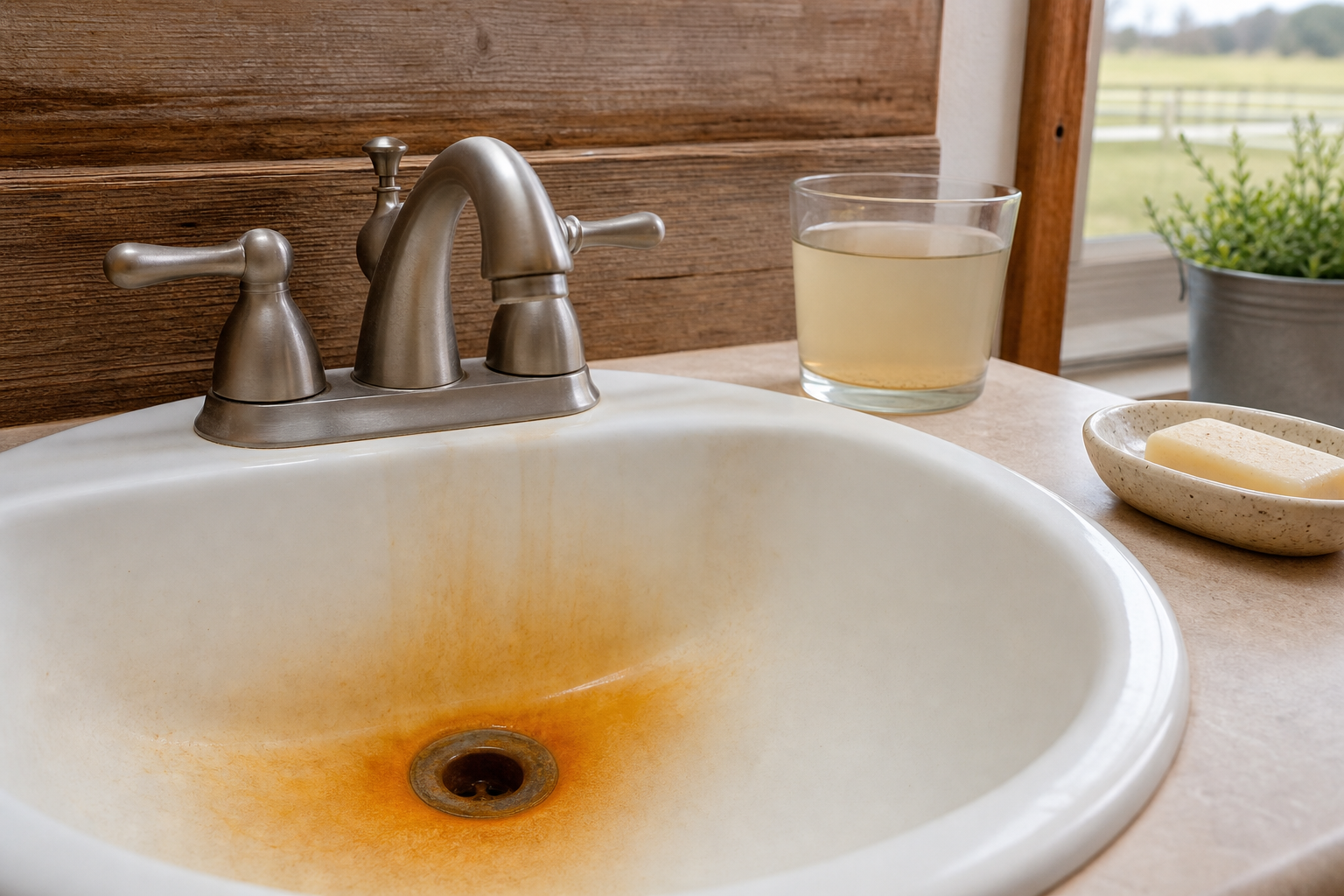
What Brown or Rusty Well Water Usually Means
Brown, orange, or rusty well water is usually a minerals or sediment problem before it is a chemistry textbook problem. In Texas private wells, the most common suspects are iron, manganese, disturbed sediment, corroded plumbing, or changes inside the pressure tank and piping. EPA nuisance standards list iron and manganese as common reasons for colored water and staining. Iron is the classic reason water looks rusty or orange. Manganese more often pushes water toward darker brown or even black staining.
That does not mean every case is harmless. A color change can also be the sign that surface water got into the well, a casing or cap issue is letting contamination in, or recent storms stirred up material that should not be there. CDC guidance for private wells is simple on this point: private well owners are responsible for testing and should not assume the water is safe just because it was fine last month.
Is It Every Fixture or Just One Tap?
Start simple. Run cold water at the kitchen sink, bathroom sink, and an outside faucet if the property has one. If the discoloration shows up everywhere, the issue is probably in the well water, pressure tank, or main plumbing line. If the problem is strongest only in hot water, the water heater may be part of it. Sediment inside the heater, corrosion, or old plumbing components can make the hot side look worse than the cold side.
If the water starts clear and then turns rusty after a few minutes, that points toward material being pulled from the plumbing or the well system after the pump kicks on. If the water is darkest right after heavy use, the well may be pulling sediment or stirring up material that normally settles out.
Common Causes in Texas Well Systems
Iron in groundwater. Iron is the most common explanation for orange staining, reddish water, metallic taste, and rust-colored sediment. It can be a naturally occurring groundwater issue, especially in older rural wells or wells that already have a history of staining.
Manganese. Manganese can make water look brown, dark brown, or nearly black in some cases. It often leaves dark staining on fixtures, laundry, and toilet tanks. If the discoloration leans darker than orange, manganese belongs on the lab panel.
Disturbed sediment. Pump changes, pressure-tank work, recent drilling nearby, drought drawdown, or a long period of vacancy can stir up material in the well or plumbing. The water may improve after flushing, but a flush alone does not tell you whether the source is benign sediment or a bigger well problem.
Corroded plumbing or old pressure equipment. Rusty water sometimes comes from the house side of the system rather than the aquifer. Old galvanized lines, rusting tanks, and failing fittings can release reddish water even when the raw well water is cleaner than it looks at the sink.
Storms, runoff, or flooding. If the color changed after heavy rain, ponding, or floodwater around the well head, treat the problem differently. CDC guidance after emergencies recommends disinfecting and retesting flooded wells because storm-driven contamination can reach private well systems even when the water later looks better.
When Brown Well Water Is More Than a Staining Problem
Brown well water is not automatically a drinking-water emergency, but it should not be brushed off either. Visible discoloration by itself does not prove bacteria, nitrates, or other harmful contaminants are present, and it does not rule them out. Move faster if the color change is sudden, if the water also smells bad, if pressure dropped, if the well cap looks damaged, or if rainwater pooled near the well.
What to Test First
For brown or rusty well water in Texas, a practical starting panel usually includes:
- Total coliform bacteria and E. coli
- Nitrates, especially where children or pregnant women may use the water
- pH and total dissolved solids
- Iron
- Manganese
- Hardness and alkalinity if treatment equipment is part of the decision
CDC recommends testing private well water at least once each year for total coliform bacteria, nitrates, total dissolved solids, and pH. When the water changes color, annual testing is the floor, not the finish line. Use a certified lab, and ask the local health department or a qualified well professional whether the property also needs other region-specific testing.
What a Well Professional Should Check
A useful field inspection should go beyond the kitchen faucet. The well cap, casing, grading around the well head, pressure tank, pump cycling, filter housings, water heater, and any treatment equipment all matter. A pro should also look for clues that the problem is house-side corrosion rather than raw well-water chemistry. If the property history is thin, a TurnkeyWells Free Well Check can help confirm what is known about the well records before more money gets spent on guesswork.
What This Means for Texas Buyers and Sellers
Brown or rusty well water during a showing or inspection can turn into an immediate negotiation issue. Buyers want to know if they are looking at a simple iron problem, a pressure-system repair, or a contamination risk tied to the well itself.
If the property has a private well, the broader record trail matters too. Our TREC Form 61-0 water well disclosure guide explains why well records, plugged wells, shared wells, and district information should be reviewed before closing. A stained sink can be a cosmetic issue. An undocumented or poorly understood well system is a bigger problem.
If You Are Thinking About a New Well
Some owners see chronic rusty water and jump straight to replacing the well. That can be the wrong move. If the issue is house-side corrosion, bad drainage, or outdated treatment equipment, drilling a new well may not solve the real problem. The TurnkeyWells Pre-Drill Intelligence Report helps owners review nearby well depth patterns, groundwater district context, and local drilling conditions before they commit to a major expense. If rusty water is only one part of a bigger pattern that also includes odor, low pressure, or repeated sediment, compare it with our guide on well water that smells like rotten eggs in Texas.
Do Not Treat Rusty Well Water as a Guessing Game
Brown or orange water can come from minerals, sediment, corrosion, or a more serious well-system change. TurnkeyWells helps Texas property owners understand the records, risks, and next diagnostic step before they pay for the wrong fix.
Start with a Free Well CheckNeed help with this well issue?
Contact TurnkeyWells and we can connect you with a licensed local professional.
Tell us what is happening with the well, where the property is located, and whether this is for a home, land purchase, listing, or repair situation. We will help you understand the next step and connect you with a licensed water well professional in your area when field work is needed.
TurnkeyWells is not the drilling or repair contractor. We help property owners review records, organize the issue, and get connected with qualified local help.