Texas Private Well Problems
Well Pressure Switch Problems in Texas
A bad well pressure switch can cause no water, weak pressure, rapid cycling, or a pump that keeps running when it should shut off. In Texas private well systems, the switch is a small part with outsized consequences, and replacing the wrong part first often wastes a service call.
Quick Answer
What it usually means
The switch may be worn, out of adjustment, clogged with debris, or reacting to a bigger pressure tank, leak, or pump problem.
First symptom to notice
The pump clicks on and off too often, fails to start, or keeps running long after water use stops.
What to inspect first
Check the pressure gauge, tank behavior, visible leaks, filter restriction, and whether the switch contacts look burned or dirty.
When to move faster
If the switch is sparking, the pump will not shut off, or the house loses water completely, cut power to the system and get qualified help.
What a Well Pressure Switch Does
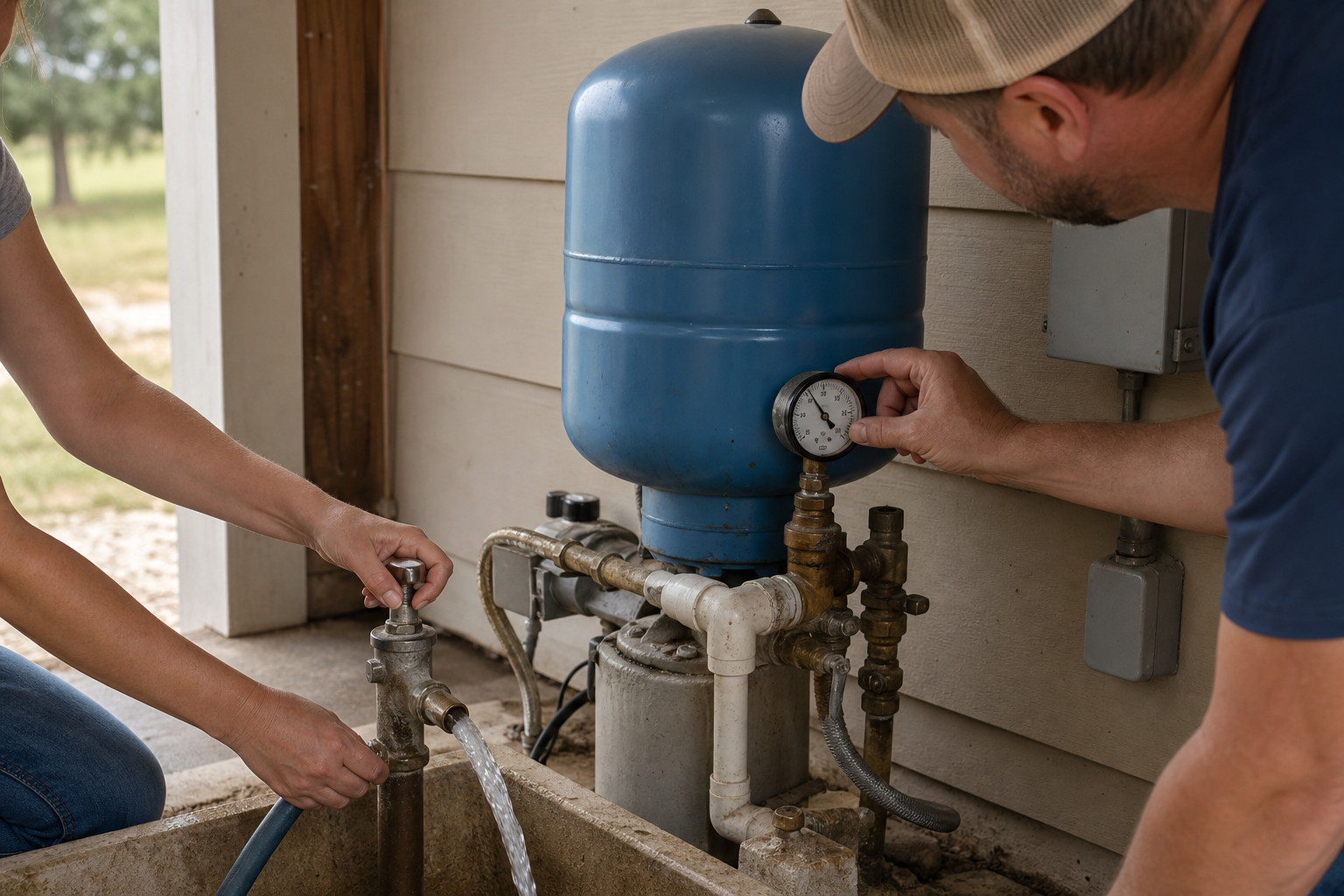
The pressure switch tells the pump when to start and when to stop. When water pressure falls to the cut-in setting, the switch closes and the pump comes on. When pressure rises to the cut-out setting, the switch opens and the pump shuts off. If that simple handoff fails, the whole house feels it fast.
That is why a bad pressure switch can look like several different problems at once. Some owners think the pump is dead when the switch never calls for it. Others blame the tank when the real problem is a switch that is sticking, chattering, or reading pressure badly because the sensing port is fouled.
Common Signs of Pressure Switch Trouble
The most common warning sign is rapid cycling. The pump turns on and off in short bursts instead of running through a normal pressure range. Another sign is a pump that keeps running because the switch never opens at the top end. Some systems lose water completely until someone taps the switch housing or resets power. Burned contacts, a buzzing sound, or visible corrosion are also red flags.
These symptoms overlap with other well-system failures, which is why the switch should not be diagnosed in isolation. A waterlogged tank, bad gauge, clogged filter, hidden leak, failing check valve, or weak pump can make the switch look guilty when it is only reacting to the real issue. If the pressure also swings across the house, compare it with our guide to low water pressure from a private well in Texas.
What Usually Causes the Switch to Fail
Normal wear at the contacts. Every cycle creates wear. Over time the contacts pit, burn, or fail to open and close cleanly.
Debris or mineral buildup. Sediment, iron, manganese, and scale can clog the pressure-sensing port. When that happens, the switch may react late or not at all.
Moisture, insects, or corrosion. Rural Texas well houses and exterior equipment pads are hard on small electrical components. Heat, humidity, ants, wasps, and corrosion can all shorten switch life.
A bigger system problem. If the pressure tank has lost its air charge, the pump is short cycling, or a leak is bleeding pressure off the line, the switch may be cycling exactly the way the system conditions force it to cycle. In that case, replacing the switch alone does not solve much.
Texas Context That Changes the Diagnosis
Texas private wells live in rough conditions. Long hot stretches, storm-driven sediment, rural electrical wear, pump houses with dust and insects, and older equipment on acreage all make control components fail earlier than owners expect. The same pressure switch problem can also mean different things on a shallow domestic well, a deeper rock well, or a property that runs irrigation, barns, or guest houses off the same system.
That is where records and context matter. A TurnkeyWells Free Well Check can help property owners confirm what is known about the well, surrounding records, and the bigger system history before they start replacing parts blindly. If repeated control issues have someone wondering whether the existing well is worth more repair money, the TurnkeyWells Pre-Drill Intelligence Report helps compare nearby well depth and performance patterns before a replacement-well conversation gets expensive.
What to Inspect Before Replacing Anything
Start with the easy facts. Does the pressure gauge rise and fall smoothly, or does it stick? Does the tank sound waterlogged? Are there visible leaks around the tank tee, pressure line, or yard piping? Is there a clogged sediment or cartridge filter cutting flow? Are the switch contacts visibly burned or corroded? Did the problem start after a storm, pump work, or a long vacancy?
On many properties, this is also the right moment to ask whether water quality is part of the story. Sediment or mineral-heavy water can foul the switch port and shorten component life. If the system trouble came with dirty water, odor, or storm runoff concerns, mechanical diagnosis may need to happen alongside certified lab testing and local health department guidance.
What a Well Professional Should Check
A qualified water well professional should verify the actual cut-in and cut-out behavior, inspect the switch contacts and sensing port, confirm gauge accuracy, test the pressure tank air charge, look for pressure loss while the system sits idle, and determine whether the pump is drawing correctly. If the switch keeps burning up, the answer may be downstream of the switch itself.
That handoff matters. TurnkeyWells is not the drilling or repair contractor. We help property owners organize records, narrow down likely causes, and connect them with a licensed water well professional in their area when field work is needed.
What Buyers and Sellers Should Know
Pressure switch trouble matters in a real estate deal because it raises bigger questions fast. Buyers want to know whether they are looking at a simple control replacement, a failing pressure tank, recurring low-yield behavior, or a pump that has been overworked for months. Sellers need documentation before a showing-day no-water event turns into a repair credit or closing delay.
If the property has a private well, this is exactly the kind of symptom that belongs in better due diligence. Our TREC Form 61-0 Texas water disclosure guide explains why well records, shared-well questions, plugged wells, and system history matter before money changes hands. A bad pressure switch may be a small fix. Poor records around repeated pump problems are the bigger transaction risk.
Do Not Let a Small Control Part Turn Into a Bigger Well Problem
Pressure switch trouble can be a quick repair, but it can also be the warning sign for a tank, leak, or pump problem that keeps getting worse. TurnkeyWells helps Texas property owners review the records, understand the likely next step, and avoid spending money in the wrong place.
Start with a Free Well CheckNeed help with this well issue?
Contact TurnkeyWells and we can help review the issue and connect you with licensed local help.
Tell us what the system is doing, where the property is located, and whether this is for a home, land purchase, listing, or active repair situation. TurnkeyWells can help review the issue, organize the next step, and connect you with a licensed water well professional in your area when field work is needed.
TurnkeyWells is not the drilling or repair contractor. We help property owners review records, understand likely risk points, and get connected with qualified local help.