Texas Private Well Problems
Low Water Pressure from a Private Well in Texas
Low water pressure from a Texas private well usually comes from a pressure tank problem, clogged filter, failing pressure switch, pump wear, plumbing leak, or a well that is not keeping up with demand. The fix is not always expensive, but guessing at it usually wastes time and money.
Quick Answer
Most likely cause
A pressure tank, switch, filter, valve, leak, or pump issue is more common than an aquifer problem.
What to ask first
Did pressure drop suddenly, or has it been getting weaker over weeks or months?
What to check first
Look for a dirty filter, cycling pump, pressure gauge problems, visible leaks, or pressure loss at every fixture.
When to move faster
If low pressure comes with cloudy water, air sputtering, dirty water after rain, or a pump that will not shut off, stop guessing and get it checked.
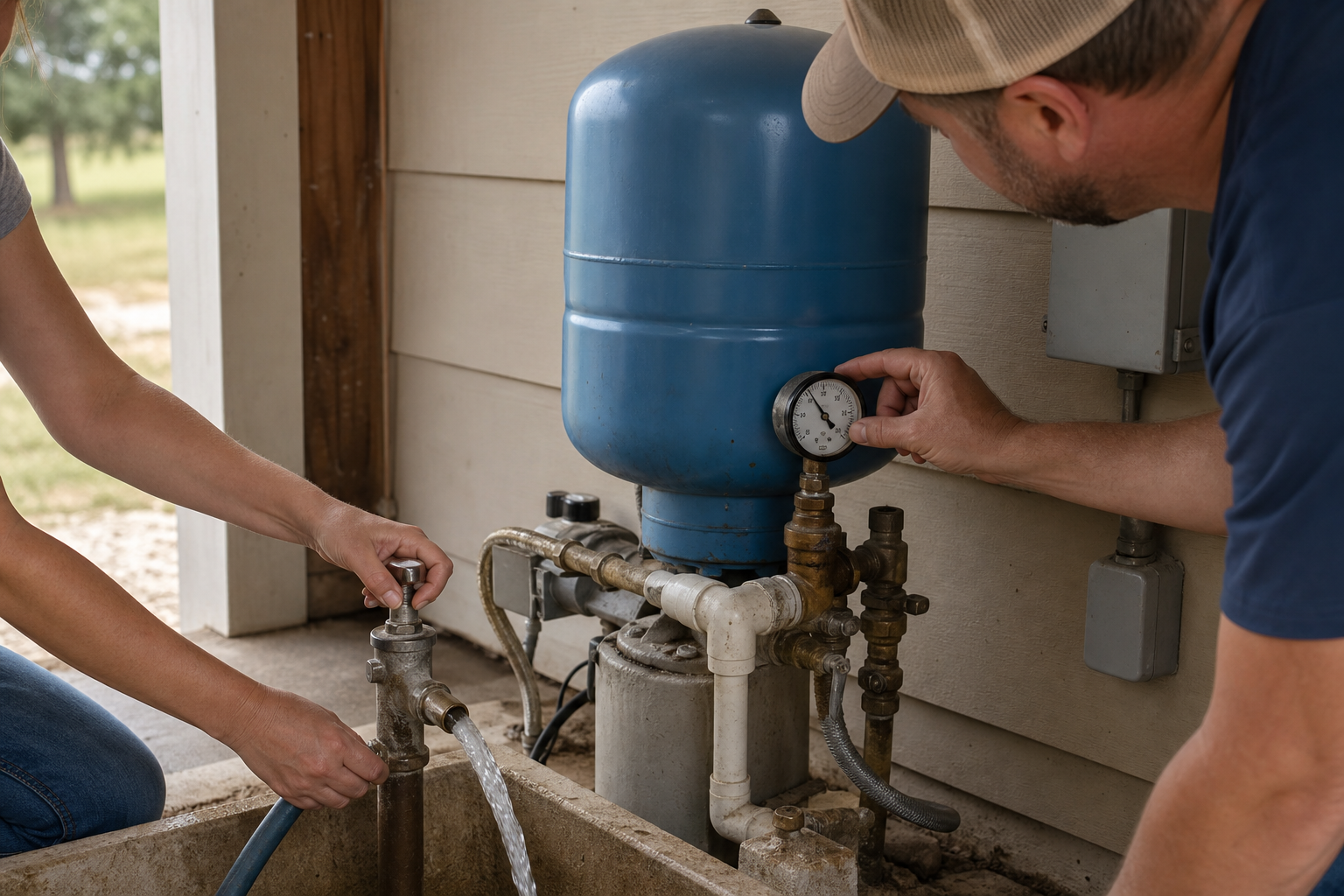
What Low Water Pressure Usually Means
Low pressure from a private well is a symptom, not a diagnosis. Sometimes the water still runs, but showers feel weak, hose bibs lose force, or pressure drops whenever more than one fixture turns on. In Texas homes on acreage, that usually points to something in the well system or house plumbing before it points to the groundwater itself.
The usual suspects are a waterlogged pressure tank, bad pressure switch, clogged cartridge filter, sediment-filled screen, partially closed valve, hidden plumbing leak, or a pump that is wearing out. A low-yield well can also cause weak pressure, but it is not the first thing to assume unless the property has a history of drawdown, drought trouble, or the pump starts pulling air.
Did the Pressure Drop Suddenly or Slowly?
A sudden drop usually means a component changed. A switch may have failed, a filter may have clogged, a valve may have been bumped, or a leak may have opened up. Slow decline over time points more toward mineral buildup, sediment, a tired pump, or pressure-tank trouble that has been building in the background.
That timing matters in Texas. On rural properties, owners sometimes blame drought immediately, but a weak shower is far more often tied to the equipment at the house than to the aquifer hundreds of feet below. If the property has gone vacant, had plumbing work, or had storm runoff around the well head, that timing belongs in the troubleshooting process too.
Common Causes in Texas Well Systems
Pressure tank problems. A tank with the wrong air charge or a failed bladder can make pressure feel weak and inconsistent. It can also make the pump cycle too often, which shortens pump life.
Pressure switch or gauge problems. If the switch is not turning the pump on and off at the right points, the house may never get proper pressure. A bad gauge also leads owners in the wrong direction because it makes the system look healthier than it is.
Clogged filter or sediment restriction. If the home has a cartridge filter, sediment trap, or older treatment equipment, that restriction may be the simplest explanation. This is especially common after storms, well work, or a long vacancy.
Plumbing leaks or partially closed valves. A hidden leak between the well equipment and the house can steal pressure all day. A half-closed shutoff valve can do the same thing and look like a bigger problem.
Pump wear or low-yield well conditions. A pump near the end of its life may still run but fail to build strong pressure. Some wells also struggle during heavy household demand, drought, or irrigation use, especially if nearby records already show modest yield or deep pump settings.
Texas-Specific Context That Changes the Diagnosis
Texas private wells do not all behave the same way. A shallow rural domestic well, an older ranch well, and a deeper house well in fractured rock can all show low pressure for different reasons. In some counties, nearby records show repeated deepening, pump resets, or low-yield notes. In other places, the well itself may be fine and the trouble is entirely on the house side.
That is why records matter. A TurnkeyWells Free Well Check can help verify what is known about the property’s well record, depth, and surrounding context before someone starts replacing parts blindly. If the owner is thinking about a replacement well because the current system has repeated pressure and performance issues, the Pre-Drill Intelligence Report is the right way to compare nearby well patterns first.
What to Test and What Not to Assume
Low pressure is not automatically a water-quality issue, but it can overlap with one. If the pressure drop came with cloudy water, brown water, odor, or contamination concerns after flooding or heavy rain, do not stop at mechanical troubleshooting. Certified lab testing may be warranted for total coliform bacteria, nitrates, pH, total dissolved solids, iron, or manganese depending on what changed and who uses the water.
If the water looks discolored as well as weak, compare it with our guide to brown, rusty, or orange well water in Texas. If the issue is just weak pressure with otherwise normal water, the better next move is usually system diagnosis rather than buying treatment equipment.
What a Well Professional Should Check
A competent inspection should include the pressure tank, pressure switch settings, gauge accuracy, filter housings, pump amp draw if appropriate, visible plumbing leaks, check valves, and whether the system is losing pressure while idle. The pro should also ask whether pressure fails only during peak use, whether irrigation or livestock demand is part of the load, and whether the property has had recent pump, tank, or treatment work.
On some properties, the answer is a licensed well service company. On others, a plumber may need to fix house-side restrictions or leaks. TurnkeyWells does not replace those contractors. We help owners understand the records, likely risk points, and whether the current well history suggests a local pattern worth taking seriously.
What This Means for Buyers and Sellers
Low pressure during a showing or inspection gets noticed immediately. Buyers worry about pump replacement, low-yield wells, and whether the issue hints at a larger repair they will inherit. Sellers need to know whether they are dealing with a simple pressure-tank repair or a broader well-performance problem that could affect disclosure, negotiation, or closing timelines.
If the property has a private well, this is exactly the kind of issue that should push the transaction toward better due diligence, not faster guesswork. Our TREC Form 61-0 Texas water disclosure guide explains why well records, plugged wells, shared-well questions, and the surrounding groundwater context matter before money changes hands.
Do Not Treat Weak Well Pressure Like a Minor Annoyance
Low water pressure can come from a simple restriction, a failing system component, or a well that is no longer performing like it used to. TurnkeyWells helps Texas property owners understand the records, likely causes, and next step before they spend money in the wrong place.
Start with a Free Well CheckNeed help with this well issue?
Contact TurnkeyWells and we can connect you with a licensed local professional.
Tell us what is happening with the well, where the property is located, and whether this is for a home, land purchase, listing, or repair situation. We will help you understand the next step and connect you with a licensed water well professional in your area when field work is needed.
TurnkeyWells is not the drilling or repair contractor. We help property owners review records, organize the issue, and get connected with qualified local help.
Repair Cost vs New Well Planning
If a well problem points toward major pump, casing, electrical, or replacement work, it helps to understand the cost of a new system before approving a large repair. The cost to drill a water well in Texas guide gives a statewide planning range for that comparison.