Texas Private Well Problems
Air Sputtering From Faucets on Well Water in Texas
Air bursts from faucets on a private well usually mean the system is pulling air where it should stay sealed, cycling badly, or running the well harder than it can recover. In Texas, this symptom often gets blamed on the wrong part first.
Quick Answer
What it usually means
Air is entering the system because of a pressure tank problem, a drop pipe or fitting leak, a low-yield well, or a system that is losing prime.
First thing to notice
The faucet spits air, then water steadies. You may also hear pump cycling, pressure swings, or a change after heavy use.
What to inspect first
Check the pressure tank, gauge, obvious leaks, filter setup, and whether the problem shows at multiple fixtures including an outside spigot.
When to move faster
If sputtering comes with muddy water, no water, storm runoff, or a pump that keeps cycling, treat it as a system problem and get qualified help.
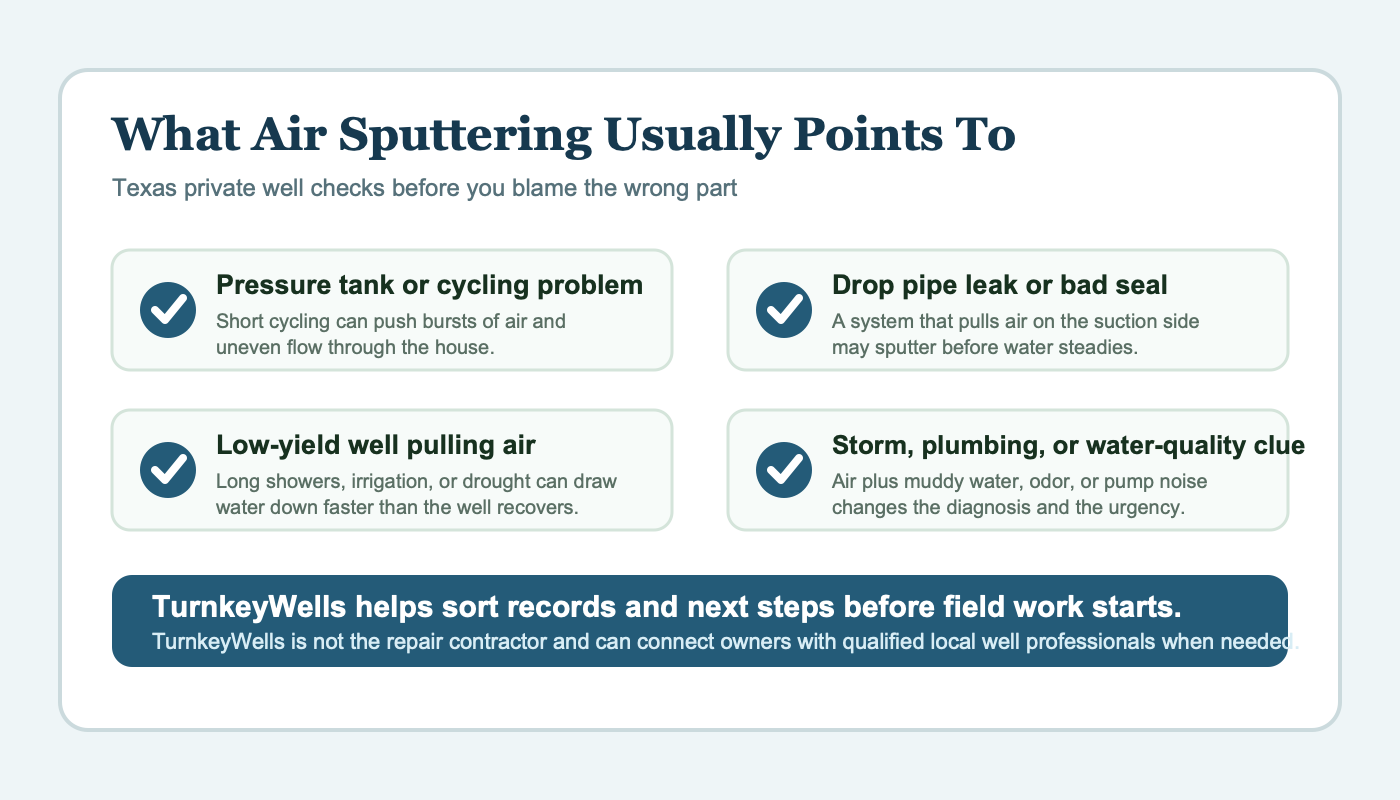
Why Air Comes Out of Faucets on a Private Well
Air sputtering from a faucet means the well system is sending a mix of air and water through the plumbing. Sometimes it happens only after the system sits idle. Other times it shows up during a shower, when irrigation starts, or when several fixtures run at once. The pattern matters because it helps narrow whether the problem is inside the home, at the pressure equipment, or down in the well system itself.
This symptom is common on Texas private wells because many systems combine aging pressure equipment, outdoor pump houses, drought stress, and long rural plumbing runs. The result is a problem that feels small at the faucet but often starts much farther back in the system.
Common Causes of Sputtering Well Water
Pressure tank trouble. A waterlogged or failing pressure tank can cause rapid cycling and unstable flow. The house may get bursts of air and water because the system is no longer moving through a normal pressure range.
Leak in the drop pipe or fittings. If the well system is pulling air on the suction side or through a damaged connection, the pump can send that air straight into the house. This is one reason sputtering sometimes shows up before a bigger no-water event.
Low-yield well behavior. A well that cannot recover fast enough may start pulling a mix of water and air during long runs. This can happen in hot Texas weather, after extended irrigation, or when a property adds more demand than the well used to handle.
Loss of prime or check-valve trouble. Some systems let water drain back when they should stay sealed. That can make the next pump cycle noisy, uneven, or full of air. If the flow also gets weak or erratic, compare the symptom with our guide to low water pressure from a private well in Texas.
What Texas Conditions Change the Diagnosis
Texas is hard on private well systems. Heat, outdoor electrical exposure, dust, ants, vibration, and long pumping cycles all shorten the life of control and pressure equipment. Drought and heavy rural water use can expose low-yield behavior that never showed up when a property used less water. After a storm, sputtering can also overlap with muddy water or cap-and-casing concerns instead of being a standalone pressure issue.
That is why context matters. If the sputtering began after recent pump work, a storm, a long vacancy, or a new irrigation load, the timing is part of the diagnosis. If the property also has thin records or repeated system complaints, a TurnkeyWells Free Well Check helps owners review what is already known before they start replacing parts blind.
Do not assume air means only a bad faucet or loose plumbing. If multiple fixtures sputter, the problem is usually in the well system, pressure equipment, or the well itself.
What to Check Before You Replace Anything
Start with pattern recognition. Does the sputtering happen at one fixture or all of them? Does it show up only after the system has been sitting, or only during heavy water use? Is the pressure tank short cycling? Does the gauge move normally, or does it bounce hard? Are there visible drips, wet spots, or filter housings that may be letting the system pull air?
Also ask whether the sputtering comes with other clues. If the water is dirty, smells off, or turns brown after rain, that changes the risk profile and the inspection list. If the house is also losing water completely, compare it with our guide to no water from a well in Texas. Sputtering is often an earlier warning sign of a bigger interruption.
When Water Testing Becomes Part of the Story
Air in the lines is usually a mechanical symptom first, but not always only a mechanical symptom. If the issue started after flooding, storm runoff, visible sediment, or a sudden water-quality change, the smart move is to combine the mechanical inspection with certified lab testing. TurnkeyWells does not give medical advice. For water-safety concerns, use certified lab testing, follow local health department guidance, and work with qualified water well or water treatment professionals.
That matters for buyers and sellers too. A sputtering faucet by itself may sound minor. A sputtering faucet plus muddy water, weak records, or a recent storm event is a different conversation.
What a Well Professional Should Check
A qualified water well professional should inspect the pressure tank air charge, cycling behavior, gauge accuracy, check valve behavior, fittings, well seals, and whether the well is drawing down too far under use. They may need to separate house-side plumbing issues from actual well-side air entry. If the well cannot keep up with intended use, the question may shift from repair to longer-term planning.
That is where the Pre-Drill Intelligence Report helps. If an owner is trying to decide whether repeated repairs make sense or whether nearby properties point toward a replacement-well conversation, the report helps compare local depth patterns and planning conditions before a much bigger expense gets approved.
Buyer and Seller Angle
Air sputtering at faucets matters in a real estate deal because it raises credibility questions immediately. Buyers want to know if they are inheriting a simple pressure tank repair or a well that is drawing down, leaking, or losing prime. Sellers need documentation that shows what was tested, what was repaired, and whether the problem was resolved or merely tolerated.
This is exactly the kind of symptom that belongs in stronger due diligence around the TREC Form 61-0 Texas water disclosure guide. One short burst of air may not kill a deal. Repeated sputtering with poor records and no inspection trail can do real damage during option or repair negotiations.
Do Not Chase the Wrong Part
Air sputtering can lead owners to swap a switch, a filter, or a tank because those parts are visible. Sometimes that works. Many times it does not because the real problem is a leak, a low-yield well, or a system that has been stressed for too long. The goal is not only to stop the noise at the faucet. The goal is to find where the air is getting in and why.
Figure Out Why the System Is Pulling Air Before You Replace More Parts
TurnkeyWells helps Texas property owners review the records, understand the likely cause, and get pointed toward the right next step before a small symptom turns into a bigger well problem.
Start with a Free Well CheckNeed help with this well issue?
Contact TurnkeyWells and we can help review the issue and connect you with licensed local help.
Tell us what the system is doing, where the Texas property is located, and whether this is for a home, land purchase, listing, or active repair situation. TurnkeyWells can help review the issue and connect you with a licensed water well professional in your area when field work is needed.
TurnkeyWells helps organize records, explain likely next steps, and connect customers with qualified local help. TurnkeyWells is not the drilling or repair contractor.