Texas Private Well Problems
Well Pump Runs But No Water in Texas
If the well pump sounds like it is running but nothing reaches the house, the problem is usually deeper than a simple faucet or filter issue. On Texas private wells, this symptom can point to a low-yield well, a split drop pipe, a worn pump, a clogged control component, or a system that is being reset without anyone confirming where the water is actually stopping.
Quick Answer
What it usually means
The pump may be energized, but water is not making it from the well to the pressure system because of drawdown, a broken pipe, a failed pump stage, blocked equipment, or the wrong control diagnosis.
Most common causes
Low well recovery, split drop pipe, worn submersible pump, clogged filter or sediment equipment, bad check valve behavior, or a pressure switch or control-box issue that only looks like a pump failure.
What to inspect first
Check the breaker, pressure gauge, switch response, filter restriction, visible leaks, and whether the problem started after storms, drought, recent service, or heavy water use.
When to stop resetting
If the breaker keeps tripping, the water comes back dirty, or the system keeps losing prime or pressure, stop guessing and get qualified help before the same failure turns into a bigger repair bill.
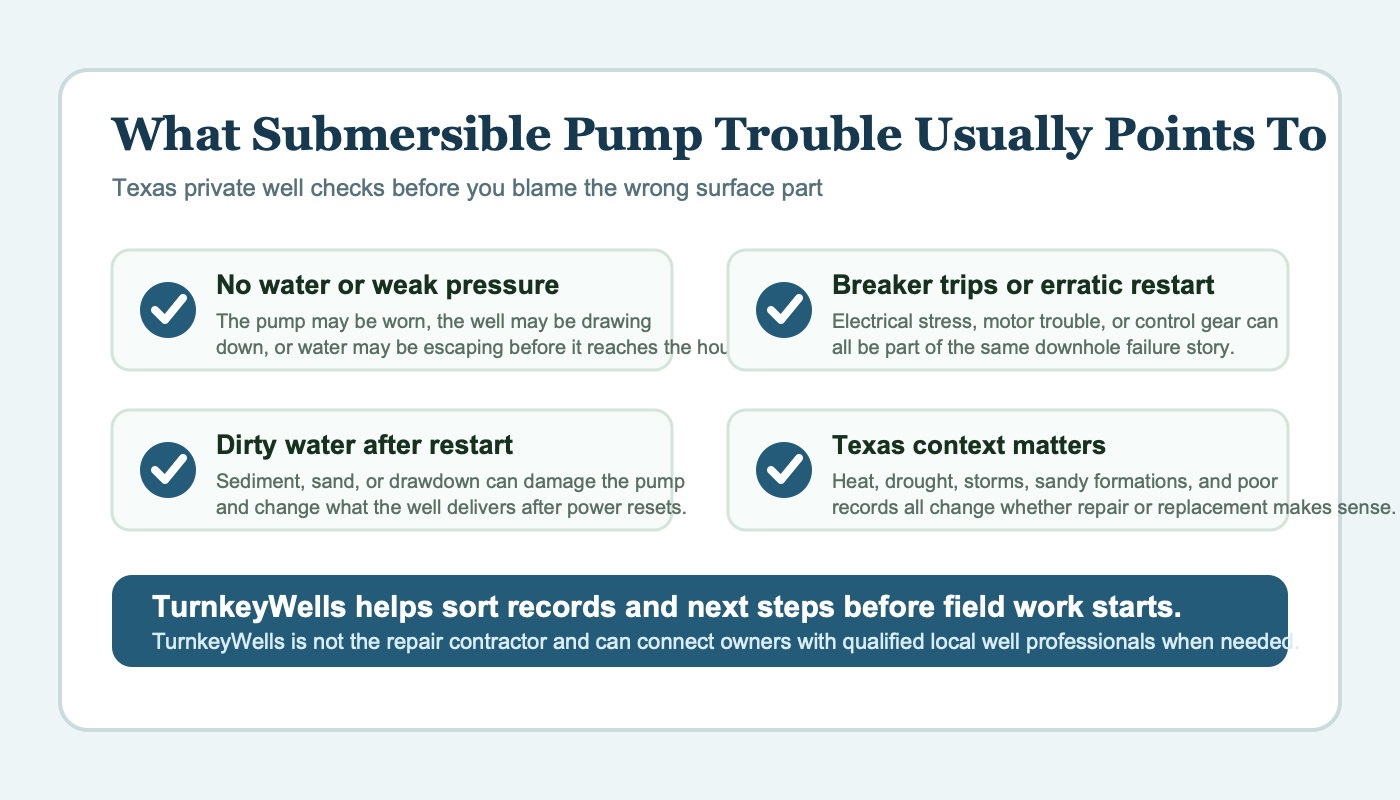
What It Means When the Pump Runs but the House Gets No Water
This symptom tricks owners because it sounds simple. The pump hums, the control equipment clicks, or the system seems alive, but the faucet stays dry. That does not automatically prove the pump is completely dead. It means the system is failing somewhere between the power supply, the pump, the water column in the well, and the plumbing path that should deliver water to the pressure tank and the house.
On Texas private wells, that failure point often gets guessed wrong the first time. Owners replace a pressure switch because it is visible. They reset the breaker three times because the pump sounds like it wants to start. They swap a cartridge filter because the house lost flow right after sediment showed up. Sometimes those guesses help. Many times they waste money because the actual problem is downhole or tied to how the well is recovering under Texas conditions.
Common Reasons a Pump Can Run Without Delivering Water
The well is drawing down below the pump intake. In hot weather, after heavy irrigation, or on properties with added demand from guest houses, barns, or livestock, a Texas well may not recover as fast as the pump is trying to pull. The pump can keep running while the water level drops too low to supply the house consistently.
The drop pipe or connection is leaking. If a split pipe, bad fitting, or failed check-valve setup is letting water fall back or escape before it reaches the pressure system, the pump may sound active while the house still gets nothing. This is one reason a system can act normal at start-up and then collapse under use.
The pump motor runs, but the pump is not producing useful flow. Worn impellers, sand damage, or internal pump failure can leave the motor energized while real water delivery falls apart. That overlap is why this symptom often sits close to our guide on submersible well pump problems in Texas.
A clogged filter, sediment trap, or equipment blockage is stopping flow. After storms, service work, or sediment disturbance, the pump may still be moving water but the delivery path can be choked off. If the problem began with dirty water, brown water, or grit, mechanical diagnosis needs to include what changed in the water itself.
The control diagnosis may still be wrong. A pressure switch, control box, or gauge issue can make the system look like a running pump no-water problem when the real issue is inconsistent starting, false readings, or bad pressure control. Compare the symptoms with our guide to well pressure switch problems in Texas if the pump behavior feels erratic rather than steadily dead.
A pump that runs with no water is a system diagnosis problem, not just a pump-replacement problem. The right repair depends on whether the water is missing because the well cannot keep up, the piping is losing it, the pump is worn out, or the controls are sending you in the wrong direction.
Texas Conditions That Change the Diagnosis
Texas well systems live through long heat, lightning, dust, insects, storm runoff, and drought swings that can expose weaknesses fast. A system that seemed fine during mild weather may fail when irrigation demand spikes, when a rural property sits vacant and then gets hammered with weekend use, or when sandy formations start delivering more grit than the pump can tolerate. Gulf Coast and East Texas wells may deal with more sediment and corrosion. Rock-well areas may hide drawdown and depth issues that do not show up until demand climbs.
That context matters because the next step should match the bigger story, not just the sound the equipment is making. A TurnkeyWells Free Well Check helps owners line up records, likely risk points, and nearby context before they approve the wrong repair. If the bigger question is whether the current well is worth more money at all, the Pre-Drill Intelligence Report helps compare nearby well conditions before the conversation jumps to drilling a replacement.
What to Inspect Before You Keep Resetting the System
Start with the obvious facts. Is the breaker holding or tripping. Does the pressure gauge move honestly or stay pinned. Does the pressure switch call for water. Is there a clogged cartridge filter, iron filter, or sediment setup that may be blocking flow. Are there wet spots, leaking unions, or pressure loss while the system sits idle. Did the no-water event start after a thunderstorm, recent pump work, heavy outdoor water use, or a long vacancy.
Also pay attention to what happened right before the failure. If the system had low pressure first, compare it with our guide to low water pressure from a private well in Texas. If the house now has no water at all, our page on no water from a well in Texas helps frame the bigger emergency-style checklist. Those symptom shifts often show whether this is a sudden control failure or a well performance problem that was building for a while.
When Water Quality Changes the Risk
If the water comes back muddy, sandy, rusty, or foul-smelling after a reset, treat that as part of the same failure story. Dirty restart water can point to sediment disturbance, drawdown, casing trouble, or a system that is pulling from conditions it should not be pulling from. TurnkeyWells does not provide medical advice. For water-safety concerns, use certified lab testing, local health department guidance where appropriate, and qualified water well or water treatment professionals.
That warning matters for owners, buyers, and sellers. A no-water event by itself can be a repair issue. A no-water event plus bad water, thin records, or storm exposure can become a much bigger property-risk conversation.
What a Well Professional Should Check
A qualified water well professional should verify voltage and amp draw, confirm the switch and control gear are behaving correctly, measure whether the system is actually building pressure, and determine whether the pump is moving water or only sounding active. If the pump is pulled, the review should include wire condition, drop pipe integrity, check valve behavior, pump depth, evidence of sand wear, and whether the current pump setting still makes sense for the well’s real recovery.
That field review matters because the wrong fix is expensive. Replacing a control part on a well that is drawing down does not solve much. Replacing a pump without understanding sediment, pipe damage, or water demand can set the owner up for another failure. The goal is not just to make the water come back today. The goal is to understand why it stopped reaching the house in the first place.
Buyer and Seller Angle
A pump-runs-but-no-water complaint matters in a real estate transaction because it combines cost, uncertainty, and documentation risk. Buyers want to know whether they are inheriting a one-part repair, a low-yield well, a tired pump, or a system that has already been limping along. Sellers need more than “it was working yesterday” if they want to avoid repair credits or closing delays.
This is exactly the kind of issue that belongs in better due diligence around the TREC Form 61-0 Texas water disclosure guide. A clean repair with invoices and clear test results is one story. A recurring no-water event with poor records and changing water quality is a different story entirely.
Do Not Approve the Wrong Repair Just Because the Pump Hums
When a well pump runs but no water reaches the house, the sound of the equipment can fool people into skipping the real diagnosis. Texas owners save money when they confirm whether the problem is drawdown, a damaged pipe, clogged equipment, worn pump stages, or bad control behavior before the system gets pulled apart.
TurnkeyWells helps property owners review records, narrow the likely cause, and connect them with qualified local help when field work is needed. The smarter path is to understand the whole well story before a no-water event turns into the wrong invoice.
Get the Bigger Well Story Before You Approve a Pump Pull or Replacement
TurnkeyWells helps Texas property owners organize records, understand the likely cause of a no-water event, and connect them with qualified local help when field work is needed.
Start with a Free Well CheckNeed help with this no-water issue?
Contact TurnkeyWells and we can help review the issue and connect you with licensed local help.
Tell us what the system is doing, where the Texas property is located, and whether this is for a home, land purchase, listing, or active repair situation. TurnkeyWells can help review the issue, organize the next step, and connect the visitor with a licensed water well professional in their area when field work is needed.
TurnkeyWells helps organize records, explain likely next steps, and connect customers with qualified local help. TurnkeyWells is not the drilling or repair contractor.