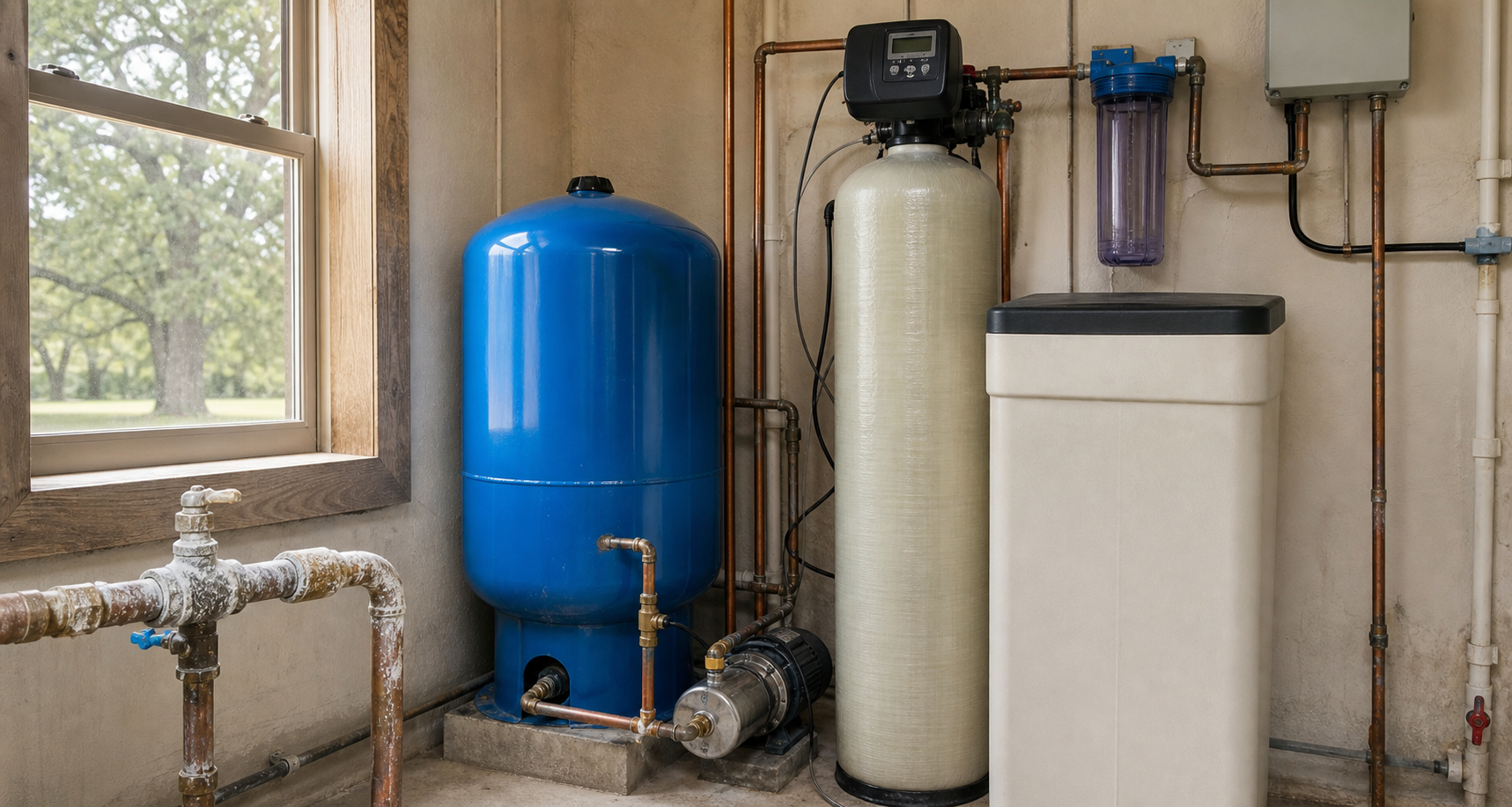
Texas Private Well Problems
Hard Well Water and Scale Buildup in Texas
Hard well water in Texas usually means the groundwater is carrying enough dissolved calcium and magnesium to leave white crust on fixtures, shorten water-heater efficiency, and make every plumbing decision feel more expensive than it should. The scale itself is obvious. The bigger question is whether you are dealing with normal mineral load, a treatment gap, or a broader water-quality and maintenance problem.
Quick Answer
What it usually means
Your well water likely has elevated hardness minerals, most often calcium and magnesium, and the treatment setup may not be sized, adjusted, or maintained for current water conditions.
What owners notice first
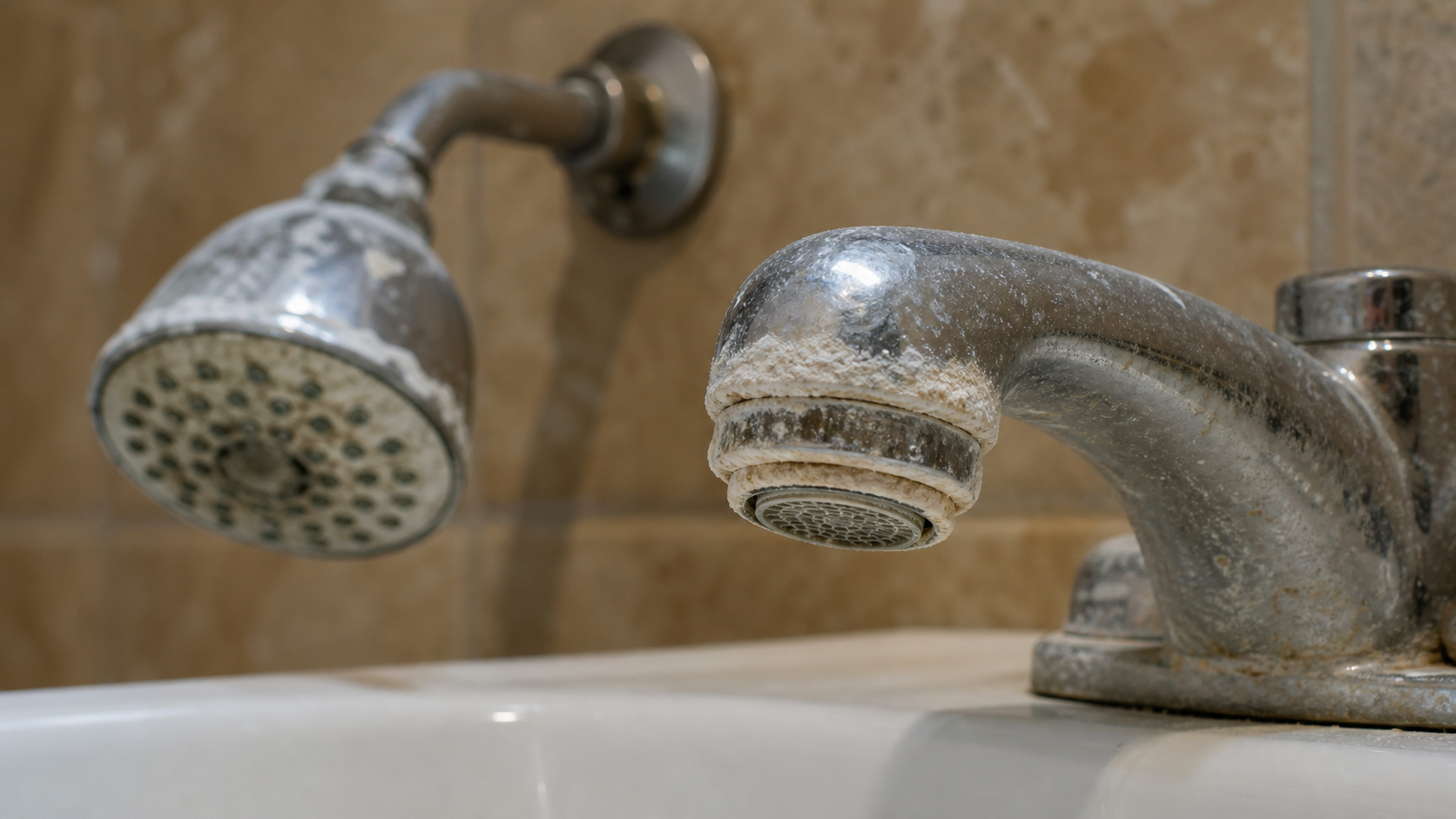
White crust on faucets and showerheads, glassware spots, soap that never feels rinsed away, heater inefficiency, and scale around valves, fixtures, and appliance connections.
What to test first
Start with hardness, total dissolved solids, pH, iron, manganese, and the core annual private well panel so the mineral problem is not judged in isolation.
When to move faster
If the scale arrived suddenly, the water taste changed, fixtures are clogging fast, or the property is in a sale or purchase window, get testing and equipment inspection moving before you guess at treatment.
Why Hard Water Matters on a Private Well
Hard water is common on private wells because the groundwater has more time to pick up minerals from the rock and soil it moves through before it reaches the pump. In parts of Texas, especially where limestone and other mineral-rich formations are part of the local water story, that can show up as visible scale on fixtures, reduced appliance efficiency, and a treatment system that never seems quite caught up.
The problem is not just cosmetic. Scale narrows fixture openings, coats heating elements, affects water-heater performance, and can make buyers or sellers wonder whether the well has been maintained properly. It also gets mixed up with other symptoms. Owners may call it hard water when the real issue includes iron, manganese, pH imbalance, or a neglected treatment setup that has not been serviced in too long.
Common Signs That Hard Well Water Is Building Scale
White crust on faucets, showerheads, and valves. Mineral residue around aerators and fixture joints is the classic clue. If the buildup keeps returning quickly after cleaning, the hardness load may be stronger than the current setup can handle.
Spots on dishes and a filmy feel after washing. A well can deliver water that technically flows fine but still makes sinks, shower doors, and glassware look dirty all the time. Soap that never rinses clean and towels that feel stiff belong in the same conversation.
Water-heater strain and appliance inefficiency. Hard water scale settles where water gets heated. That means water heaters, tankless equipment, and some appliance components can lose efficiency before the owner realizes the mineral load is the reason.
Bad taste or staining mixed into the same complaint. If the water also tastes off, compare that symptom with bad tasting or metallic well water in Texas. If reddish or dark staining is part of the problem, hardness may not be the only mineral issue in the system.
Scale is the clue, not the whole diagnosis. The visible crust tells you minerals are leaving deposits somewhere in the system. It does not tell you whether the current treatment equipment is working, whether the chemistry changed, or whether other water-quality issues are riding along with the hardness.
What Usually Causes Hard Well Water in Texas
Natural groundwater minerals. Calcium and magnesium are the usual drivers. They are common enough that two wells on nearby properties can both be “hard” and still behave differently depending on depth, formation, and what else is dissolved in the water.
Treatment equipment that is undersized, bypassed, or overdue for service. A softener or treatment tank may be present and still not be solving the problem. Resin age, valve settings, salt management, bypass position, and simple neglect can all leave owners assuming the well got worse when the equipment simply stopped keeping up.
Water chemistry overlap. Hardness can arrive with iron, manganese, high total dissolved solids, or pH conditions that change how the water behaves in the house. That is why testing matters more than treating by guesswork.
Ownership changes and poor documentation. Sellers often do not know when the softener was last serviced. Buyers inherit systems with almost no treatment history. On Texas acreage, the water treatment setup is frequently the least documented piece of the property until it starts costing money.
What to Test Before You Spend Money on Treatment
Start with a certified lab panel that tells you what the water is doing now, not what the last owner said it did three years ago. For most Texas hard-water complaints, a practical first round includes hardness, total dissolved solids, pH, iron, and manganese. It also makes sense to keep the normal annual private well baseline in view, which is why our guide on how often to test private well water in Texas still matters even when the visible complaint is scale.
If the house also has children, a real estate deadline, storm exposure, or any reason to question the full safety picture, keep the annual private well basics in play instead of looking at hardness alone. TurnkeyWells does not provide medical advice. For water-safety concerns, use certified lab testing, follow local health department guidance where appropriate, and work with qualified water well or water treatment professionals.
What a Well or Treatment Professional Should Inspect
A qualified professional should inspect the treatment train, not just the scale on the faucet. That means checking whether a softener is actually online, whether the control head is cycling correctly, whether the media or resin has a maintenance issue, whether bypass valves are set properly, and whether iron or sediment is interfering with the treatment plan. The inspection should also look at the water heater and any clogged fixtures so the owner knows where the mineral load is doing the most damage.
That matters because a property can have hard raw water and still be manageable with the right equipment and maintenance rhythm. The expensive mistake is buying replacement treatment gear before anybody confirms the current water chemistry and what the existing system is or is not doing.
Texas Real Estate and Buyer-Seller Angle
Hard water gets brushed off in sales conversations until a buyer sees scaled fixtures, a tired softener, or heater history that feels vague. Then the question stops being “is hard water common here?” and becomes “what else about the well or treatment setup has been ignored?” If the property is changing hands, records matter. Testing matters. Equipment notes matter.
This is exactly the kind of issue that belongs in stronger due diligence around the TREC Form 61-0 Texas water disclosure guide. A seller who can show recent testing and a treatment-service trail tells a different story than a seller whose answer is just “Texas water is hard everywhere.” Buyers who are still deciding whether the current well is the right long-term fit can use the Pre-Drill Intelligence Report to understand nearby well conditions before assuming the only answer is more treatment spending.
Do Not Treat the Crust Without Understanding the System
Scale buildup usually points to a solvable minerals problem, but the right fix depends on the water, the equipment, and the property history. Some owners need routine service and better settings. Some need a clearer treatment design. Some discover the visible scale was the easy part and that the bigger issue is poor records, mixed mineral problems, or a system that has quietly fallen behind the actual water conditions.
The clean first step is context. A TurnkeyWells Free Well Check helps organize the well records and next questions. From there, the field work should be handled by qualified local professionals who can test the water, inspect the treatment setup, and scope the real fix instead of the most expensive guess.
Get the Bigger Water Story Before You Buy the Wrong Treatment Fix
TurnkeyWells helps Texas property owners review the issue, organize records and next steps, and connect them with qualified local help when field work is needed.
Start with a Free Well CheckNeed help with this hard-water issue?
Contact TurnkeyWells and we can help review the issue and connect you with licensed local help.
Tell us what kind of scale buildup you are seeing, where the Texas property is located, and whether this is tied to a home, land purchase, listing, or active repair situation. TurnkeyWells can help review the issue and connect the visitor with a licensed water well professional in their area when field work is needed.
TurnkeyWells helps organize records, explain likely next steps, and connect customers with qualified local help. TurnkeyWells is not the drilling or repair contractor.