Texas Private Well Water Testing
How Often to Test Private Well Water in Texas
Most Texas private wells should be tested at least once a year, then tested again after flooding, repairs, equipment changes, or any sudden change in taste, smell, pressure, or water appearance. The expensive mistakes usually come from waiting until the option period, the next tenant, or a family water concern forces the question.
Quick Answer
Baseline cadence
Test private well water at least annually, even if the water seems normal and the system has not needed repair.
Test sooner if
Heavy rain, flooding, pump work, cap damage, sediment, odor, staining, or taste changes show up between annual checks.
Start with
Total coliform bacteria, E. coli, nitrates, pH, total dissolved solids, and symptom-specific mineral or contamination panels.
Real estate angle
Buyers and sellers should not wait for closing week. A current water test belongs in the same file as TREC Form 61-0 questions, repair records, and inspection notes.
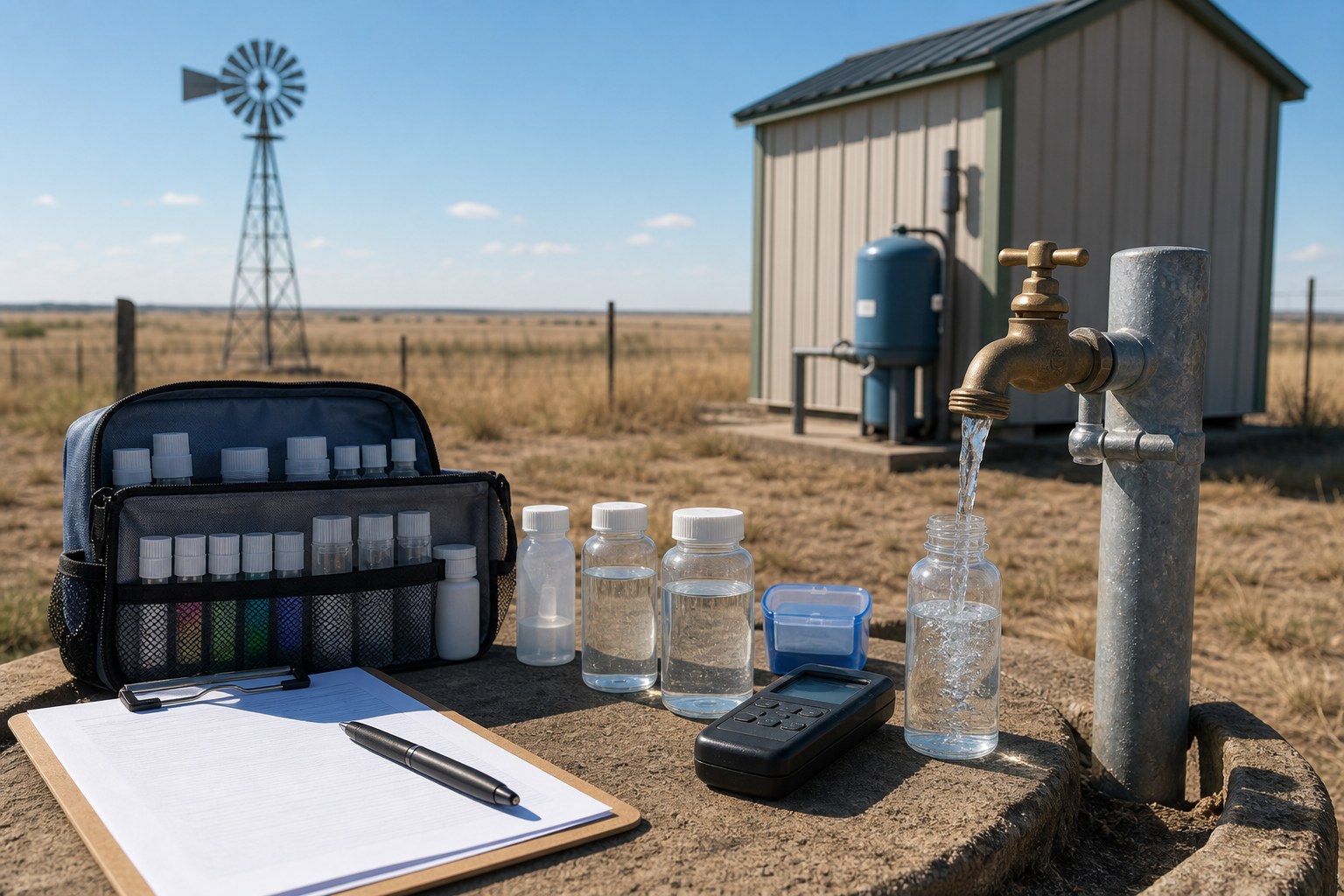
Annual Testing Is the Baseline, Not the Whole Plan
Private well owners in Texas are responsible for their own water quality. That does not mean you need a panic-driven testing program or a lab panel every few weeks. It means you need a clear baseline and a short list of events that should trigger extra testing. For most households, once a year is the minimum sensible cadence. It gives you a documented snapshot of whether the well still looks sanitary, whether nitrate or bacteria concerns are developing, and whether the mineral profile is drifting in a way that could point to a mechanical or water-quality issue.
Annual testing also keeps the property file cleaner. If the house ever goes on the market, the question is no longer when the water was last tested. You already know. That alone can reduce friction for buyers, agents, and inspectors who do not want to rely on vague memory.
What to Test Every Year
A practical annual private-well panel should usually include total coliform bacteria, E. coli, nitrates, pH, and total dissolved solids. Those tests help screen for sanitary problems, broad water-balance issues, and a few of the questions that matter most when a private well serves a household. They are not the only tests that ever matter, but they are a solid yearly baseline for most Texas properties.
From there, match the testing to the symptom. Rusty or orange staining may justify iron testing. Black staining may point toward manganese. Rotten-egg odor can call for sulfur or bacteria-related follow-up. Cloudy or gritty water may deserve sediment and broader evaluation. If those symptoms are already present, compare them with our guides on brown or rusty well water and cloudy or sandy well water before you assume the fix is a filter swap.
When to Test More Often Than Once a Year
Trigger events that should move testing up
- Flooding, heavy rain runoff, or standing water around the wellhead.
- Any change in taste, odor, clarity, staining, or sediment.
- Pump replacement, pressure tank work, shock chlorination, cap damage, or other major service.
- Air sputtering, weak pressure, or a system that starts acting differently after drought or heavy use.
- A property listing, buyer option period, or seller preparation window when current documentation matters.
- Nearby land-use changes that raise questions about runoff, livestock, septic, or chemical exposure.
In Texas, weather is a real reason to move faster. A well can look fine for months, then a major rain event exposes drainage issues at the wellhead. Long dry stretches can also change pressure behavior or make owners miss the early signs of a lower-yield situation because the system still limps along. Testing alone will not solve those mechanical problems, but it helps separate water-quality questions from pressure or equipment questions before the wrong repair path gets expensive.
Texas Private Wells Are Exposed to Different Risk Patterns
Texas well owners deal with a wide mix of conditions: rural septic systems, livestock, seasonal storm runoff, iron-heavy groundwater, sulfur complaints, older casing, and properties that may have more than one historic well on the tract. That is why generic advice like “test if you feel like it” is not enough. The better approach is a documented annual test plus event-driven follow-up when the site or the system gives you a reason.
If the well is already showing performance symptoms, pair water testing with a real system review. Low pressure, short cycling, or recurring sediment may not mean the water itself is unsafe, but those symptoms often travel with maintenance issues that should be understood at the same time. Our guides on low water pressure from a private well and annual private well inspection checklists help frame that conversation.
What a Professional Usually Checks Alongside Water Testing
A water sample is only part of the story. A qualified field review typically looks at the well cap, visible casing, drainage around the wellhead, pressure tank behavior, pressure switch condition, leaks, treatment equipment, and recent service history. If the pump is short cycling or the cap is compromised, clean lab results today do not erase the maintenance risk tomorrow. The goal is to understand both the water and the system that delivers it.
TurnkeyWells does not replace the licensed well professional or certified lab. TurnkeyWells helps organize the record side, identify likely next questions, and connect owners with qualified local help when field work is needed. That distinction matters because some testing decisions are straightforward and some are tied to the mechanical condition of the well.
Buyer and Seller Timing Matters
Water testing becomes much more stressful when it is first discussed after a contract is signed. Buyers want to know whether the water has been tested recently, whether the results are current enough to trust, and whether any equipment or wellhead issues were already discovered. Sellers are in a stronger position when the file includes recent lab results, service invoices, and a clean explanation of what changed and what did not.
For Texas transactions, the physical condition of the well should be reviewed alongside the disclosure paperwork. The TurnkeyWells TREC Form 61-0 guide covers the disclosure side, while water testing and inspection records help answer the current-condition side. If the well may be nearing replacement, the Pre-Drill Intelligence Report can add nearby depth and drilling context before a buyer inherits a bigger decision than a single lab test can answer.
Do Not Use Guesswork for Water Safety Questions
Taste, smell, and appearance are useful clues, but they are not a safety clearance. If a private well raises a water-safety concern, rely on certified lab testing, local health department guidance where appropriate, and qualified water well or water treatment professionals. TurnkeyWells does not provide medical advice, and a closing deadline or maintenance delay is a poor reason to skip the testing that actually answers the question.
A Simple Testing Routine Most Owners Can Stick To
The workable version is simple. Pick a month each year and run the baseline panel. Save the report with pump invoices, prior lab results, and any well records in one place. Move the test up if flooding, runoff, repairs, odor, sediment, or a real estate transaction changes the risk. That habit gives you something far more useful than reassurance. It gives you a documented starting point when the property, the water, or the transaction gets complicated.
If you do not know what records already exist for the property, start there. A Free Well Check can help you review the public side of the file, and TurnkeyWells can help you figure out whether the next move is lab testing, a maintenance review, or a deeper local drilling-context question.
Build a Testing Routine Before the Well Becomes a Problem
TurnkeyWells can help Texas well owners, buyers, and sellers review the property record, organize the testing question, and decide what should happen next before uncertainty turns into a repair scramble or closing delay.
Start with a Free Well CheckNeed help with well water testing or maintenance timing?
Contact TurnkeyWells and we can help review the issue and connect you with licensed local help.
Tell us what is happening with the well, where the Texas property is located, and whether the question is about annual testing, a buyer or seller deadline, a recent repair, or a water-quality concern. TurnkeyWells can help review the issue, inspection question, or maintenance concern and connect the visitor with a licensed water well professional in their area when field work is needed.
TurnkeyWells helps organize records, next steps, and qualified local referrals. TurnkeyWells is not the drilling or repair contractor.