Texas Private Well Maintenance
Annual Private Well Inspection Checklist for Texas Homes
A private well should get a real look every year, not just after the pump fails or the water changes color. In Texas, heat, drought, heavy rain, aging pressure tanks, and real estate deadlines can all turn small well problems into expensive surprises.
Quick Answer
Best cadence
Inspect the well system once a year and test the water at least annually, with extra testing after flooding, repairs, or a sudden change.
What matters most
Well cap, casing, drainage, pressure tank behavior, pump cycling, visible leaks, electrical protection, and lab water quality results.
Tests to start with
Total coliform bacteria, E. coli, nitrates, pH, total dissolved solids, and any local minerals that match the symptom.
Real estate risk
Buyers and sellers should document well condition before closing, not after the option period is almost gone.
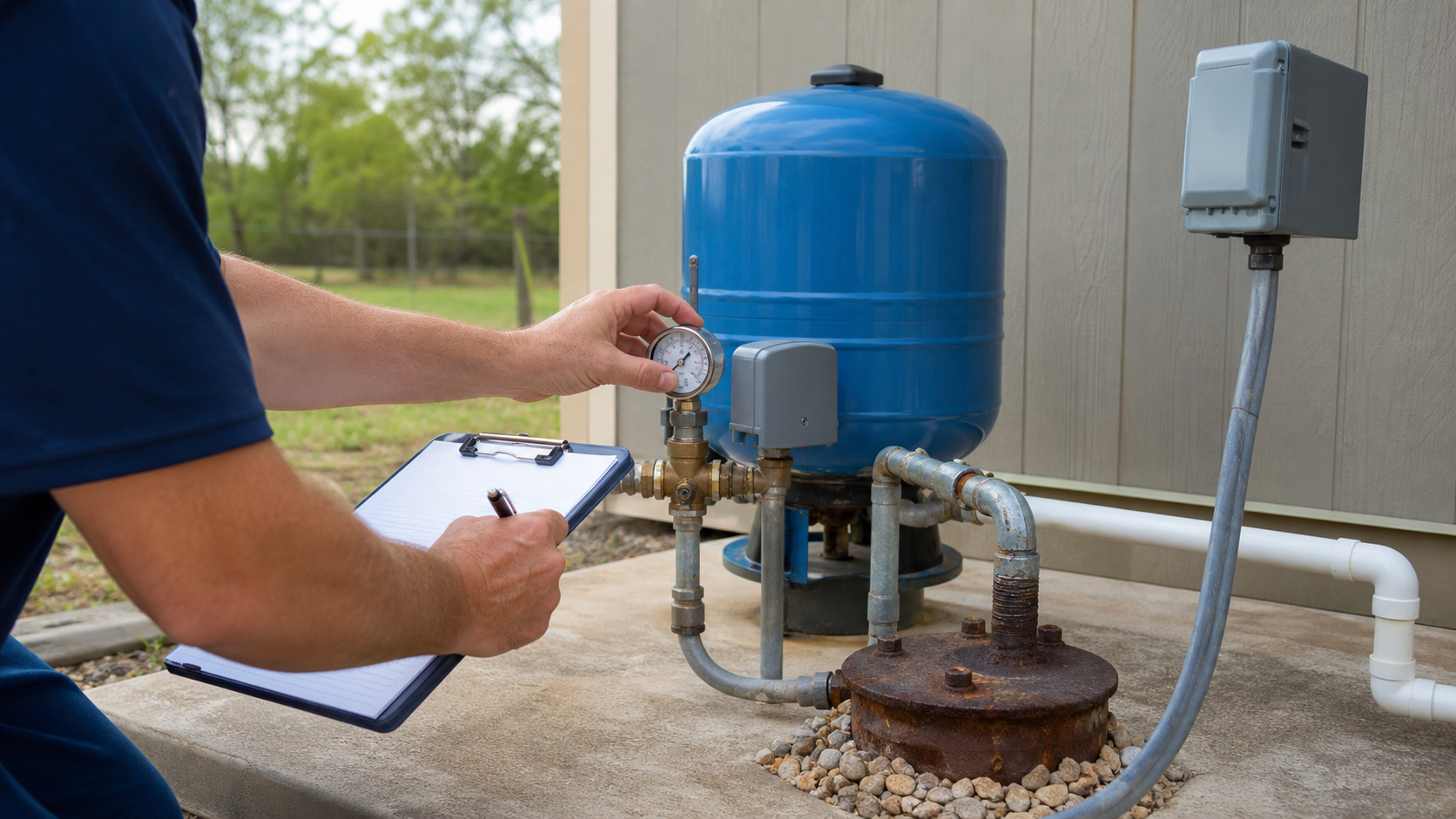
What an Annual Private Well Inspection Should Catch
A private well is easy to ignore when water is coming out of the tap. That is exactly why annual inspection matters. Most expensive well problems do not start as a total failure. They start as a loose cap, a small pressure issue, a tank cycling more often than usual, a filter loading up faster, or a water test that no one ran until the house was under contract.
Texas private wells are not monitored like public water systems. The owner is responsible for the condition of the well and for testing the water. That does not mean every owner needs a complicated maintenance program. It means the well needs a yearly, documented check so small problems do not become emergency service calls, failed inspections, or closing delays.
The Yearly Checklist
Annual well inspection points
- Confirm the well cap is secure, sanitary, and not cracked or loose.
- Look for gaps, corrosion, or damage around visible casing.
- Make sure the ground slopes away from the well head so rainwater does not collect around it.
- Check for standing water, animal activity, chemical storage, septic components, or runoff sources near the well.
- Watch the pressure gauge while water runs and while the pump cycles.
- Listen for rapid pump cycling, hard starts, unusual vibration, or a pump that runs too long.
- Inspect visible piping, valves, fittings, filters, and the pressure tank for leaks or rust.
- Review water test history and run the annual lab panel.
- Save the inspection notes, lab results, service invoices, and any driller or pump reports in one folder.
The paperwork matters more than most owners think. If the property is ever listed for sale, documentation gives the seller a cleaner disclosure package and gives the buyer fewer reasons to assume the worst. If the well has no recent water test, no inspection notes, and no record lookup, the buyer’s inspector is starting from a fog bank.
What to Test Every Year
At minimum, annual testing should cover total coliform bacteria, E. coli, nitrates, pH, and total dissolved solids. Those tests give a basic read on sanitary risk, common health concerns, acidity, and dissolved mineral load. They do not answer every question, but they are a sensible baseline for a private well used by a household.
Add issue-specific testing when symptoms show up. Orange or rusty staining usually means iron should be checked. Black staining points toward manganese. Rotten egg odor may involve hydrogen sulfide, sulfur bacteria, or a water heater reaction. Cloudy or gritty water may call for sediment, bacteria, and broader mineral checks. For examples, compare our guides to brown well water in Texas and cloudy or sandy well water.
Inspect After Heavy Rain, Flooding, or Repairs
Annual inspection is the baseline. Some events should trigger an extra check. If heavy rain pooled around the well head, if floodwater reached the casing, if the well cap was damaged, if the pump was pulled, or if plumbing work stirred the system up, do not wait until the next yearly reminder.
In those cases, look at the well head first. Surface water entering a well is a different problem than normal sediment. It raises bacteria and contamination questions, especially on rural properties with livestock, septic systems, fuel storage, fertilizer, or drainage moving across the yard. If the water changes after a storm, stop guessing and test it.
Pressure Tank and Pump Behavior
The pressure system tells you a lot about well health. A pump that short cycles can wear itself out early. A pressure tank that has lost air charge can make the pump start and stop constantly. A pressure switch that is sticking or exposed to weather can make the whole system act unpredictable.
During an annual inspection, someone should run water and watch the gauge instead of only glancing at the tank. The key questions are simple: Does pressure rise and fall in a normal range? Does the pump start cleanly? Does it shut off when it should? Does the tank look dry, stable, and protected? If pressure is weak or inconsistent, our low water pressure guide for Texas private wells walks through the common causes.
Wellhead, Casing, and Drainage
The visible well head is not decorative. It is the sanitary barrier between the water supply and everything on the surface. A cracked cap, missing vent screen, open conduit, damaged casing, or bad drainage can let insects, dirt, and runoff move toward the well. That is not something a carbon filter fixes.
Keep the area around the well clean and accessible. Do not bury the well head in landscaping. Do not pile chemical containers, feed, fuel, or scrap material around it. If the well sits in a low spot where water collects, that needs attention before the next storm turns the wellhead into a drain.
Buyer and Seller Due Diligence
For a Texas real estate transaction, annual maintenance records can make the difference between a clean file and a stressful option period. A buyer should ask for recent lab results, well service invoices, pump information, driller records, and any known problems. A seller should gather those documents before listing instead of waiting for the buyer to find the weak spots.
Water well condition is separate from the legal disclosure questions on TREC Form 61-0, but the two belong in the same due diligence conversation. The TurnkeyWells TREC Form 61-0 guide explains the disclosure side. The inspection and lab results explain the current physical condition of the system.
Where TurnkeyWells Fits
TurnkeyWells is not the drilling or repair contractor. The role is to help Texas property owners, buyers, sellers, and agents organize the well records, understand what public data says about the property, and identify the right next step. A Free Well Check can help confirm what records exist. A Pre-Drill Intelligence Report is useful when the existing well is failing, the property may need a new well, or the buyer wants nearby well depth and groundwater context before spending serious money.
The cleanest annual plan is simple: inspect the visible system, test the water, save the documents, and act on early warning signs. Private wells can serve a property for decades, but only if the owner treats the system like infrastructure instead of a mystery pipe in the yard.
Do Not Wait for the Well to Fail
An annual inspection gives Texas private well owners a baseline before pressure problems, water-quality changes, or real estate deadlines force the issue. TurnkeyWells can help review the property record, organize next steps, and connect you with qualified local help when field work is needed.
Start with a Free Well CheckNeed help with this well issue?
Contact TurnkeyWells and we can connect you with a licensed local professional.
Tell us what is happening with the well, where the property is located, and whether this is for a home, land purchase, listing, or repair situation. We will help you review the issue, organize the next step, and connect you with a licensed water well professional in your area when field work is needed.
TurnkeyWells is not the drilling or repair contractor. We help property owners review records, understand likely risk points, and get connected with qualified local help.