Austin is not trying to kill growth. It is trying to tighten the water math. That is important to data-center and semiconductor projects inside the city, and it also affects buyers near the city edge who hear a vague utility promise and assume the hard part is solved.

Austin just gave Texas land buyers a useful policy lesson: a city can stay pro-growth, still recruit high-tech industry, and still demand better water discipline before the big promises start sounding like infrastructure.
Austin Current reported on July 23 that City Council approved a resolution directing the City Manager to explore stronger water-conservation measures for high-water-use industries, including data centers and semiconductor manufacturers. That is not a moratorium story. It is a standards story. Austin is asking what these projects would actually use, how they would conserve, and whether reclaimed-water or reuse language can be backed by real systems instead of presentation slides.
That distinction is important because land buyers often hear one comforting phrase and stop there. Sometimes it is city water. Sometimes it is recycled water. Sometimes it is closed-loop cooling. None of those phrases answers the tract-level question by itself. The real question is what source the project will rely on, what the drought rules look like, what the utility has built already, and what happens if the demand grows faster than the public system does.
Austin is not signaling anti-data-center politics here. It is signaling that major users should show their water homework. Buyers should treat that as a model. Growth is not the problem. Unverified water assumptions are.
What Austin actually approved
The public reporting and the City of Austin backup document line up on the core point: the resolution pushes staff to tighten how large-volume users explain water demand and conservation before the city waves them through. Austin Current said the review targets high-water-use industries such as data centers and semiconductor manufacturers. The council action came after Water Forward Task Force recommendations argued that economic-growth recruiting should not outrun long-term water planning.
The council backup goes further than a headline. It says large-volume water customers should submit a conservation plan for Austin Water review and approval. It says those applicants should account for all water uses in their projections, including construction, server cooling, facility cooling including cooling towers, onsite energy generation, and other ancillary uses. It also says applicants should identify the water footprint by source, including surface water and groundwater, municipal piped water, and purified reclaimed water.
That is the part rural buyers should pay attention to. A city policy that requires clearer source-by-source accounting tells you the same problem exists everywhere else too. Big projects are often marketed with one polished supply phrase while the full water stack is still messy underneath.
Current Signal
Why reclaimed water is useful, but not magic
Austin has been working this lane already. The council backup says Austin Water previously recommended using recycled water for all aspects of water use in data centers to reduce reliance on limited drinking-water supplies. It also says existing requirements for large developments of 250,000 square feet or more can include connection to existing reclaimed-water pipes, onsite water reuse, dual plumbing that makes a project ready for reclaimed water, and payments that support reclaimed systems.
That is serious planning. It is also exactly why buyers should stay disciplined. Reclaimed water is only as real as the pipes, treatment capacity, connection point, financing, and long-term operating plan behind it. A project brochure can say reclaimed water in five seconds. The infrastructure can take years.
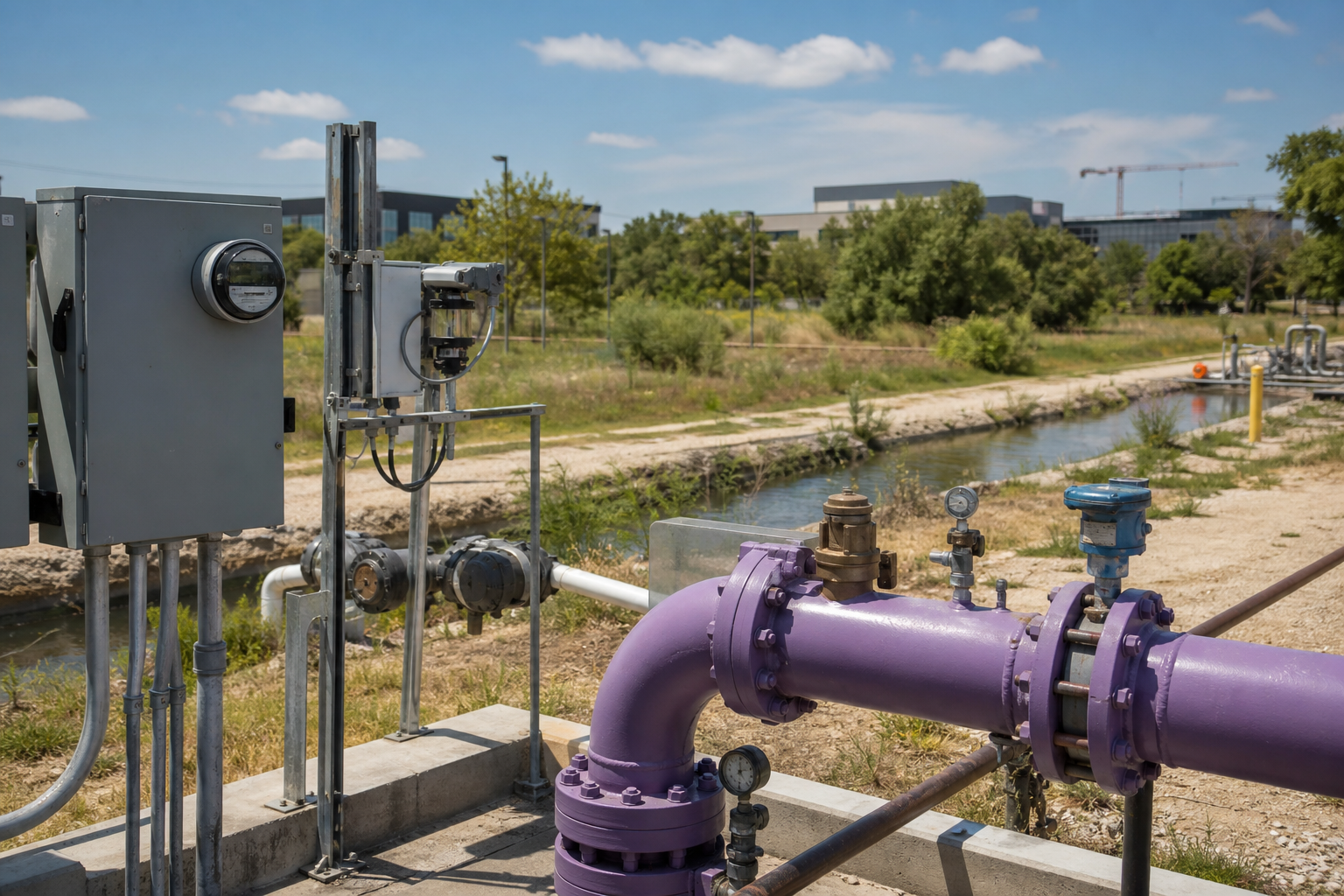
That makes Austin’s resolution more interesting than a generic conservation vote. The city is trying to force more of that infrastructure reality into the approval conversation earlier, before the water story hardens into a sales pitch.
What this means outside Austin city limits
Land buyers sometimes assume a city policy story stops at the city boundary. That is too simple. Austin’s utility and drought decisions can affect how edge-of-city land gets marketed, how developers talk about serviceability, and how nearby rural buyers think about future competition for water infrastructure or future drilling demand.
If a tract sits near an Austin growth corridor, do not treat a city-water promise as a substitute for a due-diligence file. Ask what utility is serving the site, whether the large-user discussion depends on reclaimed water or potable water, whether the project has to meet drought-contingency standards, and what happens if the conservation assumptions shift after the first phase. If the property is outside city service, the question gets even sharper: what does the groundwater-district map say, what do nearby wells show, and does the development story point back to municipal expansion or to a future well field?
This is where Austin connects naturally to the rest of the TKW water-intelligence lane. The statewide AI data centers and Texas water guide explains why fast-moving demand can outrun public reporting. The San Antonio recycled-water brief shows a stronger reuse model, but even there the value is in the actual system, not the slogan. And the Hays County water-planning story shows how local pushback usually starts when the source-water math feels incomplete.
What buyers, owners, and agents should verify now
- Ask what water source is doing the real work. Potable municipal supply, reclaimed water, onsite reuse, groundwater, and future pipeline assumptions are not interchangeable.
- Check whether the infrastructure already exists. Reclaimed-water language means much less if the line is not built, the connection is uncertain, or the treatment capacity is still theoretical.
- Read the drought layer, not just the utility brochure. Austin’s backup explicitly calls for drought-contingency recommendations tied to large-volume customers. That means drought rules are part of the project story, not a side note.
- Use the tract file for rural or edge-of-city land. A Free Well Check and a Pre-Drill Intelligence Report are stronger than generic growth optimism when a property may still depend on a private well path.
- Keep the closing file honest. If water service, source assumptions, or large-user pressure are central to the deal, tie that review back to the Texas water-disclosure guide and the local utility or district record before closing.
- Separate standards from outcomes. Austin approved a review process, not a guarantee that every future project will be water-smart by default. The point of the policy is that proof still has to be shown.
See what nearby Texas well records say before a utility or growth story starts doing too much of the selling for a tract.
Site reviewOrder a Pre-Drill Intelligence ReportOrganize the tract-level file when the water story involves utility pressure, future growth, or a backup well plan.
Bottom line
Austin is showing the right instinct: if a project wants to use a lot of water, the conservation plan and source-water details should get harder scrutiny before the deal starts feeling inevitable.
For buyers, that means the right takeaway is not political. It is practical. When a project is sold with city water, reclaimed water, or advanced cooling language, ask for the actual stack behind it. Austin’s own resolution shows why that stack deserves close review: source type, total demand, reuse feasibility, drought rules, and whether the infrastructure is real enough to carry the promise.
Source notes
- Austin Current, July 23, 2026, on City Council approving a resolution to explore stronger conservation requirements for high-water-use industries, including data centers and semiconductor manufacturers.
- City of Austin Council backup, Item 87, File ID 26-2129, checked July 31, 2026, for the recycled-water recommendation, the 250,000-square-foot reclaimed-water requirements, the all-water-uses accounting language, and the December 9, 2026 drought-plan recommendation deadline.
- Austin Water Forward program page, checked July 31, 2026, for the long-term planning context referenced in this policy brief.
- This article is a practical water-planning and due-diligence brief, not legal advice, engineering advice, or a guarantee about future utility service or project approvals.
Media, source, or interview requests: contact TurnKey Wells about Texas groundwater, private wells, aquifers, and water-use research.
Keep Reading
Need help reviewing the water risk around a rural property?
Ask TurnKey Wells to review the records, utility pressure, and next steps.
Tell us what property you are evaluating, whether the concern is a nearby high-water-use project, a private well question, or a closing deadline. TurnKey Wells can help review the issue, organize the records, and connect you with a licensed water well professional in your area when field work is needed.
TurnKey Wells helps organize records, next steps, and qualified local referrals. TurnKey Wells is not the drilling or repair contractor.