A story desk for Texas groundwater, private wells, aquifers, drought pressure, big water users, data centers, local water policy, and land decisions.
Flagship Research
Texas can recognize groundwater ownership beneath the land without guaranteeing unlimited pumping, a productive aquifer, or a simple title file.
GCD & PolicyTexas 2027 State Water Plan: The Data-Center Demand Gap Land Buyers Should UnderstandWhy statewide water planning helps, where it lags fast data-center demand, and what rural buyers still have to verify locally.
GCD & Permit WatchWhat the Fight Over 43 Proposed East Texas Wells Means for Property OwnersA federal lawsuit, a qualified district pause, and a modeled 15.9-billion-gallon scenario put NTVGCD permitting and property evidence in the same frame.
GCD & Permit WatchWhy 15 East Texas Counties Want Groundwater Rules Before Dallas-Area Export Wells ArriveThe proposed district would add local permitting and pumping guardrails before regional water-plan concepts become drilled well fields.
AI Water WatchHays County Data Centers: What the Moratorium Fight Really Says About Water PlanningHays County and San Marcos show why Texas can stay pro-growth while demanding source-water math, cooling details, GCD context, and property-level well records.
AI Water WatchSan Antonio’s Recycled Water Pitch: A Responsible Model for AI Growth?SAWS’ purple-pipe system shows how AI infrastructure can grow with a better water-source plan, if capacity and property-level facts stay visible.
Texas Well RecordsThe Seven Deepest Water-Well Records in Texas Are Weirder Than You ThinkTWDB data shows the deepest records are oil tests, plugged-back holes, hot flowing wells, and a warning about reading the fine print.
Texas Well WarningsSeven Texas Well-Water Disasters That Changed How We Think About GroundwaterFrom Baby Jessica to zombie wells, these stories show why well due diligence has to include safety, records, contamination, and old oilfield history.
AI Water WatchAI Data Centers and Texas WaterThe first Water Intelligence flagship on large water users, planning gaps, and private-well questions.
Austin Water-Conservation Rules for High-Water-Use Industries: What Land Buyers Should Watch
Austin is tightening the water homework for large users by asking harder questions about conservation plans, reclaimed-water feasibility, drought rules, and source-by-source demand before growth claims do too much of the selling.
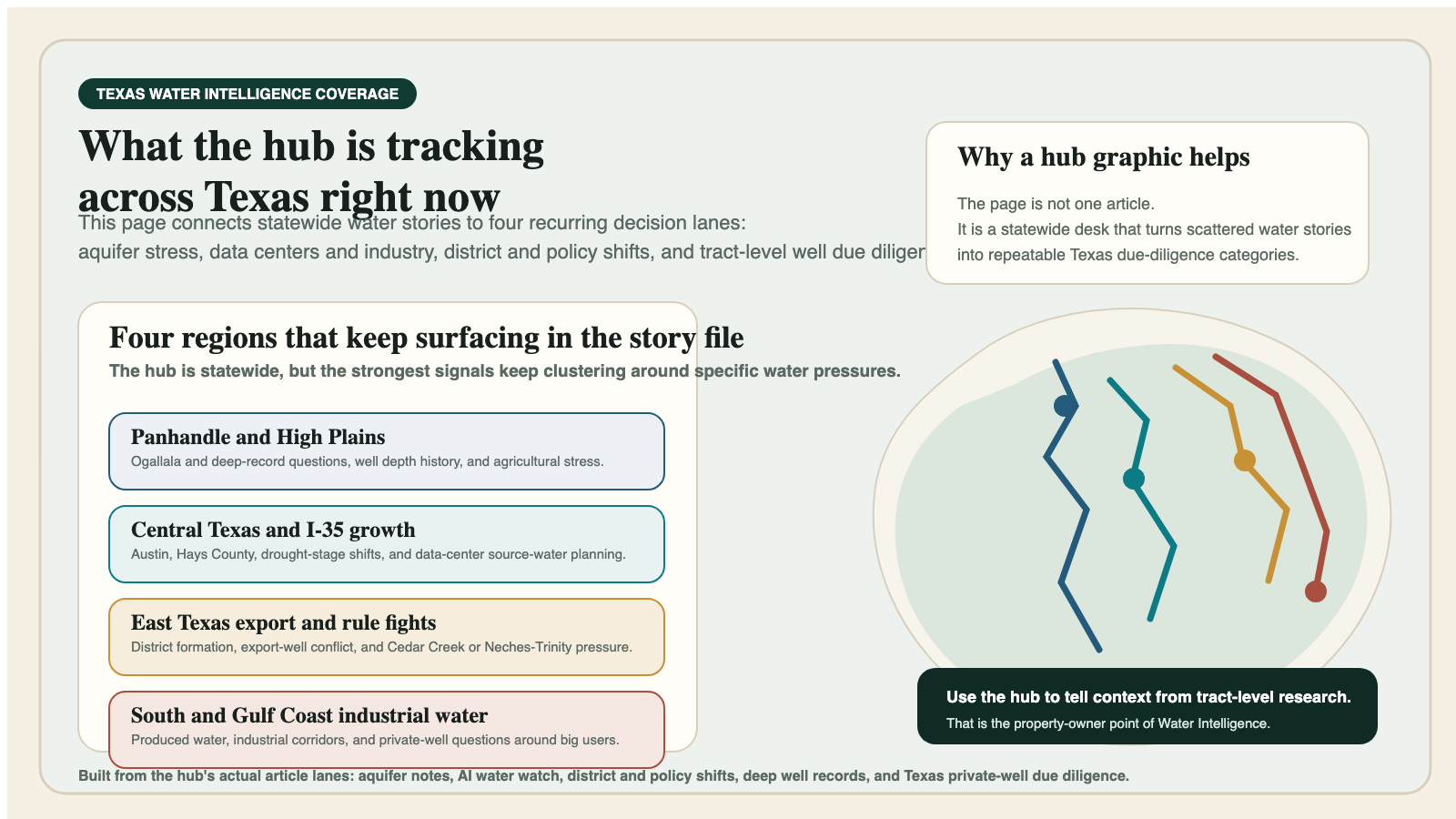
Topic Tracks
How rural land buyers should sort nearby Texas well records by use, depth, date, aquifer context, GCD rules, and missing-file risk before closing.
AI Water WatchData centers, power, cooling, drought, and local water supplyRecurring coverage of AI infrastructure and what it means for Texas groundwater and landowners.
Aquifer NotesPlain-English aquifer context for Texas land decisionsTrinity, Ogallala, Gulf Coast, Carrizo-Wilcox, Edwards, and the formations that affect well planning.
GCD & PolicyGroundwater rules, disclosure, permits, and district changesPolicy coverage translated into practical questions for buyers, sellers, and rural property owners.
Water QualityPrivate-well warning signs and testing questionsRain events, sediment, bacteria, testing schedules, and the issues that should trigger professional review.
Pre-Drill SignalsWhen news should trigger property-level researchUse public water stories as a reason to check nearby wells, depth history, aquifer signals, and GCD context.
Records & MapsTexas water well records as the starting pointTurn broad water stories into nearby evidence before relying on averages or assumptions.
Current Story Watchlist
Moratoriums and local opposition are making water, land use, and infrastructure terms part of the approval story.
Chevron and Microsoft-style projects could shift the water question from city supply to oilfield water, power generation, and regional disposal/reuse.
Groundwater district updates, monitored-well levels, and drought triggers are high-signal story inputs for property owners.
When state or regional planning lags new large users, TKW should translate the gap into due-diligence questions.
How We Choose Stories
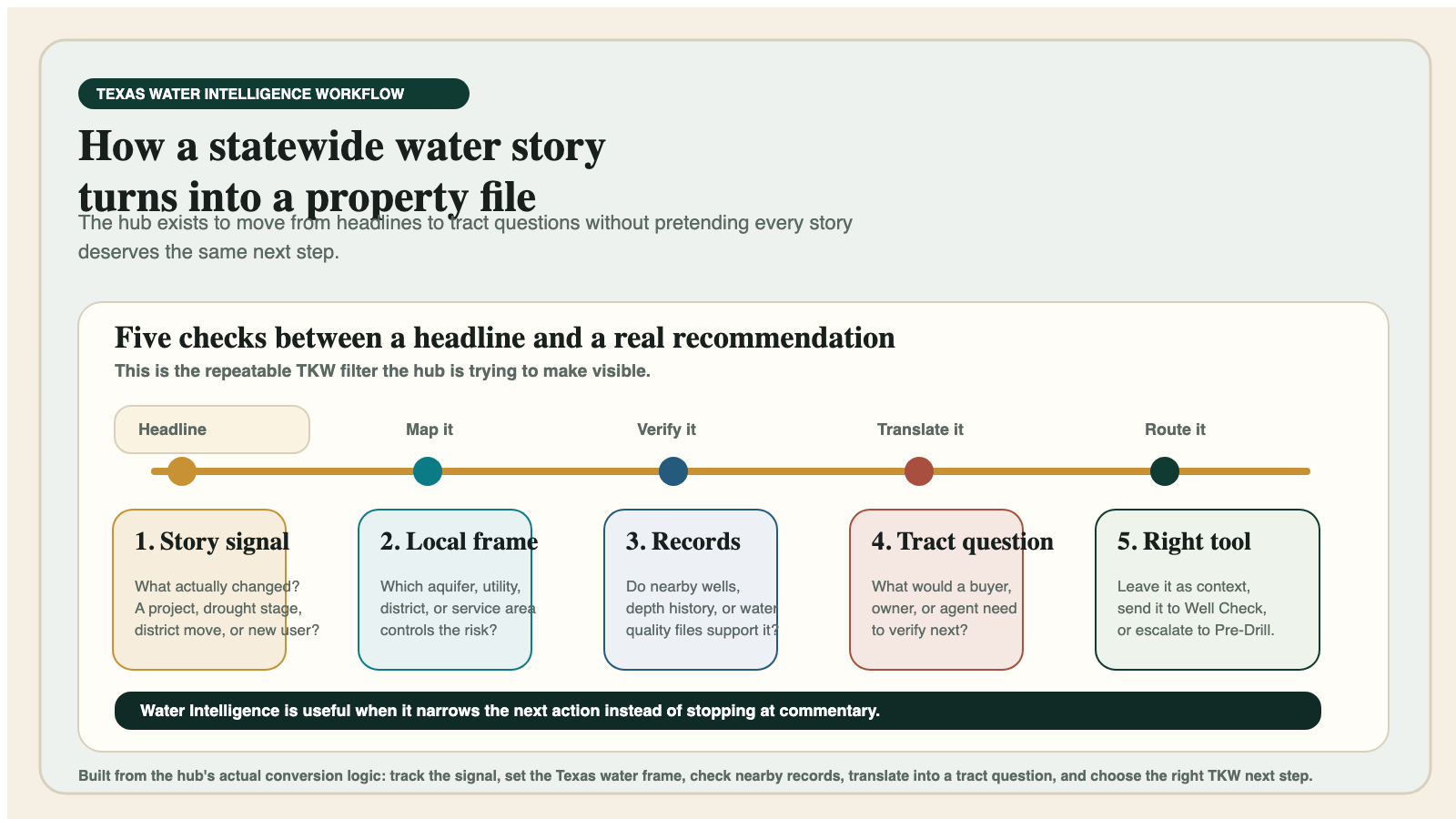
Water Intelligence is not a generic blog. A story belongs here when it changes, clarifies, or pressures one of these property questions: Can this tract support a well? What do nearby records show? What aquifer or district controls the risk? Is a new large water user changing the local conversation? What should a buyer check before closing or drilling?
For property-specific research, start with the free Texas Water Well Check. For drilling decisions, use the Pre-Drill Intelligence Report.
Media, source, or interview requests: contact TurnKey Wells about Texas groundwater, private wells, aquifers, and water-use research.