Texas Private Well Problems
Well Water Turns Brown After Heavy Rain in Texas
When well water turns brown after a storm, the problem is often bigger than harmless staining. Heavy rain can push runoff toward the wellhead, stir up sediment, or expose a weak cap or casing seal that was already waiting to fail.
Quick Answer
Most likely cause
Storm runoff near the wellhead, disturbed sediment, or a cap, casing, or grading problem that lets muddy water get where it should not.
When to stop using it
If the change was sudden after heavy rain or flooding, do not assume it is safe to drink until the well is inspected and tested.
What to test first
Start with total coliform bacteria, E. coli, nitrates, pH, total dissolved solids, iron, and manganese through a certified lab.
What to inspect first
Look at drainage around the well, the cap and casing, filter housings, pressure equipment, and whether brown water shows up at an outside tap too.
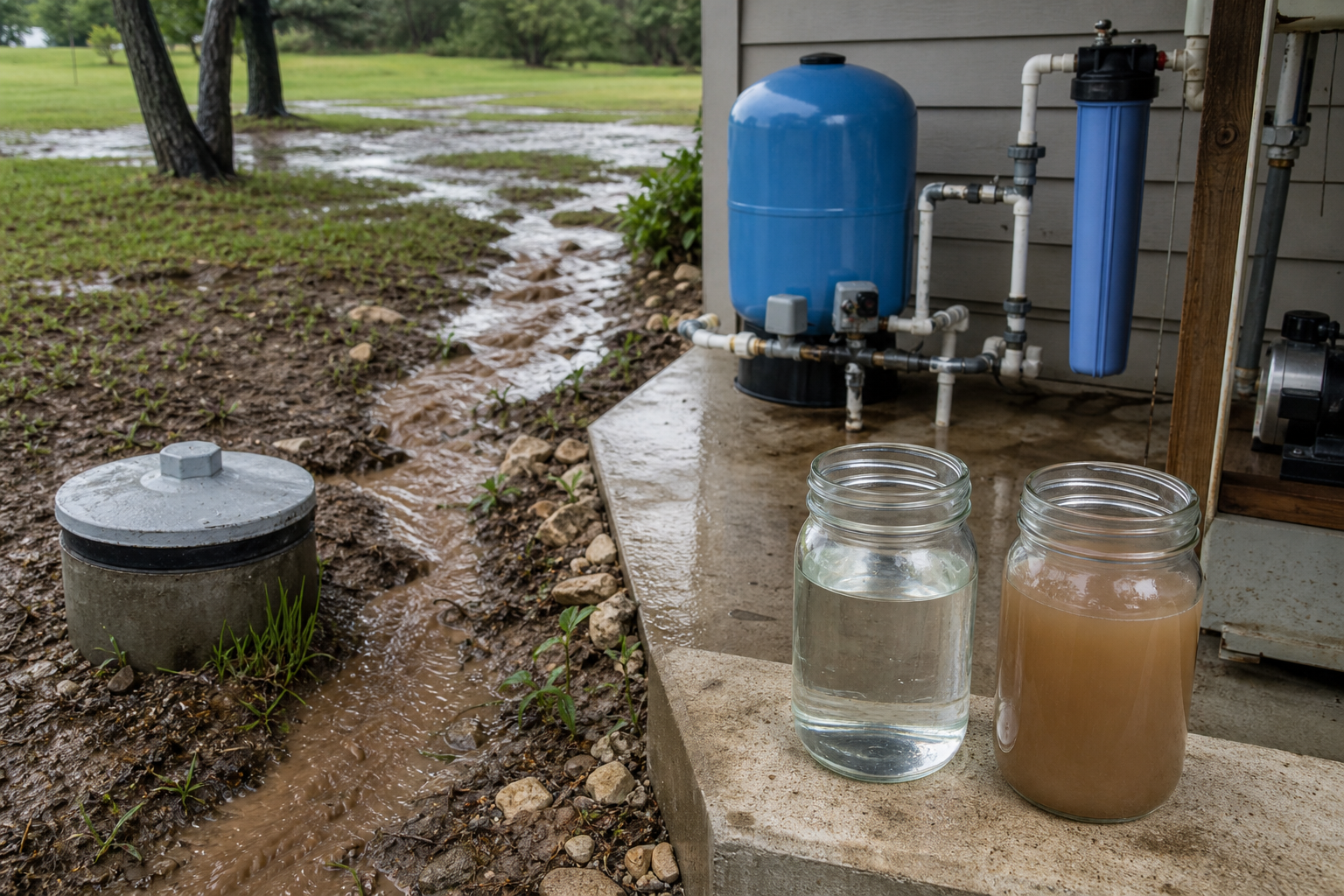
What Brown Well Water After Rain Usually Means
Brown well water after heavy rain is a specific symptom, not just a variation of the broader brown or rusty well water problem. Timing matters. When the water changes right after a storm, the likely causes shift toward runoff, muddy infiltration near the wellhead, or sediment that got stirred up because the well system or surrounding soil got hit hard by rain.
That does not mean every storm event points to dangerous contamination, but it does mean the water changed for a reason. A Texas private well that normally runs clear and then suddenly turns tea-colored or muddy after rain deserves real inspection before anyone treats it like a cosmetic nuisance.
Why Heavy Rain Changes Well Water So Fast
Private wells are vulnerable where surface conditions meet the well structure. If the ground slopes toward the well, if the cap is loose, if the casing is compromised, or if floodwater sat around the wellhead, storm runoff can move sediment and contaminants toward the system. On some properties the rain does not enter directly, but the storm disturbs the water table enough to pull finer sediment into the pump cycle for a day or two.
Texas properties make this worse when the well sits in a low spot, next to livestock activity, downhill from a driveway, or near older equipment pads with poor drainage. A storm is often just the event that exposes a condition that was already there.
Common Rain-Triggered Causes
Runoff near the well cap. A damaged, loose, or poorly sealed cap can let muddy water and debris move into the well after rain. If the grading sends water toward the casing instead of away from it, the risk goes up quickly.
Disturbed sediment in the well. Some wells stay clear most of the year but pull sediment after a major storm, a drop in water quality, or a period of aggressive pumping. If the system also looks cloudy, muddy, or sandy, sediment movement may be the main clue.
Flooded pressure or filter area. If the pump house, pressure tank slab, or filter housings took on water, the visible brown water at the sink may be tied to the equipment area, not only the aquifer itself. That still needs field inspection.
Older shallow or poorly protected wells. Older private wells and ranch wells often have more storm vulnerability than owners realize. Even if the water clears after a flush, the event may be telling you the sanitary protection around the well is weak.
Storm timing changes the risk category. If the water turns brown after heavy rain, flooding, or standing water around the wellhead, assume the next step is testing and inspection, not guessing which filter to buy first.
When to Stop Using the Water Until You Know More
Move faster if the brown water showed up suddenly, if children or medically vulnerable people are using the water, if the property had floodwater near the well, or if the discoloration comes with odor, slime, pressure changes, or visible damage at the wellhead. TurnkeyWells does not give medical advice. For water-safety concerns, use certified lab testing, follow local health department guidance, and work with qualified water well or water treatment professionals.
Do not let the water looking slightly better the next day talk you into pretending nothing happened. Some storm-related contamination risks are invisible even after the muddy appearance fades.
What to Test First After a Storm
For a Texas private well that turns brown after rain, a practical first test panel usually includes:
- Total coliform bacteria and E. coli
- Nitrates, especially where children or pregnant women may use the water
- pH and total dissolved solids
- Iron and manganese if the water looks rusty, orange, or dark brown
- Any additional storm-event testing recommended by a certified lab or local health department
If the property has a history of recurring water-quality issues, a TurnkeyWells Free Well Check helps confirm what public well records and nearby context already say about the site before more money gets spent on blind trial and error.
What a Well Professional Should Check
A qualified water well professional should inspect the cap, casing, grading, seals, filter setup, pressure equipment, and actual water behavior under use. They should also check whether sediment is coming from the raw well water, a filter housing, or house-side corrosion that only became obvious after the storm. If the event exposed a deeper planning problem with the property, the Pre-Drill Intelligence Report can help owners compare nearby well depth and local drilling context before a replacement-well discussion gets expensive.
TurnkeyWells is not the drilling or repair contractor. We help property owners organize the records, understand likely next steps, and connect them with a licensed water well professional in their area when field work is needed.
What Buyers, Sellers, and Agents Should Do
Brown water after a storm is a real estate problem as much as a maintenance problem. Buyers immediately wonder whether the well is vulnerable to contamination every time it rains. Sellers need documentation showing whether the event was tested, diagnosed, and corrected. Agents need to know if this is a one-time sediment event or evidence of a weak cap, poor drainage, or a larger disclosure issue.
This is exactly where the TREC Form 61-0 Texas water disclosure guide matters. If a property depends on a private well, storm-related water changes belong in better due diligence, not in the category of issues everyone hopes disappears before closing.
Do Not Treat the Rain Event as the Whole Story
Storm runoff may be the trigger, but it is often not the whole diagnosis. A property with bad grading, weak sanitary protection, thin well records, and repeated brown-water complaints is telling you something bigger. If the water problem keeps coming back after storms, the right question is not only how to clear the water today. It is what part of the system keeps letting this happen.
Do Not Guess at Brown Well Water After a Storm
When rain turns a Texas private well brown, the fastest answer is not always the right answer. TurnkeyWells helps property owners review the issue, organize the next step, and avoid chasing the wrong fix.
Start with a Free Well CheckNeed help with this storm-related well issue?
Contact TurnkeyWells and we can help review the issue and connect you with licensed local help.
Tell us what the well water did after the rain, where the Texas property is located, and whether this is for a home, land purchase, listing, or active repair situation. TurnkeyWells can help review the issue and connect the visitor with a licensed water well professional in their area when field work is needed.
TurnkeyWells helps organize records, explain likely next steps, and connect customers with qualified local help. TurnkeyWells is not the drilling or repair contractor.