Texas Private Well Problems
Black Stains or Manganese in Well Water in Texas
Black staining in Texas well water often points to manganese. If dark marks keep coming back, test the water before guessing at treatment.
Quick Answer
What it usually means
Black staining often points to manganese in the water, especially when the marks show up on porcelain, laundry, and fixture edges rather than as bright orange rust alone.
What owners notice first
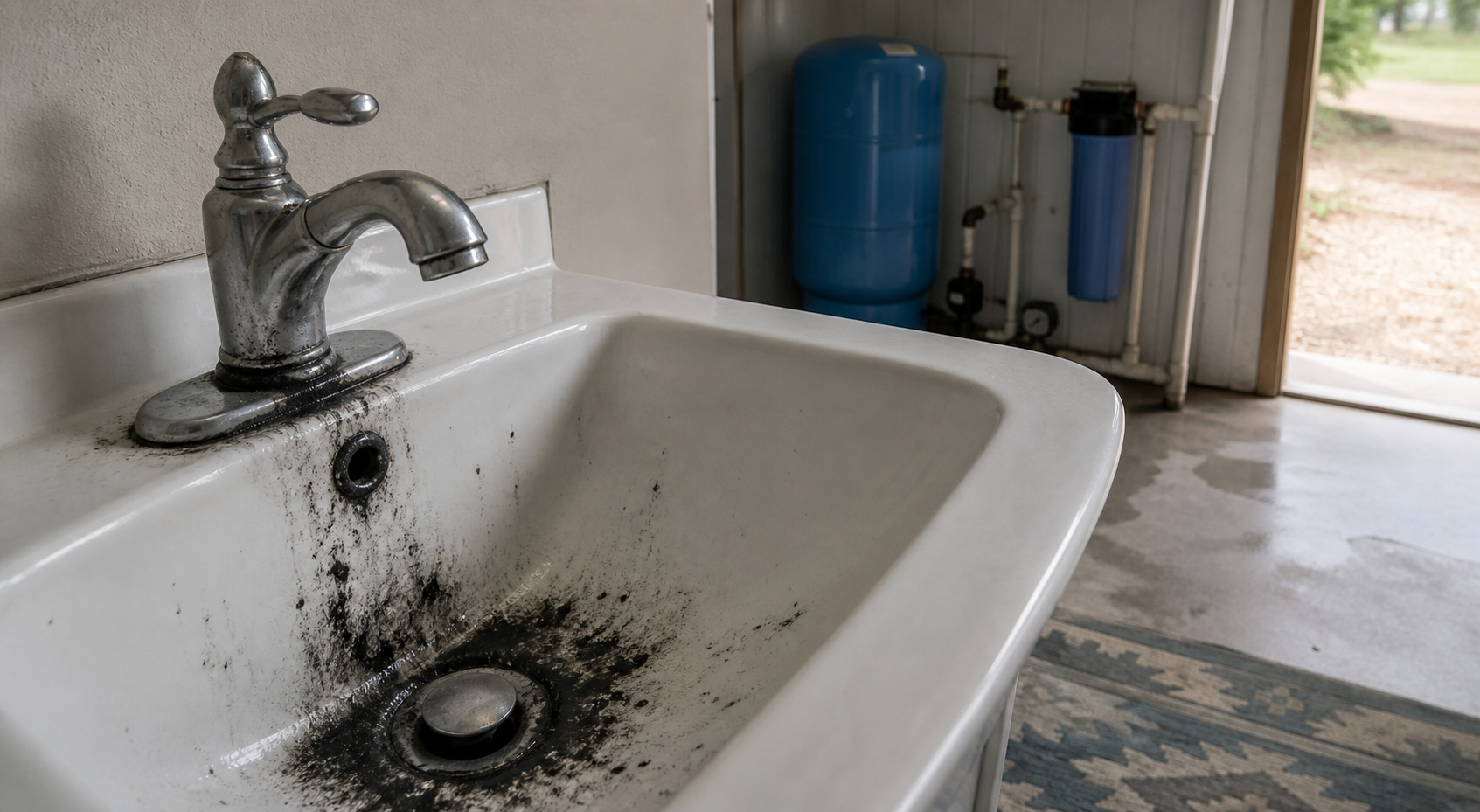
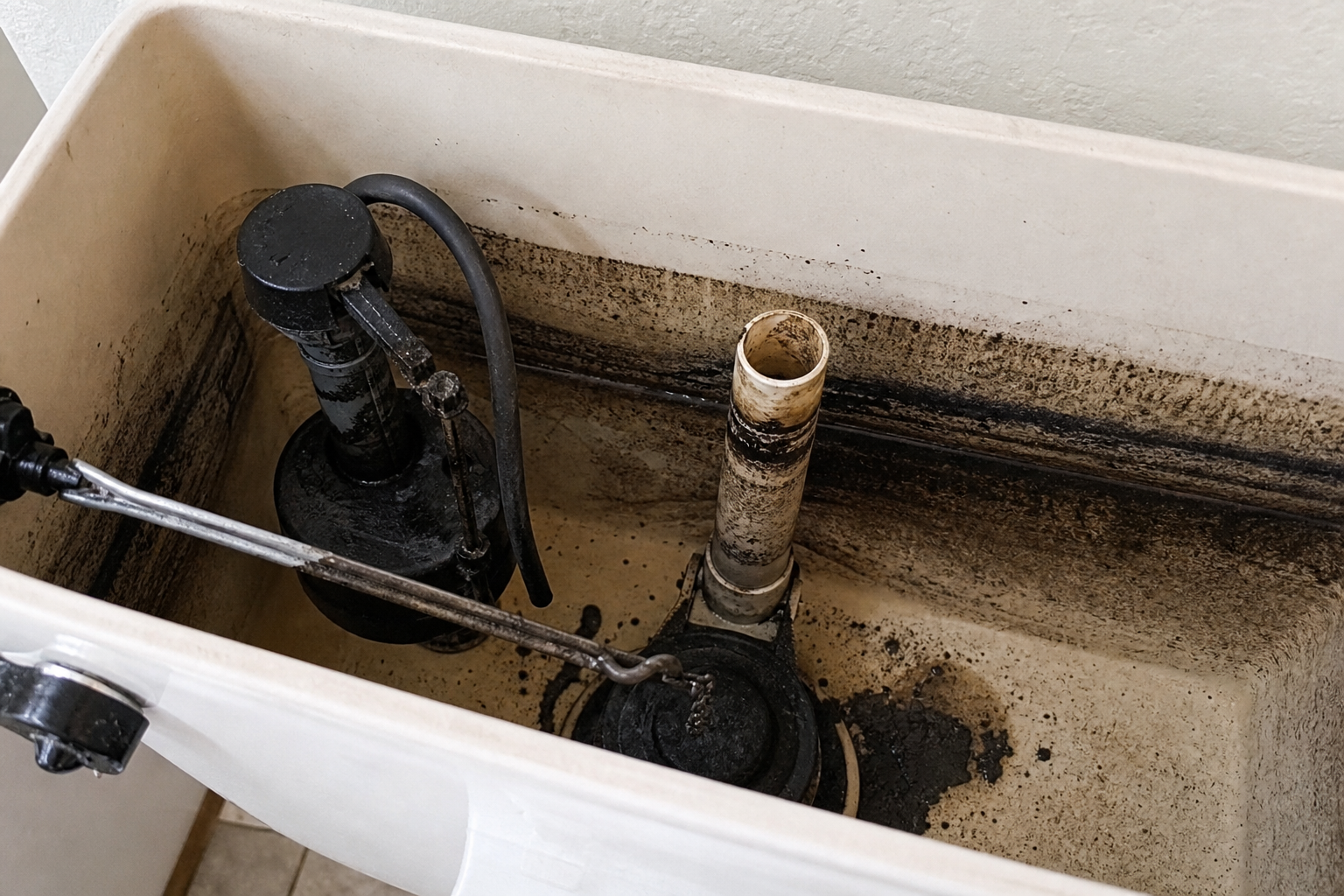
Dark rings in toilet tanks, black residue around drains, dingy laundry, and stains that come back quickly even after the fixture was cleaned.
What to test first
Start with manganese, iron, pH, total dissolved solids, total coliform bacteria, and nitrates through a certified lab so the black stain is not judged in isolation.
When to move faster
If the water also changed taste, smell, or color, or a purchase or sale is active, get testing and qualified field inspection moving before you guess at treatment.
Why Black Well-Water Stains Matter
Most homeowners do not search for manganese first. They search for the thing they can see. Black stains around a faucet base, dark residue in a toilet tank, gray-black marks on shower grout, or laundry that keeps looking dingy are usually the first clues. In Texas private well systems, manganese is one of the most common reasons that happens. The mistake is assuming the stain is only cosmetic and never checking whether the water chemistry, treatment setup, or well condition changed underneath it.
Manganese behaves differently than straight iron staining. Iron is the usual suspect when water looks orange or rusty. Manganese more often leaves dark brown, gray, or black staining and can make the problem feel dirtier, more stubborn, and harder to explain. That is why owners sometimes bounce between guesses such as mold, dirty plumbing, or a softener issue before anyone actually tests the water.
Common Signs That Manganese Belongs on the Lab Panel
Black or charcoal staining on porcelain and fixtures. Toilet bowls, tank walls, sink drains, and shower surfaces often show the problem first because the staining is easy to spot against white or light surfaces.
Dark residue mixed with a metallic or earthy water complaint. If the water also tastes odd, compare it with bad tasting or metallic well water in Texas. Manganese can show up as part of a broader water-quality change, not as a standalone stain story.
Black marks that return quickly after cleaning. The fixture may scrub clean, then stain again within days. That pattern usually means the source is in the incoming water or the treatment setup, not a one-time housekeeping issue.
Dark slime or sticky residue instead of clean powdery buildup. If the residue feels slimy or gelatinous, review iron bacteria in well water in Texas too. Iron bacteria and manganese can overlap, and the texture of the buildup tells you a lot about whether you are dealing with minerals alone.
The color is only the first clue. Black staining can point to manganese, but it does not tell you whether the well water is otherwise stable, whether the treatment equipment is failing, or whether another issue such as bacteria, iron, or pH is riding along with it.
What Usually Causes Black Stains in a Texas Well System
Naturally occurring manganese in groundwater. In many Texas wells, manganese is a naturally occurring nuisance metal. It may have been present for years and only becomes obvious when water chemistry shifts, the treatment equipment falls behind, or a new owner finally looks closely inside the plumbing fixtures.
Mixed mineral water chemistry. Manganese often shows up with iron, hardness, or high total dissolved solids. That overlap is why one product recommendation from a neighbor is not a real diagnosis. The same house can have black staining, metallic taste, and scale buildup for related but different reasons.
Treatment equipment that is undersized, bypassed, or overdue for service. A filter, softener, or oxidizing setup may be installed and still not be doing its job. Resin age, media condition, valve settings, bypass position, and neglected prefilters can all make a manageable manganese problem look worse than it should.
Ownership changes and weak records. Buyers and inherited-property owners run into this constantly. Nobody can say when the water was last tested, when the treatment media was last changed, or whether the stains are new or just newly noticed. The mystery is often a record problem as much as a chemistry problem.
Texas Context: Why This Becomes a Real-Estate and Maintenance Problem Fast
Texas private wells vary wildly by county, aquifer, completion depth, and maintenance history. Two properties a mile apart can both rely on well water and still have completely different treatment needs. Black staining is the kind of symptom that spooks buyers because it feels like evidence of neglect. Sellers often think it is a nuisance issue. Buyers start wondering whether the well was ignored, whether the treatment gear is shot, and whether the water has been properly tested at all.
That is where context matters. A TurnkeyWells Free Well Check helps organize the well-record side of the story before the conversation turns into guesswork. If a property owner is deciding whether the current setup is worth further treatment work or wants a wider view of nearby well conditions before a larger drilling or repair decision, the Pre-Drill Intelligence Report gives a better planning baseline than a contractor estimate alone.
What to Test Before You Spend Money on Treatment
Start with a certified lab panel focused on what the water is doing now. For most Texas black-stain complaints, that means manganese, iron, pH, total dissolved solids, total coliform bacteria, and nitrates. If the property has children, medically vulnerable users, or a recent storm or runoff event, work with a certified lab and qualified local professionals to decide whether more issue-specific testing is warranted.
TurnkeyWells does not provide medical advice. For water-safety concerns, use certified lab testing, follow local health department guidance where appropriate, and work with qualified water well or water treatment professionals. The practical goal is to separate a nuisance stain from a broader water-quality problem before anybody sells you a treatment package that only solves half of it.
What a Qualified Professional Should Inspect
A real inspection should look past the black ring in the sink. A qualified professional should inspect the treatment train, filters, pressure tank, plumbing dead legs, toilet tanks, and other places where residue is concentrating. They should also look at whether the current setup is equipped for manganese at all, whether iron or slime is overlapping with it, and whether the house-side plumbing is making the staining look worse.
That matters because a property can have manageable raw-water chemistry and still perform badly because the treatment equipment is bypassed, undersized, neglected, or simply not matched to the lab results. The expensive mistake is replacing equipment before anyone confirms what the incoming water and the existing system are really doing.
Buyer and Seller Angle Before Closing
Black staining belongs in the due-diligence conversation before closing because it raises practical questions fast. Has the well water been tested recently? Are the treatment records available? Does the seller know what the dark residue actually is? If the answer to every question is a shrug, the stain is no longer a cosmetic issue. It is a documentation and risk issue.
That is exactly why our TREC Form 61-0 Texas water disclosure guide matters on private-well deals. The visible mark on the sink is only one part of the story. The better question is whether the water, the well history, and the treatment setup are understood well enough for a buyer to trust the property.
Do Not Treat the Black Stain Without Understanding the Water Story
Black stains in Texas well water are often fixable, but the right next step depends on the chemistry, the equipment, and the property history. Some owners need updated testing and routine service. Some need a smarter treatment design. Some discover the stain was the first visible symptom of a deeper record or maintenance problem that had been ignored for years.
TurnkeyWells helps Texas property owners review the issue, organize records and next steps, and connect customers with qualified local help when field work is needed. The point is to get the bigger water story first, then let licensed field professionals handle the well or treatment work that belongs on site.
Get the Water Story Before You Spend on the Wrong Manganese Fix
TurnkeyWells helps Texas property owners review the issue, organize records and next steps, and connect them with qualified local help when field work is needed.
Start with a Free Well CheckNeed help with this well-water issue?
Contact TurnkeyWells and we can help review the issue and connect you with licensed local help.
Tell us what kind of dark staining you are seeing, where the Texas property is located, and whether this is tied to a home, land purchase, listing, or active repair situation. TurnkeyWells can help review the issue and connect the visitor with a licensed water well professional in their area when field work is needed.
TurnkeyWells helps organize records, explain likely next steps, and connect customers with qualified local help. TurnkeyWells is not the drilling or repair contractor.