Texas Buyer and Seller Due Diligence
Plugged or Abandoned Wells on Texas Property: What Buyers and Sellers Should Check
Old plugged or abandoned wells do not always show themselves until the deal gets serious. When the record surfaces late, buyers worry about location, safety, and future cost, while sellers suddenly have to explain a well story they may not know well at all.
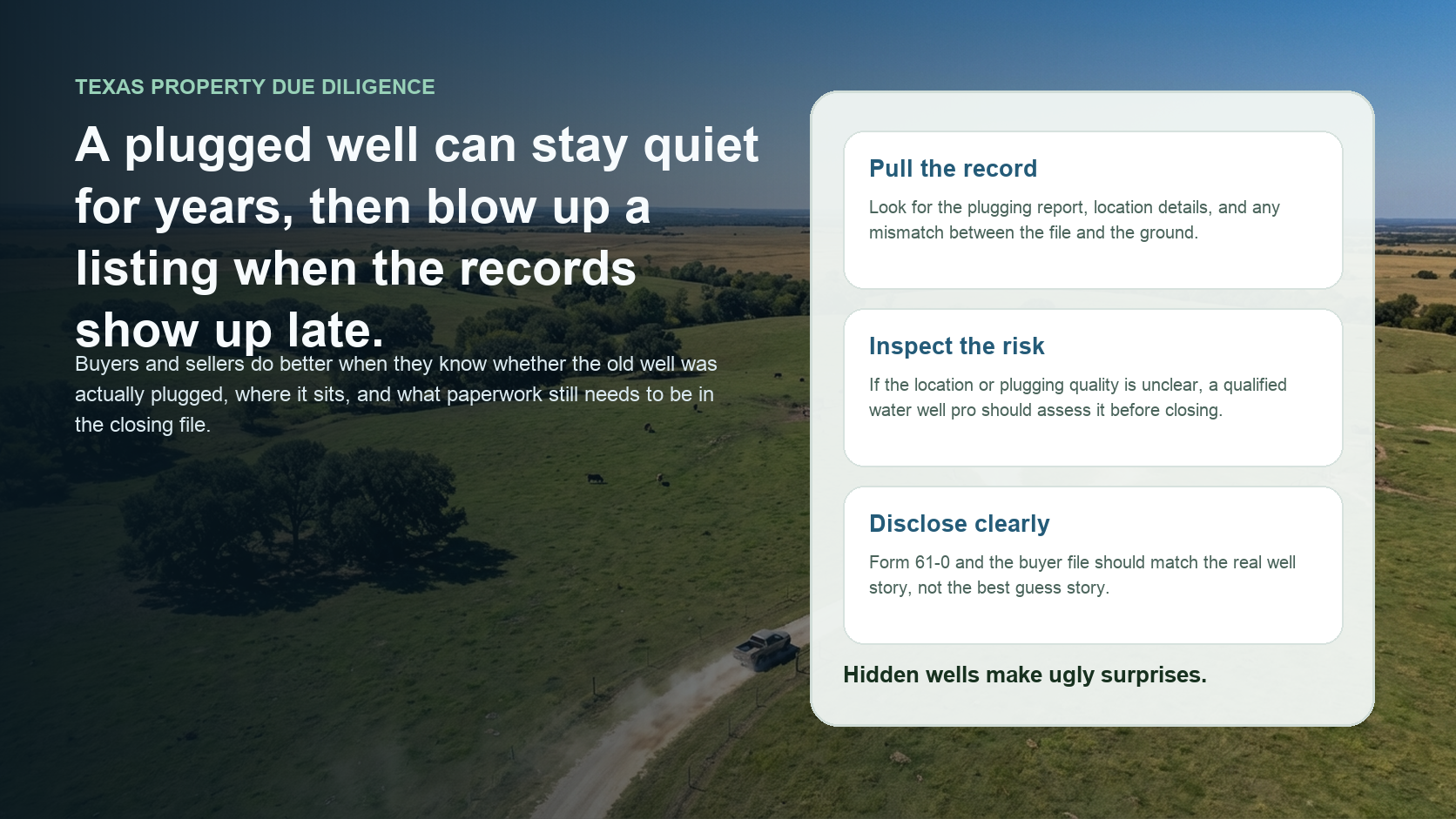
Quick Answer
Yes, it still matters
A plugged well can still affect disclosure, inspection scope, site planning, and buyer confidence even if it is no longer in service.
Pull the record first
Before anyone argues, get the well record, plugging report if one exists, and a clear sense of where the old well sits on the tract.
Inspect when details do not line up
If the paperwork is incomplete, old, or vague, a qualified licensed water well professional should evaluate the site before closing.
Texas closing angle
The buyer file and TREC Form 61-0 should match the real well story, not a casual guess from memory.
Why an Old Plugged Well Can Still Disrupt a Deal
Buyers do not usually panic because a property once had another well. They panic when nobody can explain where it was, whether it was actually plugged, or whether the paperwork matches what is sitting on the ground. That uncertainty turns a small side issue into a larger trust problem. It can affect a homesite plan, a driveway, a septic layout, future drilling decisions, and the buyer’s sense that the rest of the file may also be incomplete.
Sellers get caught flat-footed because many do not know an older well record exists until the address search turns it up. Texas rural properties change hands, fences move, old casing gets covered, and family memory gets shorter with every transfer. The result is common: an old well becomes visible in the record long after the current owner stopped thinking anyone would ever ask about it.
What Counts as Plugged or Abandoned
In plain English, a plugged well is a well that was taken out of service and sealed. An abandoned well is a looser phrase people use for a well that is no longer serving the property, but the paperwork and physical condition may be less clear. Some files say plugged. Some say inactive. Some say dry hole. Some rely on a seller’s story with no report attached. Those differences matter because the next step depends on how clear the status really is.
The practical question is not which label sounds best. The practical question is whether there is enough reliable information to know where the old well is, whether it was sealed properly, and whether any follow-up field review is still worth doing before the deal closes.
Plugged-Well Due-Diligence Checklist
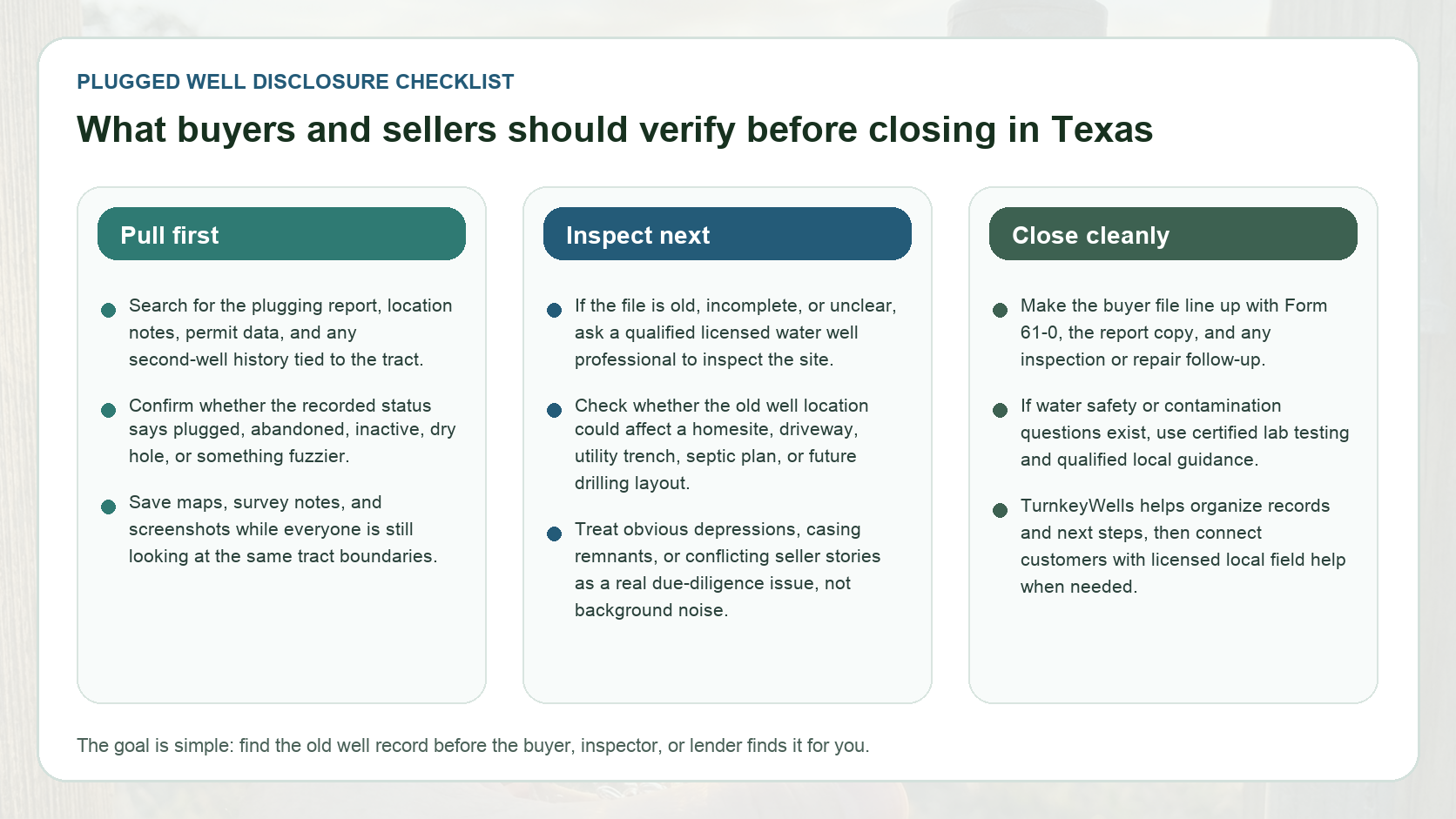
What buyers and sellers should verify early
- Search for the recorded well entry, plugging report, and any associated permit or driller paperwork tied to the tract.
- Check whether the file gives a believable location that matches current tract lines, improvements, and surface clues.
- Ask whether the old well could affect a planned homesite, barn pad, driveway, utility trench, pool, or future replacement-well location.
- Match the record story to the transaction story, including seller disclosure, inspector notes, and buyer questions.
- Do not brush off conflicting details such as a missing report, uncertain location, or casual claims that the well was handled years ago.
If the broader property file already feels thin, compare the issue with TurnkeyWells guides on private well inspection before closing and buying a house with a private well red flags. Plugged wells usually become difficult when they appear inside a file that is already leaning too hard on hearsay.
What to Pull and Document First
The fastest way to calm the room is to replace assumptions with documents. Start with a Free Well Check so the property owner, buyer, or agent can see whether the old well appears in the available public record. Save the report copy. Save the map view. Save the location notes. If the result shows a plugging date, driller name, or status language, move that into the transaction file instead of leaving it buried in screenshots and browser tabs.
This is also where the TREC Form 61-0 Texas water disclosure guide matters. The form does not ask for a fiction. It asks the seller to disclose what is known. When the record says another well exists or once existed, the seller needs to understand that before the buyer’s inspector or title team introduces it at the worst moment.
When a Physical Inspection Makes Sense
A report alone does not answer every question. If the old well location is vague, the file is incomplete, surface clues suggest the well may not have been sealed well, or the planned use of the tract makes the location important, a qualified licensed water well professional should inspect the site. That is especially true when the old well may sit near a future build area or when the closing file has multiple well stories that do not quite match.
A professional field review can help answer practical questions such as whether the casing remnants are still visible, whether the old location appears to conflict with planned improvements, and whether the plugging evidence looks consistent with the record. TurnkeyWells is not the drilling or repair contractor. TurnkeyWells helps organize the record side, frame the questions, and connect customers with qualified local water well professionals when field work is needed.
Texas-Specific Closing and Water-Safety Questions
In Texas, plugged-well questions often overlap with broader private-well due diligence. Buyers want to know whether the active well is the only well, whether any old well could create a location or contamination concern, and whether the disclosure package is complete enough to trust. If the property raises a genuine water-safety concern, or if there are signs that an old well condition may affect current water quality, use certified lab testing and local health department guidance where appropriate along with qualified water well or water treatment professionals. TurnkeyWells does not provide medical advice.
Nearby well context can also matter when the old well raises a replacement question. If a buyer or seller needs to understand what future drilling may look like on the tract, the Pre-Drill Intelligence Report helps add local depth, nearby-well, and planning context that a simple disclosure conversation does not provide by itself.
What Buyers Should Ask and What Sellers Should Hand Over
Buyers should ask for the record, the plugging story, the best available location information, and any inspection follow-up if the file looks fuzzy. Sellers should hand over the report copy, any supporting notes, and a clean explanation of what is known and what is not known. The goal is not to overdramatize an old well. The goal is to avoid letting the old well become the moment where the buyer decides the whole property file feels slippery.
Good seller files answer the obvious questions before they are asked. Good buyer files confirm that the answers are real. That is why this topic is less about technical jargon and more about disciplined records, honest disclosure, and knowing when a qualified pro should walk the site.
Where TurnkeyWells Fits
TurnkeyWells can help review the issue, organize the records, and connect buyers or sellers with qualified local water well professionals when field work is needed. That includes helping sort out whether the real next step is a record pull, a site inspection, a water test, a replacement-planning question, or a cleaner disclosure file before closing pressure gets worse. TurnkeyWells helps organize records and next steps. TurnkeyWells is not the drilling or repair contractor.
Find the Old Well Record Before It Finds Your Closing Table
TurnkeyWells can help review the plugged-well question, organize the file, and connect Texas property owners with licensed local water well professionals when field work is needed. The cleanest deals are the ones where the old well story is assembled early, not argued about late.
Start with a Free Well CheckNeed help sorting out a plugged-well question?
Contact TurnkeyWells and we can help review the issue and connect you with licensed local help.
Tell us what the Texas property record is showing, whether the concern is an old plugged or abandoned well, an inspection question, a location conflict, missing paperwork, or a buyer-seller due-diligence issue. TurnkeyWells can help review the issue, inspection question, or maintenance concern and connect the visitor with a licensed water well professional in their area when field work is needed.
TurnkeyWells helps organize records, next steps, and qualified local referrals. TurnkeyWells is not the drilling or repair contractor.