Texas Private Well Components
Water Well Pressure Tank Problems in Texas
Pressure tank problems in a Texas private well system usually show up as short cycling, pressure swings, weak shower pressure, or a pump that starts every time a faucet opens. The tank is supposed to give the system a reserve of pressurized water. When it stops doing that, the pump takes the abuse.
Quick Answer
Most likely cause
Wrong air charge, a waterlogged tank, or a failed bladder is more common than a bad aquifer.
What it feels like
Water starts strong, pressure fades fast, or the pump kicks on every few seconds during normal use.
What to inspect first
Pressure gauge behavior, visible tank corrosion, switch settings, leaks, and whether any filter or valve is restricting flow.
When to stop guessing
If the pump will not stop, the breaker trips, pressure surges hard, or dirty water showed up after flooding, get the system checked and test the water.
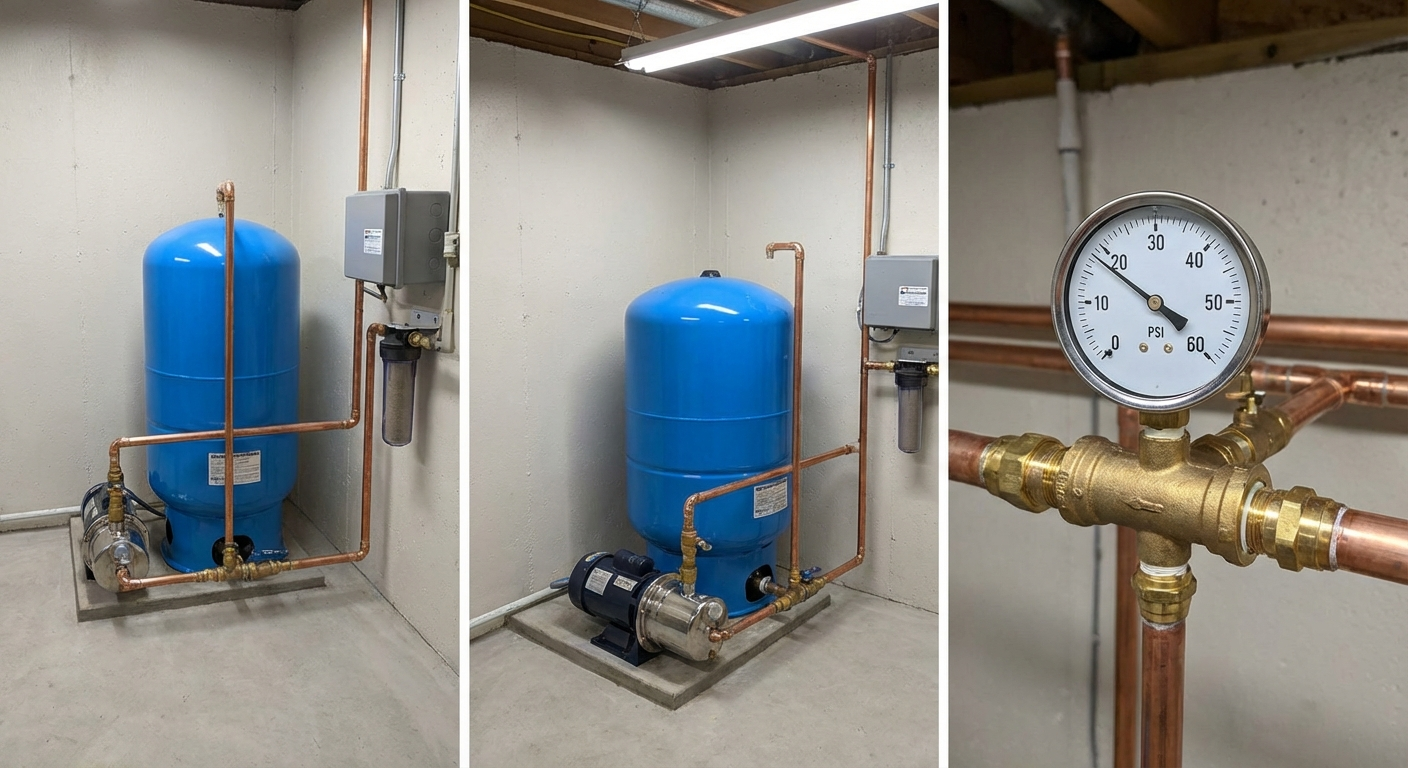
What a Pressure Tank Actually Does
The pressure tank is the buffer between the pump and the house. It stores a reserve of water under pressure so every hand wash, toilet flush, and short faucet use does not force the pump to start instantly. In a healthy well system, the tank gives the pump a break and keeps household pressure steadier.
When that tank loses its air charge, fills with water, or has a ruptured bladder, the reserve disappears. The home may still get water, but pressure becomes jumpy and the pump runs much more often. That is why a bad pressure tank can turn into a pump problem if it is ignored long enough.
Common Signs of Pressure Tank Trouble
Short cycling. The classic symptom is a pump that starts and stops every few seconds while water is running. If you are seeing that pattern, compare it with our guide to well pump short cycling in Texas. A failing pressure tank is one of the first things a good technician checks.
Pressure swings in the house. Showers may start with normal force, then weaken abruptly. Faucets may pulse. Washing machines or hose bibs may cause noticeable pressure drops elsewhere in the house.
Very little water reserve. A properly functioning tank should let some water flow before the pump restarts. If the pump comes on almost immediately every time a tap opens, the tank may not be giving the system usable drawdown anymore.
Clicking switch, bouncing gauge, or leaking relief valve. These are all clues that the system is fighting itself. Sometimes the tank is at fault. Sometimes the switch, gauge, or plumbing layout is contributing. The point is that it is a system problem, not a one-part guessing game.
What Usually Fails
Loss of air charge. Some tanks need the air charge checked and corrected. If the precharge is wrong, the system may cycle too early, build pressure poorly, or feel weak at fixtures even when the pump still works.
Failed bladder or diaphragm. Many residential tanks use an internal bladder to separate air from water. When that bladder ruptures, the tank can become waterlogged. Once that happens, the pump often starts much more often than it should.
Corrosion and age. Older tanks in humid pump houses, garages, and outdoor enclosures take a beating in Texas. Rust around fittings, seepage, and repairs layered onto old plumbing often signal a tank that is near the end of its useful life.
Related control problems. Not every pressure issue comes from the tank alone. A bad switch, inaccurate gauge, clogged filter, or partially closed valve can mimic tank trouble. If the system also has weak whole-house pressure, our low water pressure well guide helps separate tank symptoms from broader flow problems.
Texas-Specific Conditions That Make It Worse
Texas well systems often sit in hot equipment rooms, detached pump houses, garages, or weather-exposed enclosures. Heat, dust, sediment, and long service intervals all shorten the life of components. Rural properties also tend to have more irrigation, livestock, guest-house, or shop demand than a simple suburban house setup.
That matters because a marginal tank gets exposed faster under heavy demand. Owners sometimes blame drought first, but short cycling and pressure surges usually point to equipment at the house before they point to a failing aquifer. If the property has a pattern of repeated pump swaps, deepening work, or low-yield notes in nearby records, then the well history belongs in the diagnosis too. That is where a TurnkeyWells Free Well Check helps.
What to Inspect Before Replacing Parts
Start with the simple observations a homeowner can make safely. Watch the pressure gauge while water is running. Listen for rapid on-off cycling. Look for wet spots, rust trails, or active leaks around the tank base, tee fittings, switch, or nearby plumbing. Notice whether pressure problems happen at every fixture or only after treatment equipment and filters.
Do not start adjusting switches or opening pressurized fittings unless you know the system well. A pressure tank diagnosis often looks simple from across the room and gets expensive after random adjustments. If there is a clogged filter, a stuck valve, or a leaking line between the well and house, swapping the tank alone will not solve the real problem.
When Water Testing Still Matters
Pressure tank problems are usually mechanical, not chemical, but water-quality issues can ride along with them. If the pressure problem showed up after heavy rain, flooding, well work, or muddy water, do not assume it is only a tank failure. Certified lab testing may be warranted for total coliform bacteria, E. coli, nitrates, pH, total dissolved solids, iron, or manganese depending on what changed and who uses the water.
That is especially important during a home purchase or if children rely on the well. TurnkeyWells does not give medical advice and does not recommend treating a safety concern by guesswork. If the water may be contaminated, use local health department guidance, certified lab testing, and qualified water well or water treatment professionals.
What a Well Professional Checks
A qualified well professional will usually isolate the tank, verify precharge with the power off and water drained, compare cut-in and cut-out settings, confirm whether the gauge is telling the truth, inspect the switch and control behavior, and look for leaks or restrictions on the house side. If the pump is cycling badly enough, they may also evaluate whether the pump itself has already been damaged by the tank issue.
That distinction matters. TurnkeyWells is not the drilling or repair contractor. We help property owners review records, understand likely risk points, and organize the next step before field work is ordered. If the existing well has a history of repeated equipment failures and replacement starts getting discussed, the Pre-Drill Intelligence Report can help compare nearby well depth, performance patterns, and local drilling context before a bigger decision is made.
What This Means for Buyers and Sellers
A tired pressure tank is the sort of issue that shows up fast during inspections because fixtures feel weak and the pump behavior sounds wrong. Buyers worry about whether the problem stops at the tank or points to a deeper pump or well-performance issue. Sellers need documentation, not guesses, if they want to keep a small equipment repair from turning into a larger closing problem.
For Texas transactions involving a private well, records still matter even when the symptom looks mechanical. Our TREC Form 61-0 Texas water well disclosure guide explains why well history, plugged wells, shared-well questions, and groundwater context should be reviewed before closing.
A Bad Pressure Tank Can Burn Up a Good Pump
If your well system is short cycling, surging, or losing pressure too quickly, do not assume the tank is the only problem and do not assume the tank is fine. TurnkeyWells helps Texas property owners sort out the likely issue, the record trail, and the next step before money gets spent in the wrong place.
Start with a Free Well CheckNeed help with this pressure tank issue?
Contact TurnkeyWells and we can help review the issue and connect you with licensed local help.
Tell us what is happening with the well, where the property is located, and whether this is for a home, land purchase, listing, or repair situation. TurnkeyWells can help review the issue, organize the next step, and connect you with a licensed water well professional in your area when field work is needed.
TurnkeyWells is not the drilling or repair contractor. We help property owners review records, understand likely risk points, and get connected with qualified local help.