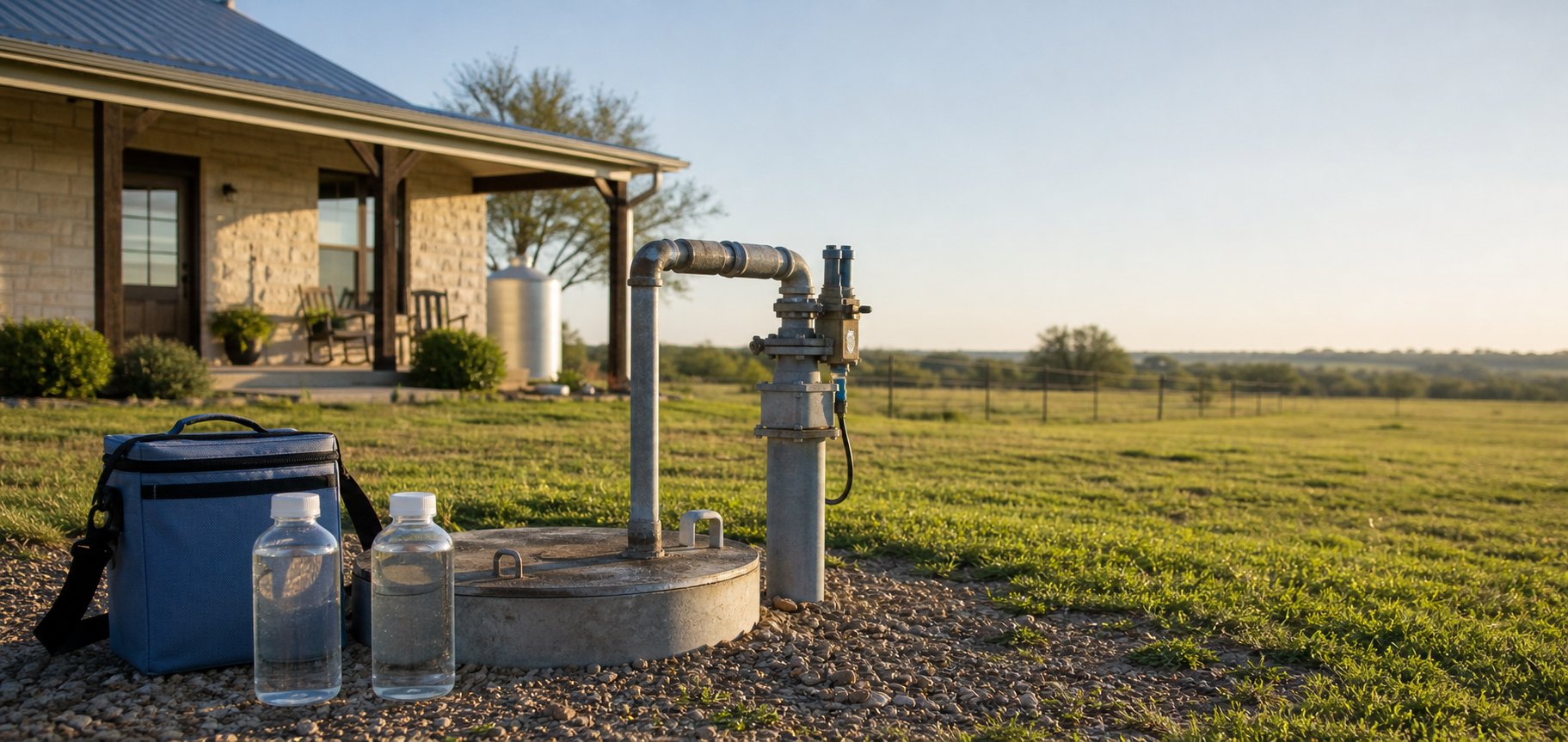
Texas Private Well Problems
Nitrates in Private Well Water in Texas
A nitrate result in Texas private well water usually points to a site-condition problem, not a cosmetic nuisance. It can signal shallow groundwater influence, septic or livestock pressure, fertilizer movement, or a wellhead that is letting the wrong water into the story.
Quick Answer
What it usually means
Nitrates often point to shallow groundwater influence or a contamination pathway near the well, such as septic, livestock, fertilized ground, or weak surface protection.
When to stop guessing
If the lab result is confirmed, treat it as a water-safety question that deserves certified lab follow-up, local health guidance where appropriate, and qualified professional input instead of casual reassurance.
What to test first
Start with certified nitrate or nitrate-plus-nitrite lab testing, then add coliform, pH, and total dissolved solids when the property history suggests a broader well-condition problem.
What to inspect now
Look at the well cap, casing, grading, nearby runoff, septic placement, livestock pressure, and whether the well sits in a low spot that collects the wrong kind of water.

Why Nitrates Matter in a Texas Private Well
Nitrate is one of the private-well issues that changes the tone of the conversation fast. Homeowners stop asking whether the water tastes fine and start asking whether the site itself is letting unwanted surface influence or waste pressure reach the well. Buyers stop asking whether the property is charming and start asking whether the well file is clean enough to trust before closing.
That is why a nitrate result should not be treated like a one-line lab annoyance. It is usually a sign that the well, the surrounding land use, or the records deserve a more serious look. Private wells are not monitored like public systems. When a Texas owner gets a nitrate result, the owner is responsible for turning that result into a real plan.
Nitrates do not explain themselves. The real job is figuring out whether the result points to shallow groundwater influence, a nearby source such as septic or livestock, a vulnerable well construction detail, or a larger records-and-property risk that should have been surfaced earlier.
What Usually Causes Nitrates in a Private Well System
Shallow groundwater influence. Wells that draw from shallower zones or sit in settings where surface water pressure reaches the well more easily can be more vulnerable to nitrate movement. That does not make every shallow well unsafe, but it does mean the physical setting matters.
Septic or wastewater pressure. A nearby septic system, poor setbacks, system failure, or old site layout can put the wrong kind of pressure on a private well. When the well story feels thin, it is smart to compare nitrate concerns with broader guides like private well inspection before closing in Texas.
Livestock, fertilizer, or intensive land use. Acreage with heavy agricultural use, corrals, feed areas, or regular fertilizer application can create a different risk profile than a simple rural homesite. The issue is not whether the property is rural. The issue is what has been happening on and around the well.
Weak wellhead protection. A poor cap, compromised casing, low grading, or standing water around the well can make the nitrate conversation worse because the well may be accepting the wrong influence from the surface. That is one reason pages like well cap and casing problems in Texas matter here.
Texas Context: Why This Shows Up in Real Estate and Rural Ownership
Texas private wells sit in every kind of setting, from small-acreage homesites to working rural tracts with septic, livestock, gardens, and older infrastructure all packed into one imperfect file. A nitrate result often exposes something the owner, buyer, or seller should have understood earlier about the site layout, nearby use patterns, or the well’s protective condition.
That is where records matter. A TurnkeyWells Free Well Check helps organize the well-record side of the story before the conversation turns into vague memory and finger-pointing. If the nitrate result is pushing the property owner toward replacement-well planning or a broader acreage decision, the Pre-Drill Intelligence Report helps add nearby-well and local planning context that one lab result cannot provide by itself.
What to Test Next
Start with a certified lab. For many Texas nitrate situations, the practical first step is nitrate or nitrate-plus-nitrite testing through a certified lab, with coliform, pH, and total dissolved solids added when the site history suggests a broader problem. If the well has seen flooding, recent repairs, repeated runoff issues, or other red flags, let the lab and qualified local professionals help define the expanded panel instead of guessing.
TurnkeyWells does not provide medical advice. For water-safety concerns, use certified lab testing, follow local health department guidance where appropriate, and work with qualified water well or water treatment professionals. The point is to confirm the scope of the issue and the likely pathway before anyone spends money on the wrong response.
Questions worth asking before the file gets messier
- Is the result confirmed by a certified lab, and was the sample collected cleanly?
- How close are septic components, livestock areas, fertilized ground, or runoff channels to the well?
- Does the well sit in a low area where stormwater tends to collect?
- Do the cap, casing, and grading look like they belong on a protected sanitary well?
- Is this happening during a sale, listing, refinance, or other deadline where documentation matters as much as the field answer?
What a Qualified Professional Should Inspect
A nitrate result deserves more than a glance at the lab sheet. A qualified professional should inspect the wellhead, casing, site grading, nearby contamination pathways, and the surrounding land-use pattern. In some cases the field story points toward a well-condition repair issue. In others it points toward ongoing site pressure that has to be understood before the owner can decide on treatment, relocation, or longer-term planning.
It also helps to compare the nitrate question with the routine testing habits on the property. If the well has not been tested consistently, the guidance in how often to test private well water in Texas belongs in the conversation. A surprising nitrate result is often the first sign that the well-testing habit was not keeping up with the real risk.
Buyer and Seller Angle Before Closing
Nitrate results create fast tension in Texas real estate because they raise both water-safety questions and disclosure questions at the same time. Buyers want to know whether the issue is isolated, ongoing, or tied to a broader site problem. Sellers need to know whether they can document the test results, follow-up work, and next-step plan clearly enough to keep the file credible.
That is why the TREC Form 61-0 Texas water disclosure guide matters here. A nitrate result is not the kind of thing that should surface for the first time through rumor, an inspector aside, or a screenshot with no explanation. Buyers should also compare the situation with buying a house with a private well red flags when the broader well file already feels thin or incomplete.
Do Not Reduce Nitrates to a Single Number
Nitrates in Texas private well water usually mean the owner needs a better understanding of the well, the site, and the records all at once. The result may point to shallow groundwater influence, nearby waste pressure, weak surface protection, or a combination that only becomes obvious when someone finally lines up the lab, the land use, and the wellhead condition.
TurnkeyWells helps Texas property owners review the issue, organize records and next steps, and connect customers with qualified local help when field work is needed. TurnkeyWells is not the drilling or repair contractor. The goal is to get the well story straight, then let licensed local professionals handle the on-site work that belongs in their hands.
Get the Nitrate Story Straight Before It Becomes a Bigger Property Problem
TurnkeyWells helps Texas property owners review a nitrate result, organize records and next steps, and connect them with qualified local help when field work is needed.
Start with a Free Well CheckNeed help sorting out a nitrate result?
Contact TurnkeyWells and we can help review the issue and connect you with licensed local help.
Tell us what the lab found, whether the Texas property has septic, livestock, fertilizer, runoff, or wellhead concerns, and what records already exist. TurnkeyWells can help review the issue and connect the visitor with a licensed water well professional in their area when field work is needed.
TurnkeyWells helps organize records, explain likely next steps, and connect customers with qualified local help. TurnkeyWells is not the drilling or repair contractor.