Texas Private Well Problems
Coliform Bacteria in Private Well Water in Texas
A coliform result in Texas private well water is a warning sign, not a paperwork nuisance. It can point to a sampling mistake, but it can also point to a real sanitary pathway into the well or plumbing system that deserves fast follow-up.
Quick Answer
What it usually means
Total coliform is often a sanitary warning light. It can mean surface water, poor sealing, recent plumbing work, or weak sampling technique deserves a closer look.
When to stop guessing
If the result is confirmed, the well flooded, the cap or casing looks compromised, or vulnerable household users rely on the water, move quickly with certified lab follow-up and local professional guidance.
What to test first
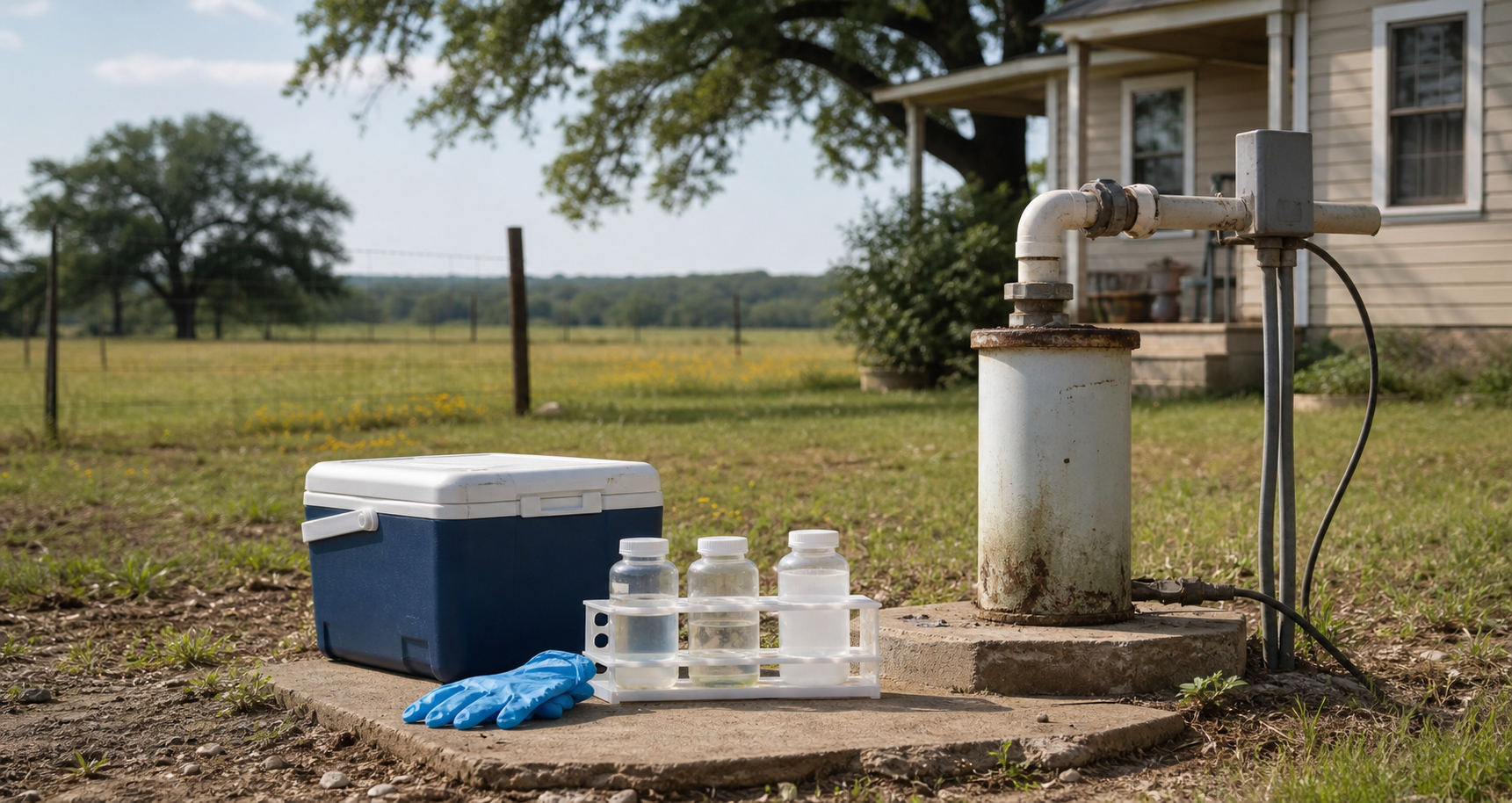
Start with a certified lab panel that includes total coliform, E. coli when appropriate, nitrates, pH, and total dissolved solids. Let the event decide whether more testing belongs on the list.
What to inspect now
Look at the well cap, casing, grading, nearby runoff, septic or livestock exposure, and any recent pump, plumbing, or treatment work that may have opened the system.
Why a Coliform Result Matters
Most private well owners do not search for total coliform until a lab result forces the issue. The word sounds technical, but the practical meaning is simple: something about the sample, the plumbing, or the well environment raised a sanitary flag. Sometimes that turns out to be a sloppy sample. Sometimes it is the first clue that runoff, a loose cap, poor sealing, or recent repair work gave contamination a route into the system.
The mistake is treating the result like a minor nuisance because the water still looks clear. Appearance is a weak referee for private well safety questions. A clear glass does not prove the well is fine, and one positive result should not be dismissed just because nobody noticed a smell or color change first.
Coliform does not answer every question by itself. It is a warning sign that the sanitary story needs follow-up. The real job is figuring out whether the problem came from the sample method, the plumbing, a recent repair, or a pathway into the well that still exists.
What Usually Causes Coliform Bacteria in a Texas Private Well System
Wellhead exposure. A loose cap, cracked seal, damaged casing, or low area around the well can let runoff and debris crowd the sanitary side of the system. That is why pages like well cap and casing problems in Texas matter so much in a bacteria conversation.
Recent flooding, heavy rain, or standing water. Texas storms can turn a marginal wellhead into an obvious risk fast. If the property saw muddy runoff, ponding around the casing, or brown water after a storm, compare the pattern with well water turning brown after heavy rain in Texas. A storm-driven color change and a coliform result often belong in the same case file.
Pump pulls, plumbing work, and treatment changes. The system does not have to fail on its own. Opening the well, breaking into the lines, swapping treatment gear, or doing repair work can create a short-term contamination event if the sanitary side was not protected well.
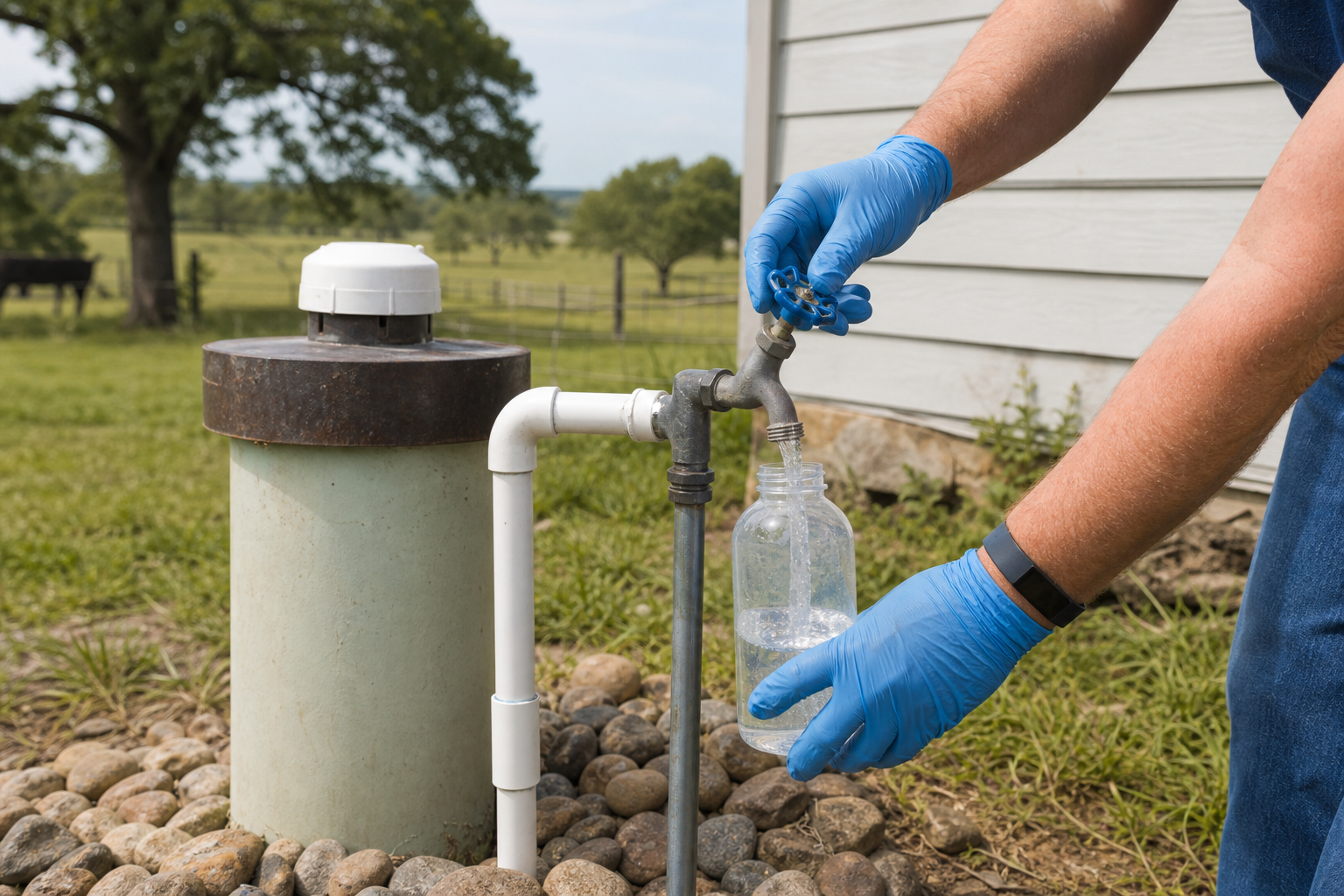
Sampling errors. A poor sample can produce a bad answer. Dirty hands, the wrong container, poor timing, or collecting from a faucet that was not prepared correctly can muddy the picture. That does not mean every result is false. It means resampling may be part of the right follow-up instead of the only follow-up.
Neglected property history. Vacant homes, inherited acreage, and weak transaction files create the same problem over and over. Nobody knows when the well was last tested, when the cap was last replaced, or whether the system was ever disinfected after a repair event. The lab report becomes the first adult in the room.
Texas Context: Why Private-Well Bacteria Questions Escalate Fast
Texas private wells live in wildly different settings, but the decision pressure often looks the same. Rural homeowners need to know whether the system is safe to keep using. Buyers need to know whether a positive result was a one-off sample issue or a warning about the well itself. Sellers need to know whether they are dealing with a repair event, a disclosure issue, or both.
That is why record organization matters almost as much as field work. A TurnkeyWells Free Well Check helps put the well-record side in order before the conversation turns into panic, blame, or vague contractor storytelling. If the property owner is also trying to understand nearby well conditions and the wider planning picture before a deeper repair or drilling decision, the Pre-Drill Intelligence Report adds local context that a single sample bottle cannot.
What to Test Next
Start with a certified lab. For many Texas private well coliform situations, the practical next panel includes total coliform, E. coli where appropriate, nitrates, pH, and total dissolved solids. If the property has known septic pressure, livestock exposure, repeated flood events, or other location-specific questions, let qualified local professionals and the lab guide what belongs on the expanded panel.
TurnkeyWells does not provide medical advice. For water-safety concerns, use certified lab testing, follow local health department guidance where appropriate, and work with qualified water well or water treatment professionals. The goal is to confirm whether this is a sample-quality issue, a one-time sanitary event, or a sign the well needs field attention before anyone treats the result like a clerical problem.
Useful questions to ask while the sample story is still fresh
- Was the sample collected correctly from a clean point with the right bottle and timing?
- Did the property have recent rain, flooding, septic trouble, livestock concentration, or standing water near the wellhead?
- Was there a pump pull, plumbing repair, treatment swap, or disinfection event shortly before the sample?
- Do the cap, casing, grading, and seal look like they belong on a sanitary well, or like an afterthought?
- Is this tied to a home sale, listing, refinance, tenant issue, or other deadline that makes documentation especially important?
What a Qualified Professional Should Inspect
A serious field review should not stop at the lab sheet. A qualified professional should inspect the well cap, casing condition, venting, grading, nearby contamination pathways, pressure and treatment equipment, and any recent repair history that could have introduced the problem. If the well was disinfected, the real finish line is clean follow-up testing after the chlorine has cleared, not a hopeful shrug.
That is one reason the guidance in how to disinfect a private well safely in Texas matters here. Shock chlorination can be part of the response after a confirmed sanitary event, but it is not magic and it does not erase a broken cap, poor drainage, or bad records. A bacteria result without a field story is still an incomplete file.
Buyer and Seller Angle Before Closing
Coliform bacteria is not a fun surprise in a transaction because it raises hard questions quickly. Was the result tied to the sample method or the well itself? Is there proof the follow-up sample cleared? Was the well disinfected for a real reason and documented properly? Did anyone inspect the cap, casing, and site drainage, or did everyone just hope a second sample would make the file look cleaner?
That is exactly why our TREC Form 61-0 Texas water disclosure guide belongs in the conversation. Buyers should not rely on reassurance alone, and sellers are better off when they can show a clean sequence of test results, repair notes, and next-step documentation. In a private-well deal, a bacteria result is as much a records-and-risk problem as it is a water-quality problem.
Do Not Treat a Coliform Result Like a Box to Check
Some Texas private well coliform results come from a bad sample. Some come from a real sanitary pathway that needs repair, disinfection, and retesting. The right next move is not to panic, but it is also not to minimize the result because the water looks fine today. The well, the sample, the site conditions, and the paperwork need to agree before the issue is truly closed.
TurnkeyWells helps Texas property owners review the issue, organize records and next steps, and connect customers with qualified local help when field work is needed. TurnkeyWells is not the drilling or repair contractor. The value is getting the well story straight, then letting licensed local professionals handle the work that belongs on site.
Get the Well Story Straight Before This Turns Into a Bigger Disclosure Problem
TurnkeyWells helps Texas property owners review a coliform result, organize records and next steps, and connect them with qualified local help when field work is needed.
Start with a Free Well CheckNeed help sorting out a coliform result?
Contact TurnkeyWells and we can help review the issue and connect you with licensed local help.
Tell us what the lab found, whether the Texas property had a recent storm, repair event, weak cap or casing conditions, or a buyer-seller deadline, and what records already exist. TurnkeyWells can help review the issue and connect the visitor with a licensed water well professional in their area when field work is needed.
TurnkeyWells helps organize records, explain likely next steps, and connect customers with qualified local help. TurnkeyWells is not the drilling or repair contractor.