Texas Private Well Maintenance
How to Disinfect a Private Well Safely in Texas
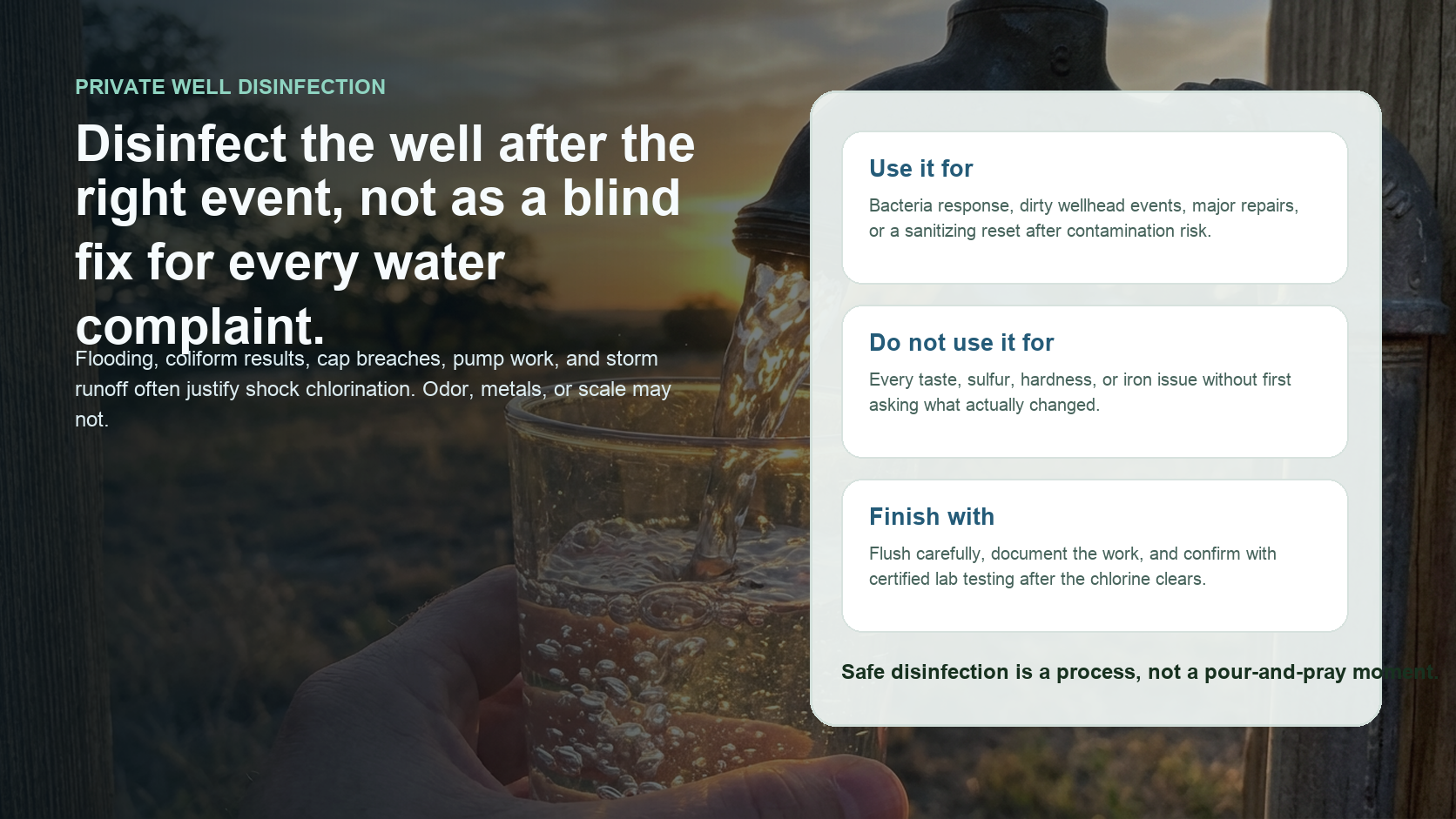
Shock chlorination can be a smart next step after bacteria findings, flooding, cap breaches, or major well work. It is not the right answer for every taste, odor, or mineral complaint, and it should end with clean documentation and follow-up lab testing.
Quick Answer
Usually appropriate
After a coliform result, flooding near the wellhead, dirty cap or casing conditions, or pump and plumbing work that opened the system.
Usually not enough
For sulfur odor, hardness, iron staining, manganese stains, or recurring taste issues when the cause has not been diagnosed first.
Test before and after
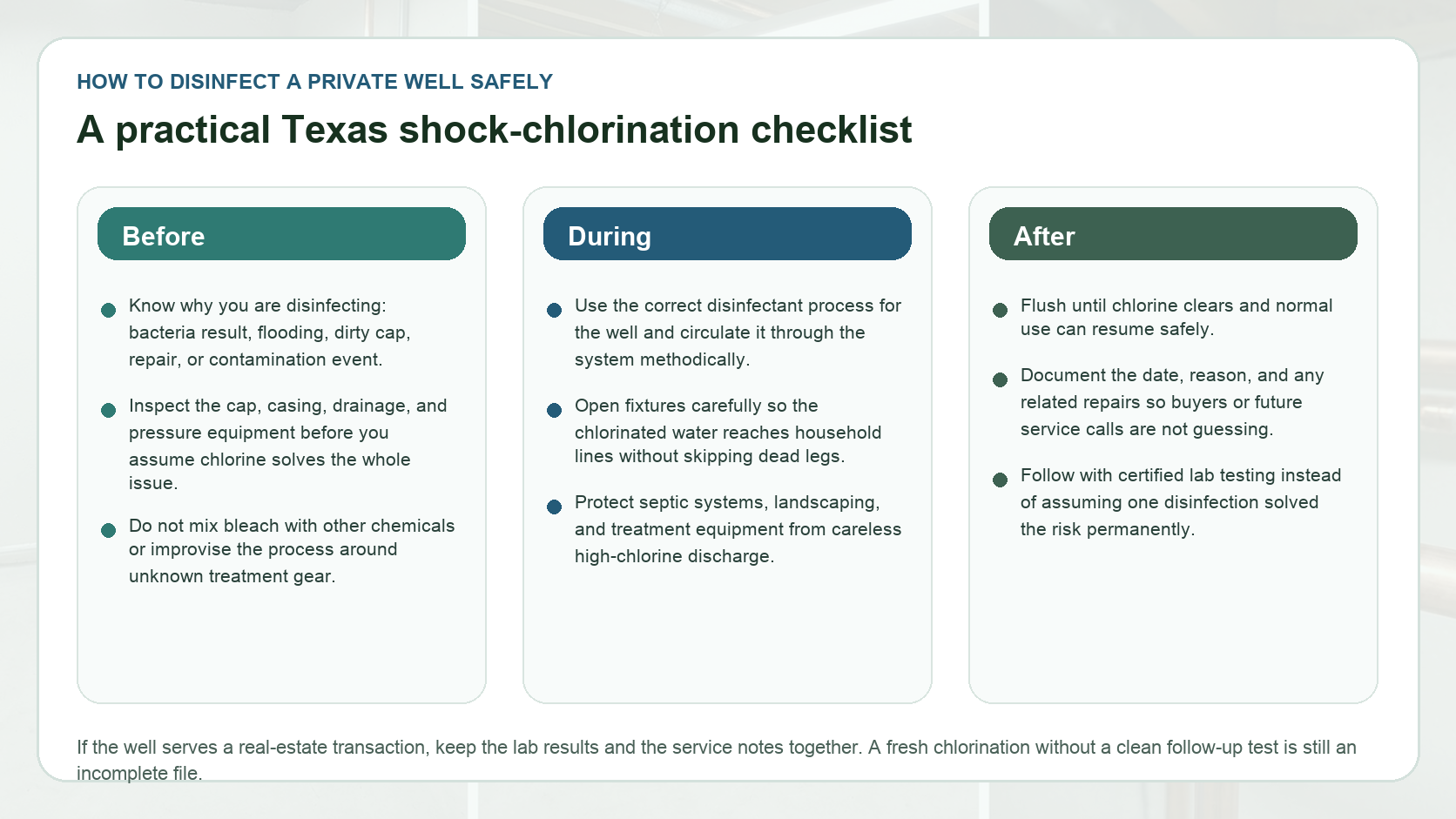
Use certified lab testing and keep the records. One chlorination without a clean follow-up test is still an incomplete file.
Texas risk angle
Heavy rain, runoff, livestock pressure, older wellheads, and rural repair history often decide whether disinfection is routine cleanup or part of a bigger well problem.
When Shock Chlorination Actually Makes Sense
Disinfecting a private well is most useful when there has been a sanitary event, not just a vague water complaint. A positive coliform result, floodwater around the wellhead, a loose or damaged cap, a pump pull, plumbing work that opened the system, or a period of neglect can all justify shock chlorination. In those cases the goal is to sanitize the well and household lines while you also deal with the condition that introduced the risk.
That last part matters. Chlorine is not a magic reset button. If runoff still drains toward the casing, if the cap is still compromised, or if the water issue is really iron, manganese, hardness, or sulfur, a one-time disinfection may do very little beyond giving the owner a strong bleach smell and a false sense of closure.
What to Inspect Before You Reach for Chlorine
Pre-disinfection checkpoints
- Why are you disinfecting? Use a clear reason such as bacteria findings, flooding, repair work, or visible sanitary problems.
- Check the cap, casing, and grading around the wellhead for runoff, insects, gaps, or obvious contamination routes.
- Review pressure tank, filter, treatment, and plumbing equipment that may need to be bypassed, protected, or serviced separately.
- Do not mix bleach with other chemicals and do not improvise around unfamiliar treatment gear.
- Plan the flush route so chlorinated water does not damage septic systems, landscaping, or sensitive equipment.
If you are still not sure whether the issue is sanitary or mechanical, compare the symptom with related TurnkeyWells guides on how often to test private well water in Texas, annual private well inspection checklists, and well water turning brown after heavy rain. Those pages help separate disinfection questions from broader performance or runoff problems.
What the Safe Process Looks Like
The safe process is methodical. First sanitize for a reason you can name. Then use the correct disinfectant procedure for the well and household plumbing, circulate that water through the system carefully, and allow adequate contact time. After that, flush until the chlorine clears and normal use can resume. The process should be calm and deliberate, not a rushed attempt to drown an unknown problem in bleach.
Texas owners should also think about timing. If the well was affected by flooding, storm runoff, or surface intrusion, disinfection should happen only after the physical pathway is corrected. Otherwise the same contamination route may still be open the next time heavy rain hits.
What a Professional Usually Checks
A qualified water well professional does more than dump chlorine into the system. They typically assess the visible wellhead, cap, casing integrity, drainage, pressure behavior, any recent pump or electrical work, and whether the home has treatment equipment that changes how the system should be sanitized. They are also more likely to notice when the disinfecting event points to a deeper repair issue rather than a one-time cleanup task.
That is one reason TurnkeyWells frames disinfection as part of a decision chain. The question is rarely just whether chlorine can be added. The better question is whether the property needs sanitary cleanup, a field repair, better records, or a bigger conversation about replacement risk and nearby well conditions. The Pre-Drill Intelligence Report becomes relevant when an older system may be drifting toward a much more expensive next step.
Texas Water Safety and Follow-Up Testing
Do not treat odor, taste, or clear-looking water as proof that the well is fine after disinfection. The right finish line is certified follow-up testing after the chlorine has cleared. For many owners that means checking total coliform bacteria and any issue-specific panel that fits the event, especially if the trigger involved floodwater, septic concern, livestock pressure, or a prior contamination result.
TurnkeyWells does not provide medical advice. If the water may be unsafe, the right next step is certified lab testing, local health department guidance where appropriate, and help from qualified water well or water treatment professionals.
Buyer and Seller Due Diligence
Disinfection matters in real-estate files because it can either build confidence or create more questions. A seller who shocks the well right before listing but cannot explain why, what was repaired, or whether the follow-up test came back clean has not really solved the buyer’s concern. A buyer who sees a recent disinfection note with no lab result should assume the file is still incomplete.
That is where the paperwork should line up with the physical condition of the system and the transaction disclosures. The TREC Form 61-0 guide covers the disclosure side, but the transaction also needs believable supporting records. Date of chlorination, reason for it, related repair invoices, and follow-up lab results should all stay together.
Where TurnkeyWells Fits
TurnkeyWells helps property owners review the issue, organize records, understand likely next steps, and connect customers with qualified local water well professionals when field work is needed. A Free Well Check is a practical first step when you need to understand the public record side of the property before deciding whether the issue is simple maintenance or part of a larger well risk. TurnkeyWells is not the drilling or repair contractor.
Sanitize the Well for the Right Reason and Keep the Records Clean
TurnkeyWells can help review the disinfection question, organize the records, and connect Texas property owners with licensed local water well professionals when field work is needed. The goal is not just to chlorinate the system. The goal is to understand what happened and what should happen next.
Start with a Free Well CheckNeed help sorting out a disinfection or testing question?
Contact TurnkeyWells and we can help review the issue and connect you with licensed local help.
Tell us what happened at the Texas property, whether the trigger was bacteria, flooding, repair work, runoff, or a buyer-seller concern, and what records or test results you already have. TurnkeyWells can help review the issue, inspection question, or maintenance concern and connect the visitor with a licensed water well professional in their area when field work is needed.
TurnkeyWells helps organize records, next steps, and qualified local referrals. TurnkeyWells is not the drilling or repair contractor.