Texas New Well Maintenance
Problems After Drilling a New Water Well in Texas
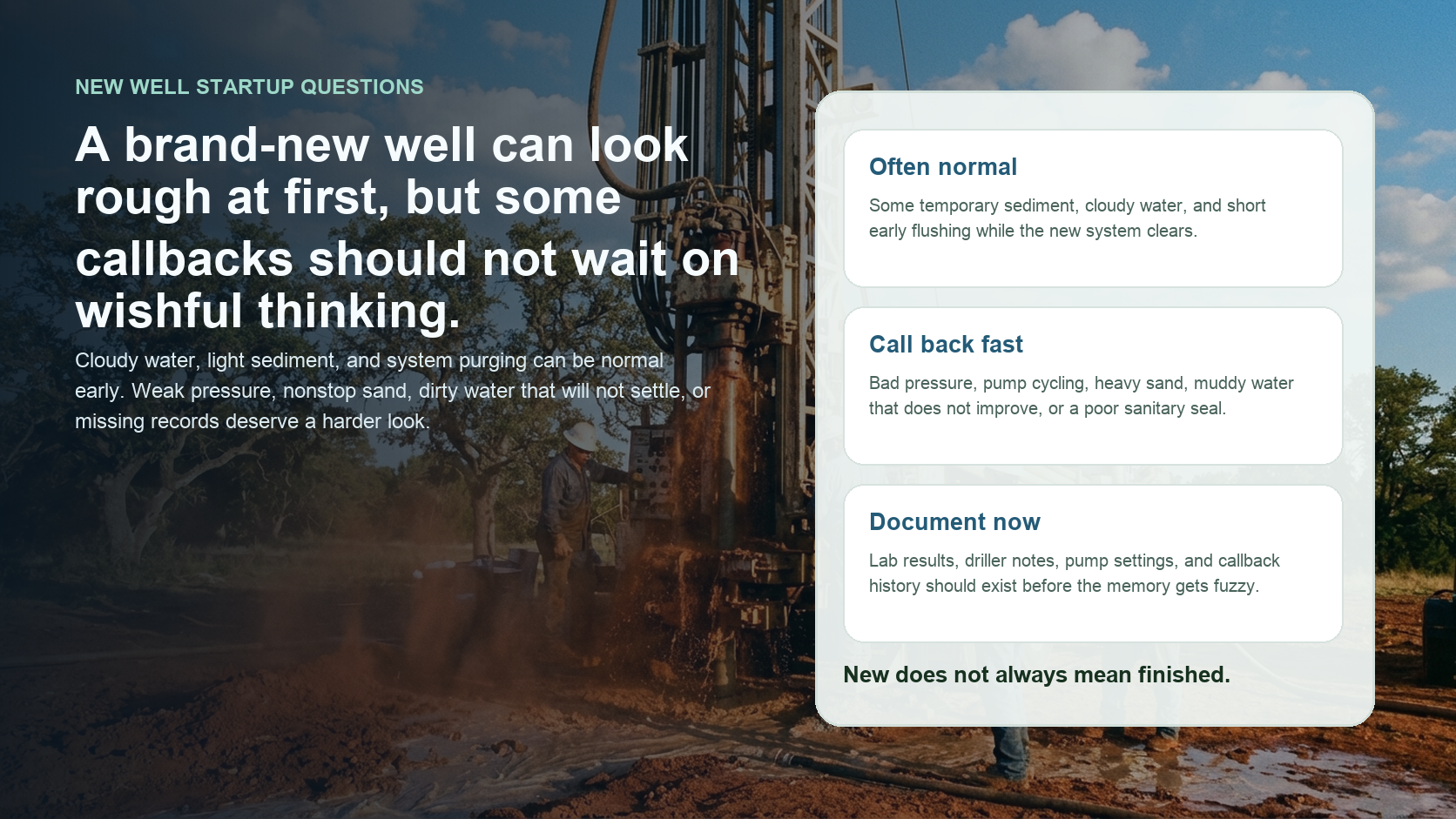
A new private well should not leave the owner guessing for weeks. A little cloudy water, air in the lines, or fine sediment can happen while the system is first flushed, but weak pressure, water that stays dirty, missing records, or a sloppy wellhead need a callback instead of another round of waiting.
Quick Answer
Often normal early
Short-term cloudiness, small amounts of fine sediment, and air clearing from new lines during the first flushing period.
Usually a callback issue
Heavy sand, recurring muddy water, pressure that will not hold, leaks, or a cap and casing area that already looks unfinished.
Test if there is a safety question
Do not assume new water is automatically safe. Use certified lab testing when taste, odor, color, or contamination concerns show up.
Records matter fast
Driller paperwork, pump model, pressure settings, yield notes, and callback dates should be saved while everyone still remembers the job.
Why a New Well Can Still Have Problems
New does not mean finished in the way many property owners expect. After the rig leaves, the well still has to run under normal household use. Fine cuttings can work out of the system. Air can move through the plumbing. The pressure switch, tank, pump controls, and any treatment equipment may act differently once showers, irrigation, laundry, and outdoor spigots are all part of the load.
That does not excuse every complaint. The owner needs to know which symptoms fit the expected startup period and which ones belong back with the driller, pump installer, or water treatment professional. In Texas real estate, that distinction matters because a rural property can move from drilling to move-in, listing, or closing before anyone has a clean paper trail.
What Can Be Normal Right After Drilling
Some cloudy water, light grit, and air sputtering can be part of the first flush after drilling. A new pressure system may also need adjustment after the owner starts using more than one fixture at a time. The first day is not always the best picture of long-term water clarity or pressure, especially if the well was only test-run briefly during the handoff.
The key is whether the problem is improving. Water that stays muddy, sand that keeps showing up, pressure that drops hard, a pump that short-cycles, or a wellhead that looks exposed to runoff should not be filed away as normal just because the well is new.
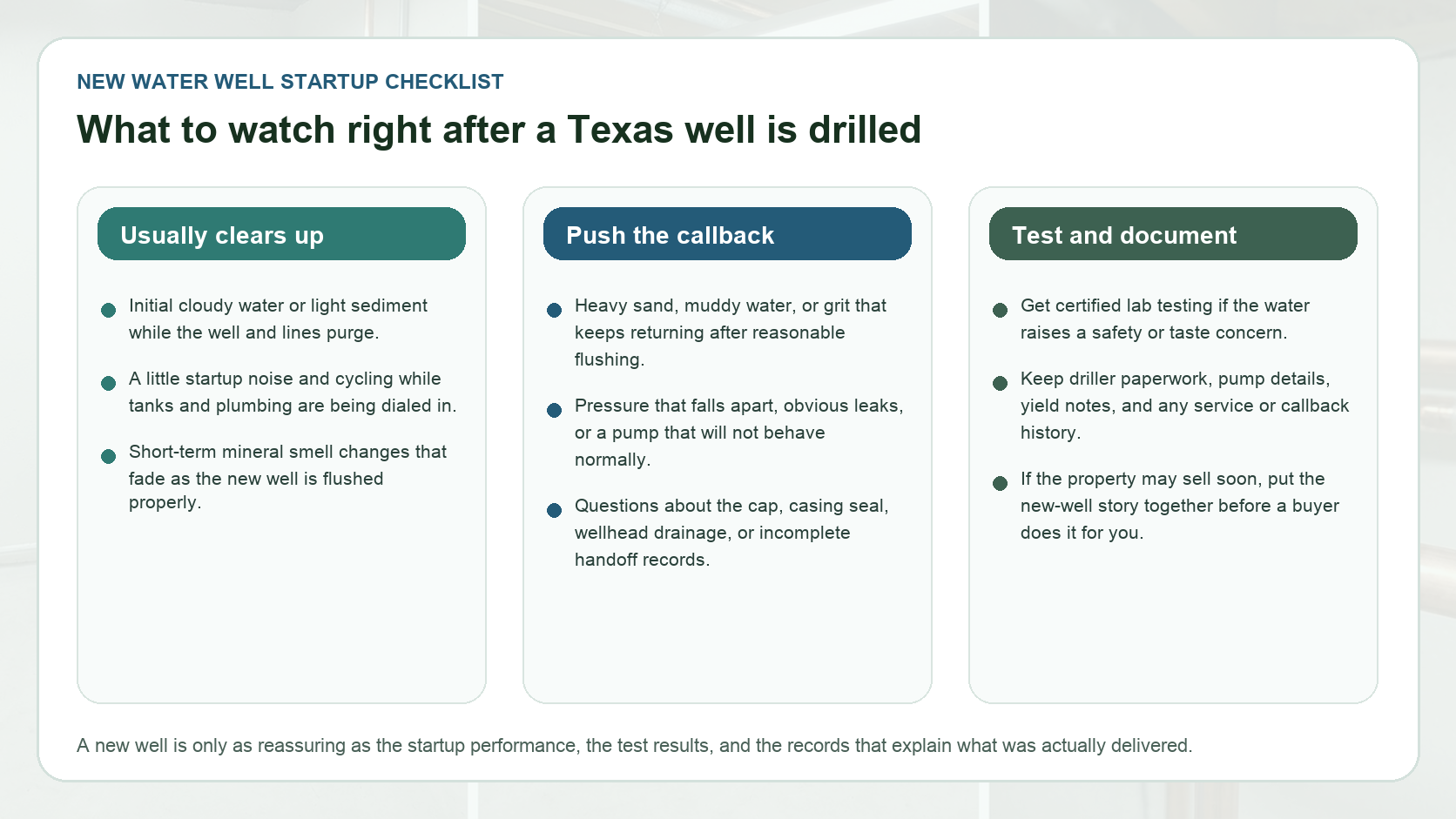
New-Well Startup Checklist
What to write down before the details blur
- Write down what the driller or pump installer said to expect during flushing, including any time frame they gave you.
- Note whether sand, mud, cloudiness, or grit is fading, staying the same, or coming back after the water has been clear.
- Run more than one fixture and record what happens: weak flow, pressure drop, short cycling, air spurts, or the pump restarting too often.
- Walk the wellhead. Check the cap, casing, grading, surface drainage, and whether the area looks sealed and finished.
- Put the driller report, pump details, yield information, startup instructions, invoices, photos, and callback notes in one place.
If pressure is already part of the complaint, compare what you are seeing with TurnkeyWells guides on low water pressure from a private well and air sputtering from faucets on well water. The pattern matters. A short purge of air is different from a pressure system that cannot keep up with ordinary use.
Problems That Should Send You Back to the Driller or Installer
The clearest callback signals are the ones that are not moving in the right direction. Heavy sand, muddy water that returns after clearing, unstable pressure, leaks around the tank or plumbing, and a pump that starts and stops too often all deserve a direct service question. So does a new wellhead with poor grading, cap concerns, standing water nearby, or unfinished surface work.
Thin paperwork is another warning sign. A new well should not be handed over with no clear driller record, no pump information, no yield notes, and no explanation of what was tested. If the property may be sold soon, the missing documentation can become just as much of a problem as the water complaint.
Texas Water Quality and Testing Questions
Do not assume the word new means the water automatically gets a free pass. If the water raises a safety question, or if the property has taste, odor, cloudiness, nearby runoff, septic, or livestock concerns, use certified lab testing. For water safety issues, follow qualified lab guidance, local health department guidance where appropriate, and help from qualified water well or water treatment professionals. TurnkeyWells does not provide medical advice.
Testing also matters because new-well complaints are not always mechanical. A well can start with a startup-flush issue and still need a separate conversation about bacteria, nitrates, sediment, or mineral content. Related pages on how often to test private well water in Texas and well cap and casing problems help frame whether the concern sounds temporary, sanitary, or structural.
What a Professional Usually Checks on a New-Well Callback
A qualified water well professional does more than say give it time. They usually want to know how the water has behaved since startup, whether the sediment or cloudiness is fading, how the pressure system performs under normal use, whether the wellhead and seal look finished correctly, and what the driller record actually says. They are also more likely to spot when the issue belongs to the pump or pressure equipment instead of the hole itself.
TurnkeyWells is not the drilling or repair contractor. The value here is helping owners, buyers, and sellers organize the record side, understand what questions matter most, and connect with qualified local water well professionals when field work is needed.
Buyers, Sellers, and New-Well Documentation
New-well problems are not just owner headaches. They also show up in transactions. Buyers want to know whether the new well is performing as represented, whether the startup issues were resolved cleanly, and whether there is a complete file that explains the driller work, yield, pump setup, and any follow-up visits. Sellers are better off when they can show the paperwork instead of summarizing it from memory.
If the property is in a transaction, the physical performance of the new well should line up with the disclosure conversation and the records around it. The TREC Form 61-0 Texas water disclosure guide matters here, and so does broader local context. If there are questions about nearby well depth, performance expectations, or whether the current system really solved the property problem, the Pre-Drill Intelligence Report can add useful local perspective.
Where TurnkeyWells Fits
TurnkeyWells can help review the issue, organize the records, and connect customers with qualified local water well professionals when field work is needed. That can include sorting out whether the complaint sounds like early startup behavior, poor documentation, an inspection concern, or a real callback issue that should not wait. TurnkeyWells helps organize records and next steps. TurnkeyWells is not the drilling or repair contractor.
Do Not Let a New Well Stay a Vague Story
TurnkeyWells can help review the startup problem, organize the records, and connect Texas property owners with licensed local water well professionals when field work is needed. The goal is to know whether this is normal settling, a true callback issue, or a bigger well-planning question.
Start with a Free Well CheckNeed help sorting out a new-well startup problem?
Contact TurnkeyWells and we can help review the issue and connect you with licensed local help.
Tell us what the Texas property is seeing, whether the concern is cloudy water, sediment, pressure trouble, a wellhead question, thin startup records, or a buyer-seller due-diligence issue. TurnkeyWells can help review the issue, inspection question, or maintenance concern and connect the visitor with a licensed water well professional in their area when field work is needed.
TurnkeyWells helps organize records, next steps, and qualified local referrals. TurnkeyWells is not the drilling or repair contractor.