Texas Buyer and Seller Due Diligence
Private Well Water Test Before Closing in Texas
What buyers and sellers should test, document, and clarify before a lab report gets treated like the whole well file
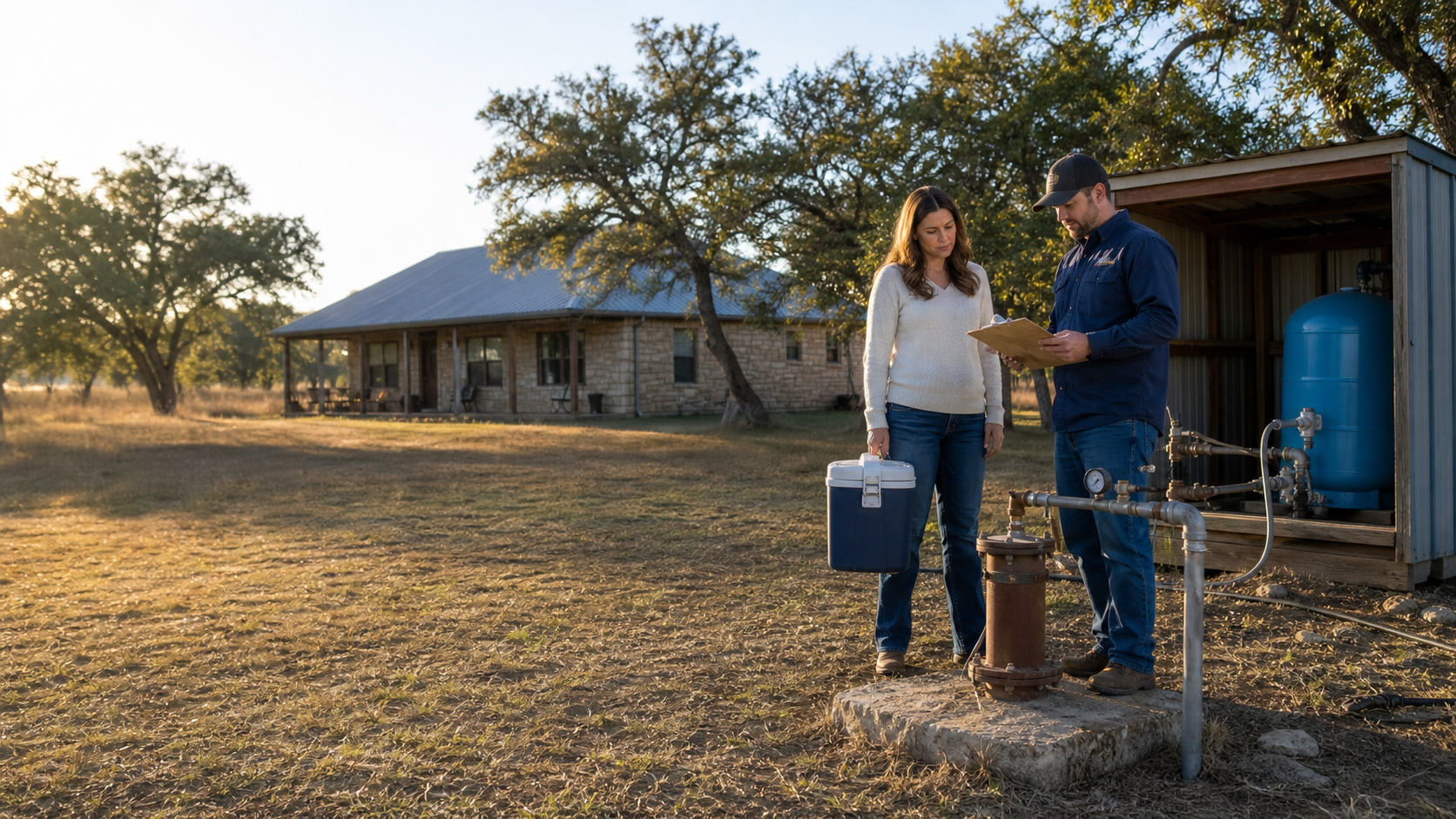
A clean-looking glass of water does not close a rural Texas deal. Buyers need to know what was tested, when it was tested, how the sample was handled, and whether the result lines up with the rest of the private-well story before closing day turns into repair day.
Quick Answer
What buyers should know first
A pre-closing water test helps identify obvious quality problems, but it does not replace an inspection of the well system, records, or pumping setup.
What usually belongs in the panel
Total coliform bacteria, nitrates, pH, total dissolved solids, and issue-specific items like iron, manganese, or sulfur when the property history points that way.
What raises risk fast
No recent sample, vague chain of custody, a seller with no maintenance records, visible system problems, or a lab panel that was too narrow for the property history.
Texas paperwork angle
The result should make sense alongside TREC Form 61-0, any inspection notes, prior repairs, and the practical condition of the well on the ground.
Water-test checklist in plain text
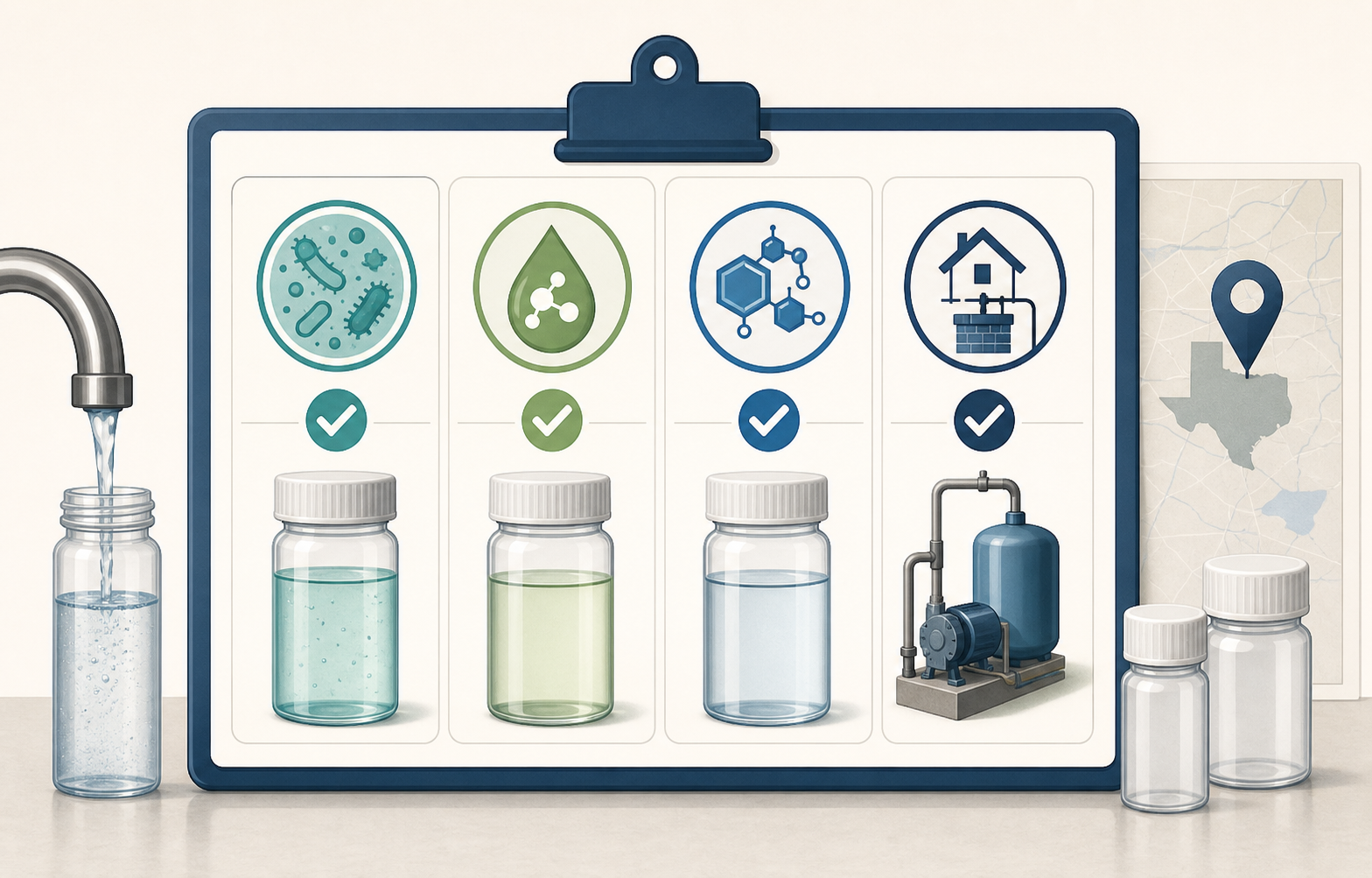
This text version mirrors the checklist graphic so buyers and sellers can review the essentials without relying on the image alone.
Ask what was tested
Confirm the exact lab panel, sample date, who collected the sample, and whether the test fits the property history instead of just checking a generic box.
Compare the result to the system
A clean report means less if the wellhead, pressure equipment, treatment components, or site conditions suggest deferred maintenance or contamination pathways.
Pull the rest of the file
Match the water-test result against service invoices, prior complaints, seller records, and any known odor, staining, pressure, or sediment problems.
Decide what still needs follow-up
If the panel is narrow, the chain of custody is unclear, or the system condition looks questionable, line up more testing or field review before the deal closes.
Why the Water Test Before Closing Is Worth Doing
Private-well buyers often hear some version of the same line: the water tastes fine, the family has used it for years, and the lab sample came back okay once. That is not useless information, but it is not the same thing as a reliable pre-closing file. A well-water test can surface bacteria, nitrate, or chemistry problems that would be expensive, disruptive, or safety-sensitive after closing. It also helps because it forces the parties to stop speaking in generalities and point to a real result with a real date.
For buyers, the lab report is usually the fastest way to learn whether the water-quality story has been documented recently or mostly repeated from memory. For sellers, updated testing can reduce guesswork and keep small concerns from turning into bigger closing-week arguments. The trap is assuming the lab report answers every question by itself. It does not. It is one important piece of a larger due-diligence review.
What a Smart Pre-Closing Panel Usually Includes
Core pre-closing testing questions
- Ask whether the sample included total coliform bacteria, nitrates, pH, and total dissolved solids, not just one or two basic items.
- Add issue-specific items such as iron, manganese, sulfur, hardness, or other chemistry when the property has stains, odor, treatment equipment, or prior complaints.
- Confirm that the sample timing reflects current conditions rather than a stale report from a different season or a different owner.
- Use a certified lab and keep the chain of custody clear enough that everyone knows what water source was actually tested.
- Write down what the report answers, what it does not answer, and what still depends on field inspection or follow-up testing.
There is no single magic panel for every Texas property. A horse property, a house with strong sulfur odor, a tract with visible treatment equipment, and a place with no records may all justify a slightly different testing conversation. The useful question is not whether a test happened. It is whether the right test happened for this property.
What the Lab Report Does Not Tell You
A water test is not a substitute for system inspection. The lab result does not tell you whether the well cap is secure, whether surface runoff can reach the wellhead, whether the pressure tank is failing, or whether the treatment system has been masking a deeper issue. It also does not tell you whether the seller skipped maintenance for years and happened to test the water only because the property hit the market.
That is why the testing page should be read together with the broader guides on private well inspection before closing and seller record gaps. If the test looks fine but the equipment area is neglected and the records are thin, the buyer still has a due-diligence problem. The reverse is also true: a narrow testing issue may be manageable if the rest of the well file is organized and the follow-up path is clear.
Texas-Specific Risk Questions Buyers and Sellers Should Not Skip
Texas rural properties vary widely in geology, land use, and neighboring well conditions. That means a pre-closing sample should be interpreted in context, not just filed away. A home on acreage near livestock, septic infrastructure, flood-prone ground, or older rural improvements may deserve more scrutiny than a buyer first expects. A tract with older plumbing, known sediment issues, or long vacancy can also produce a test result that needs explanation before anyone assumes the issue is settled.
Water safety conversations should stay disciplined. TurnkeyWells does not provide medical advice. For water-safety issues, use certified lab testing, local health department guidance where appropriate, and qualified water well or water treatment professionals. The job here is not to diagnose health effects from a webpage. It is to make sure buyers and sellers do not close on wishful thinking.
What a Professional Usually Checks Alongside the Sample
A qualified water well professional or inspector may look well beyond the lab paperwork. They may review the wellhead condition, visible casing or cap concerns, pressure performance, treatment equipment, filter condition, obvious plumbing workarounds, and the site factors that could affect sample interpretation. If the water test suggests a problem, the next useful step is often understanding whether the issue likely starts at the source, in the plumbing, or in a neglected treatment setup.
Buyers who are also trying to judge long-term replacement risk can pair the testing discussion with the Pre-Drill Intelligence Report. That report does not replace a water test, but it helps explain nearby well conditions and whether the tract has a plausible backup plan if the current well story gets worse after closing.
Buyer and Seller Strategy Before the Deal Gets Expensive
For buyers, the strongest move is to treat the lab report as evidence, not comfort. Ask for the raw result, the sampling details, and the related maintenance file. If something does not match the seller’s story, slow it down. For sellers, the best move is not to hide behind a single clean sample. Provide the report, explain what is known, disclose what is unknown, and make it easier for the buyer to see the full picture. That is far better than forcing the other side to discover the gaps one phone call at a time.
Some deals only need updated testing and better documentation. Others need a price adjustment, a repair conversation, or a follow-up inspection before anyone should feel comfortable signing. The point is not to make every well look risky. The point is to stop treating one lab result as if it is the same thing as real due diligence.
Where TurnkeyWells Fits
TurnkeyWells helps property owners organize the well-record side of the file, compare the testing story to the inspection and disclosure story, and clarify what still needs follow-up before closing. A Free Well Check is a practical starting point when the buyer or seller needs a cleaner read on the records, while the broader TREC Form 61-0 guide helps keep the disclosure side aligned with the actual well questions in the deal.
TurnkeyWells helps with records, next-step planning, and qualified local referrals when field work is needed. TurnkeyWells is not the drilling or repair contractor.
Common Pre-Closing Water-Test Questions
Is one clean water test enough to clear the whole well?
No. A clean report can be encouraging, but it does not replace well-system inspection, record review, or common-sense follow-up on visible red flags.
What if the seller only has an old water test?
That is still useful background, but it may not answer the current risk. Buyers usually need a recent sample that matches the current property and the current transaction.
Does TurnkeyWells perform the field testing?
No. TurnkeyWells helps review the issue, organize the records, and connect buyers or sellers with qualified local water well professionals when field work is needed.
Review the Water-Test Story Before It Turns Into a Closing Surprise
If a Texas property deal depends on a private well, TurnkeyWells can help review the testing question, organize the records, and show what still needs to happen before the deadline starts making decisions for you.
Start with a Free Well CheckNeed help reviewing a pre-closing water-test file?
Ask TurnkeyWells to review the issue and connect you with licensed local help when field work is needed.
Tell us what the Texas property setup looks like, whether the concern is the lab panel, the timing of the sample, missing records, disclosure questions, or the broader inspection timeline. TurnkeyWells can help review the issue, inspection question, or maintenance concern and connect the visitor with a licensed water well professional in their area when field work is needed.
TurnkeyWells helps organize records, next steps, and qualified local referrals. TurnkeyWells is not the drilling or repair contractor.