Texas Buyer and Seller Due Diligence
Seller Has No Private Well Records in Texas
What buyers, sellers, and agents should verify before closing
A missing well file does not automatically kill a Texas deal, but it does change the risk. The real job is to separate harmless missing paperwork from missing records that hide a bigger water, disclosure, or inspection problem.

Quick Answer
What it usually means
The seller may know the system works but cannot prove recent testing, repairs, district paperwork, or older well history.
What buyers should do first
Pull public well records, inspect the live system, ask for invoices or lab reports, and write down what is still unknown.
What raises risk fast
Weak pressure, odor, storm-related water changes, a second unexplained well, or no current test results before closing.
Texas paperwork angle
The physical condition of the property and the seller’s answers on official TREC Form 61-0 should tell the same story.
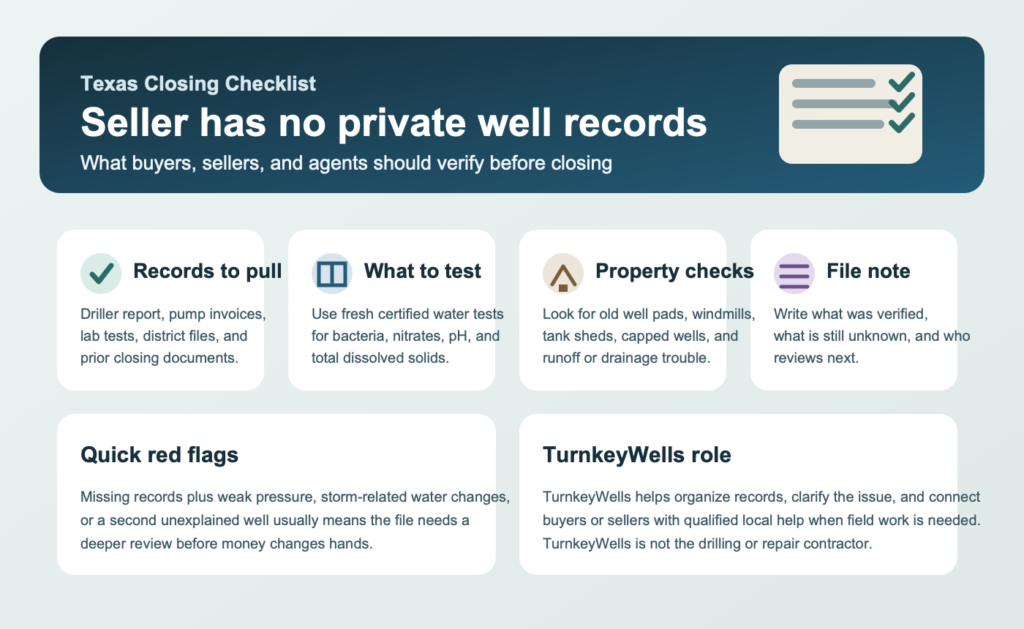
Closing checklist in plain text
This HTML summary preserves the same practical guidance shown in the checklist graphic so mobile readers do not have to rely on text embedded in the image.
Records to pull
Gather the driller report, pump invoices, lab tests, district files, and prior closing documents the seller or agent can still locate.
What to test
Use fresh certified water tests for bacteria, nitrates, pH, and total dissolved solids when the seller has no current testing file.
Property checks
Look for old well pads, windmills, tank sheds, capped wells, runoff paths, or drainage trouble that may point to missing history.
File note
Write down what was verified, what is still unknown, and who needs to review the next step before money changes hands.
Quick red flags: Missing records plus weak pressure, storm-related water changes, or a second unexplained well usually means the file needs deeper review before closing.
Why Missing Private Well Records Raise Closing Risk
Plenty of Texas sellers rely on a private well for years without keeping an organized file. That is common on inherited acreage, older rural homes, small ranch properties, and places where the water has worked well enough that nobody felt pressure to save every invoice. The problem shows up when the property goes under contract. A buyer asks for test results, repair history, district registration, or proof about older wells on the tract, and the answer is a shrug.
Missing records do not always mean the well is bad. They do mean the buyer is being asked to trust memory instead of proof. That changes the conversation from simple disclosure to due diligence. The right goal is to figure out whether the well story is mostly undocumented, partly undocumented, or missing the records that would explain the water system clearly.
What Buyers, Sellers, and Agents Should Gather First
First-pass missing-records checklist
- Ask for any driller report, pump invoice, pressure tank invoice, water test, or filter-service receipt the seller can still find.
- Run the address through a Free Well Check to identify nearby and registered well records worth reviewing.
- Inspect the property for well houses, pressure tanks, capped wells, old windmill pads, irrigation equipment, and visible drainage concerns.
- Ask whether the property has any shared-well arrangement, inactive well, plugged well, or off-property water source that should be disclosed.
- Order fresh certified lab testing if the seller has no current water-quality record or if the water has shown any odor, taste, staining, or storm-related change.
- Write a file note that separates what is confirmed, what is likely, and what still needs professional review before closing.
The point is not to turn a missing invoice into a crisis. The point is to stop letting missing records stay vague. Once the file is organized, the buyer can decide whether the issue is routine, negotiable, or a reason to slow down.
What a Professional Should Inspect When the Paper Trail Is Thin
A field review is more important when the documents are thin. Someone should run the water at several fixtures, watch for low pressure or short cycling, inspect the visible wellhead, check for cap or casing problems, and look at the pressure tank and related equipment. A seller may honestly say the well works fine, but the live system can still show obvious warning signs in ten minutes.
If the property already shows a symptom, compare it with TurnkeyWells guides on private well inspection before closing, low water pressure from a private well, and plugged or abandoned wells on Texas property. Those pages help distinguish a missing-records problem from a live mechanical or site-history problem.
Texas-Specific Context: Records, Districts, and Disclosure
Texas deals add a paperwork layer that buyers should not ignore. A seller who has no file may also have no district registration number, no recent lab result, and no clean explanation for whether another old well exists on the property. That does not mean the seller is hiding something on purpose. It does mean the team should check the public side of the file instead of assuming the blank spaces are harmless.
This is where the TurnkeyWells guide to TREC Form 61-0 and the official TREC Form 61-0 PDF both help. The seller’s answers and the actual condition of the property should line up. If the land has an old capped well, a questionable equipment shed, or evidence that water comes from somewhere unexpected, the missing-records issue becomes a closing issue fast.
What to Inspect or Document Before the Option Period Expires
Buyers should not wait until the last day to ask whether records exist. If the seller has no organized file, the inspection period should cover current testing, visible equipment condition, any known repair history, and whether there are nearby records that change the picture. A clean explanation can still save the deal. A vague explanation usually gets more expensive the longer it sits.
The Pre-Drill Intelligence Report becomes especially useful when the missing records make buyers wonder whether the well may be near replacement, whether neighboring wells show a different depth or aquifer story, or whether the tract has bigger groundwater-planning risk than the seller realized.
Buyer and Seller Strategy
For buyers, missing records should lead to better questions, not automatic panic. Ask what the seller actually knows, what has been tested recently, and what evidence supports that story. For sellers, the best move is not to bluff. Gather what you can, be clear about what you cannot prove, and let the inspection file get stronger instead of more defensive.
Not every missing-records deal ends with a repair. Sometimes the right answer is updated testing and better documentation. Sometimes it is a credit because the system risk is still uncertain. Sometimes it is a sign that the property needs more inspection before either side acts confident. Clean documentation lowers friction. Guessing usually increases it.
Where TurnkeyWells Fits
TurnkeyWells helps organize the public well-record side of the file, frame what still needs to be checked, and connect property owners with qualified local water well professionals when field work is needed. The role here is records review, due-diligence support, and next-step clarity rather than drilling or repair work.
Common Closing Questions
Can a Texas sale still close if the seller has no private well records?
Yes, sometimes. The real question is whether the parties can replace missing history with current evidence, public records, and clear disclosure before the option and closing deadlines run out.
When should buyers order new water testing?
Fresh testing is smart when the seller has no recent lab file, the water has shown odor or staining, or the well has changed after storms, repairs, or vacancy.
Does TurnkeyWells become the contractor on the well issue?
No. TurnkeyWells helps review the records gap, organize the due-diligence file, and point buyers or sellers toward the right local next step when field work is needed.
Build the Well File Before Closing Pressure Builds
TurnkeyWells can help review the missing-records issue, organize the next steps, and show where the public record trail stops before a buyer or seller decides what to do next.
Start with a Free Well CheckNeed help reviewing a thin well file?
Ask TurnkeyWells to review the records gap.
Tell us where the Texas property is, what records are missing, and whether the concern is water quality, pressure, disclosure, an older well on the tract, or a closing deadline. TurnkeyWells can review the file and point you toward the right next step when local field work may still be needed.
This intake is for records review and referral help. TurnkeyWells is not the drilling or repair contractor on this page.
Phone is optional here. If you prefer, give email plus the property location and the main concern so the review can start accurately.