Texas Seller Due Diligence
What Sellers Should Fix Before Listing a Property With a Well in Texas
Private well deals get harder when sellers leave obvious well problems for the buyer to discover. The best listing strategy is to fix the issues buyers will notice, document what was done, and be honest about anything bigger than a clean pre-listing repair.
Quick Answer
Fix first
Visible cap, casing, drainage, pressure, leak, and equipment issues that a buyer or inspector can confirm in minutes.
Test and document
Current certified lab results, repair invoices, and a clean explanation of what the system has done recently.
Do not guess
If the symptom points to a larger well-performance problem, do not hide it behind a cosmetic repair or a vague story.
Texas listing angle
The physical condition of the system should line up with the seller’s answers on TREC Form 61-0.
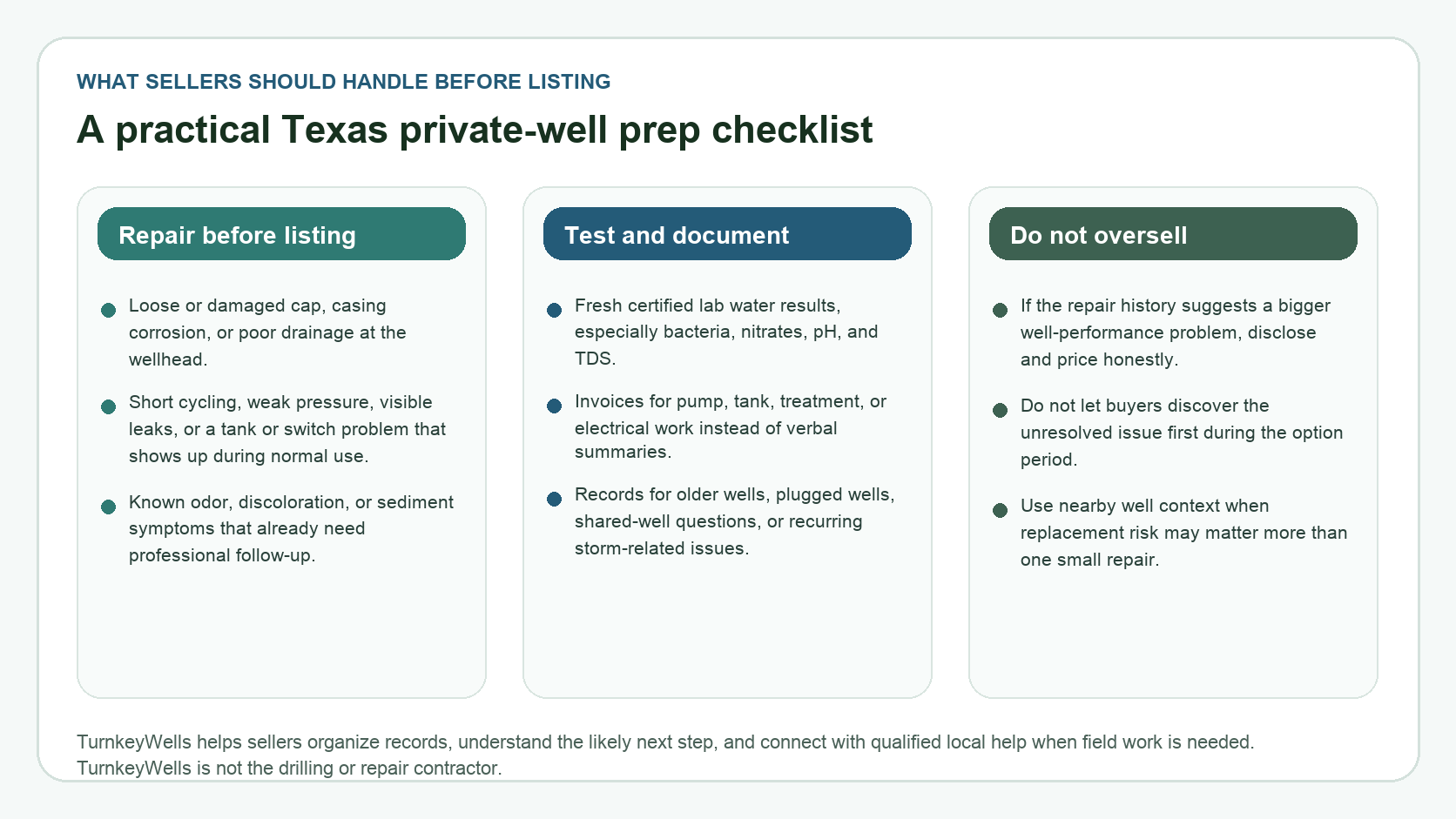
Why Sellers Should Deal With Well Problems Before Listing
A private well does not scare serious Texas buyers by itself. What scares them is uncertainty. Weak pressure, old lab reports, a sloppy wellhead, or a seller who cannot explain recent repairs make the whole property feel less reliable. Once that happens, every showing question gets harder and every negotiation gets more expensive.
Pre-listing well work is not about making the file look perfect. It is about fixing the problems buyers will reasonably notice, documenting the condition honestly, and figuring out whether the property has a small repair issue or a bigger well risk that should shape pricing and disclosure from the start.
What Sellers Should Usually Fix Before Listing
Pre-listing private well repair priorities
- Loose, damaged, or unsanitary well caps and casing conditions that suggest runoff or contamination risk.
- Pooling water, poor grading, or visible drainage problems around the wellhead.
- Pressure tank, pressure switch, or leak issues that cause short cycling, weak pressure, or obvious service concerns.
- Known water-quality symptoms such as odor, discoloration, sediment, or taste changes that have not been tested properly.
- Visible plumbing, electrical, or treatment equipment problems that make the system look neglected or improvised.
- Missing explanations around older wells, shared wells, or plugged wells on the tract.
Those are the issues most likely to turn a buyer’s first inspection into a trust problem. If the system already has a clear symptom, compare it with TurnkeyWells guides on private well inspection before closing, low water pressure from a private well, and signs an old water well is failing. That helps sellers separate a straightforward pre-listing repair from a bigger performance issue that should not be papered over.
What Sellers Should Test or Document Even If They Do Not Repair It
Some listing problems are not visible until somebody asks for paperwork. Buyers want recent certified lab results, especially for bacteria, nitrates, pH, and total dissolved solids. They want receipts for pump pulls, pressure tank replacements, treatment work, and electrical repairs. They want to know whether the water changed after heavy rain, whether the well was shocked recently, and whether there is a second well on the property that needs to be explained.
Missing documentation does not automatically mean the well is bad. It does mean the seller is asking the buyer to trust memory over records. That is rarely a winning strategy in a Texas rural transaction.
What a Professional Usually Checks Before the Listing Goes Live
A qualified field review typically looks at the visible wellhead, cap, casing, drainage, pressure behavior, pressure tank condition, leaks, and the recent repair pattern. If the water has a symptom, the real question is whether it points to a mechanical problem, a sanitary problem, or both. Sellers often waste money when they treat a broader well issue like a single part swap just because one technician got the water running again for the moment.
That is also where nearby context matters. If the well may be near replacement or if the repair history suggests the system is aging out, sellers need more than a quick patch. The Pre-Drill Intelligence Report can help frame whether the property’s next decision is likely to stay in the repair lane or move into a more expensive drilling conversation.
Texas Listing and Disclosure Pressure
Texas sellers should think about the physical well condition and the disclosure side together. The TREC Form 61-0 Texas water disclosure guide explains the transaction paperwork, but the form does not clean up a live system that still shows obvious neglect or missing records. If a buyer’s inspector finds a cap issue, poor drainage, or a symptom the seller already knew about, weak disclosure language is not going to make that problem smaller.
The same thing is true when the property sits in a Groundwater Conservation District or when replacement planning may matter soon. Sellers do not need to solve every future groundwater question before listing, but they should know when the current issue is bigger than one easy repair.
When Water Testing Should Be Non-Negotiable
Sellers should not rely on taste, smell, or a buyer’s willingness to take a chance. Fresh certified lab testing is especially important when the property has flood exposure, storm-related water changes, nearby septic pressure, livestock risk, staining, sulfur odor, or recent repair work. A current test file helps honest sellers and protects them from needless speculation.
TurnkeyWells does not provide medical advice. If the water raises a safety concern, the right next step is certified lab testing, local health department guidance where appropriate, and qualified water well or water treatment professionals.
Repair It, Credit It, or Price It Honestly
Not every pre-listing issue should be repaired the same way. Some problems should be fixed before the sign goes up because they are obvious and relatively contained. Others are best handled with updated testing, cleaner documentation, and a realistic disclosure conversation. And some should change the seller’s pricing expectations because the well may be telling a bigger story than a small invoice can solve.
Sellers usually lose the most money when they spend too little to handle an obvious issue or spend the wrong money on a cosmetic fix that does not survive buyer due diligence. The point is not to make the well look flawless. The point is to prevent avoidable surprises and let the listing enter the market with a believable file.
Where TurnkeyWells Fits
TurnkeyWells helps property owners organize records, review likely well risks, and decide what should be inspected, tested, repaired, or priced honestly before the listing process gets tense. A Free Well Check is a practical first step when sellers need to understand the public well-record side of the file, and TurnkeyWells can help connect customers with qualified local water well professionals when field work is needed. TurnkeyWells is not the drilling or repair contractor.
Prepare the Well File Before Buyers Start Digging
TurnkeyWells can help review the issue, organize the records, and connect sellers with licensed local water well professionals when field work is needed. The cleanest listings are the ones where the well story is already assembled before the first inspection question lands.
Start with a Free Well CheckNeed help preparing the well before listing?
Contact TurnkeyWells and we can help review the issue and connect you with licensed local help.
Tell us what the seller is seeing, where the Texas property is located, and whether the concern is about pressure, water quality, visible repair items, missing records, or a bigger inspection question. TurnkeyWells can help review the issue, inspection question, or maintenance concern and connect the visitor with a licensed water well professional in their area when field work is needed.
TurnkeyWells helps organize records, next steps, and qualified local referrals. TurnkeyWells is not the drilling or repair contractor.