
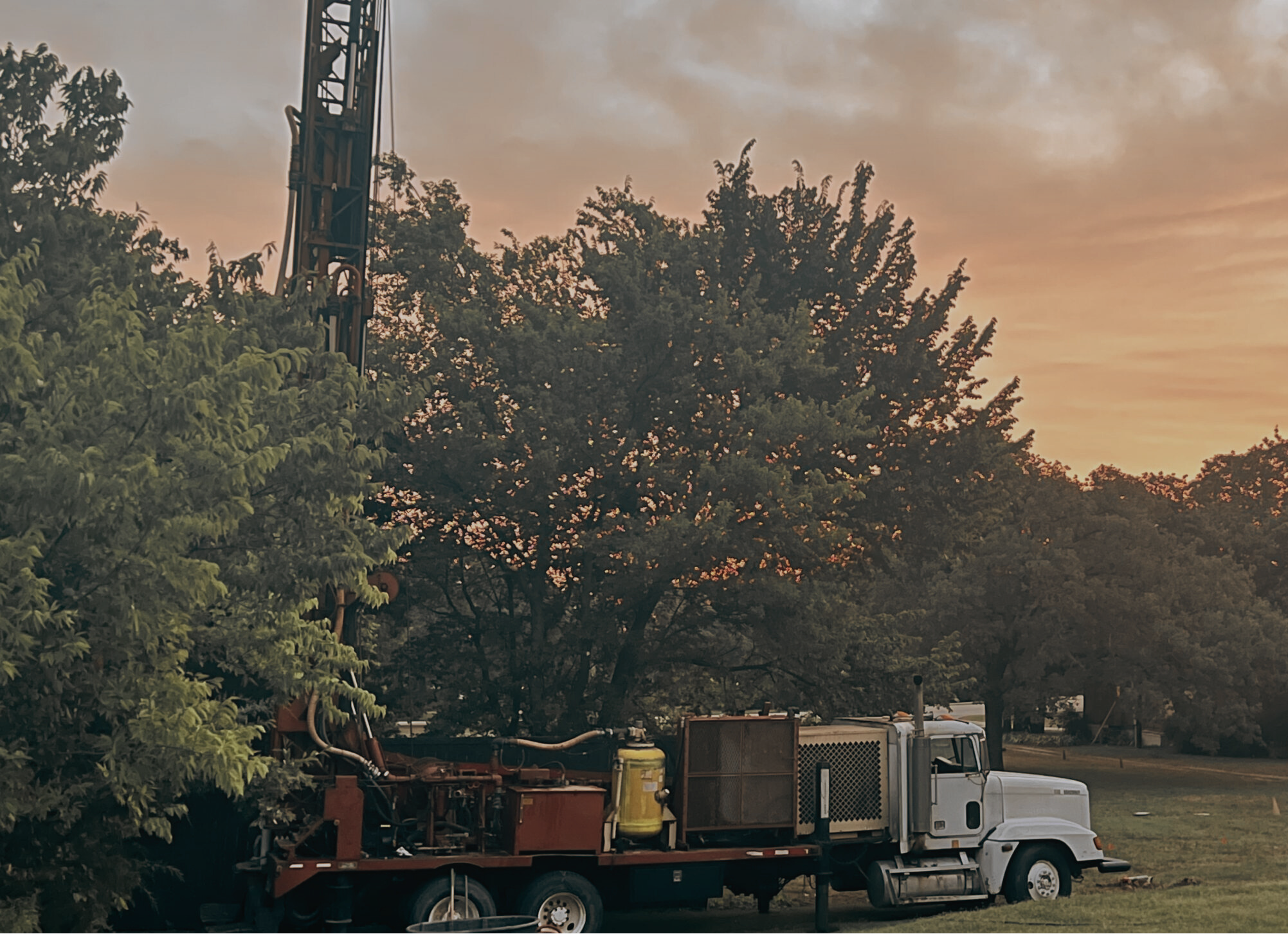
Water Well Drilling in Dallas County, TX
24,270+
Wells on Record
52 ft
Median Domestic Depth
27–330 ft
Typical Range
Woodbine / Trinity
Primary Aquifers
Drilling a Water Well in Dallas County
Dallas County sits over two productive aquifers: the Woodbine and the Trinity. Most domestic wells in the county tap the Woodbine formation, which runs shallow enough that drilling costs stay reasonable compared to many parts of Texas. The median depth for a domestic well here is around 52 feet, though properties in the eastern edges near Seagoville and Balch Springs sometimes require going deeper to find consistent flow.
The Texas Water Development Board has logged more than 24,270 wells in Dallas County. That’s a large and well-documented record, which means drillers working this area have solid data to draw on when planning your project. We know what depths are producing and which formations are most reliable in each part of the county.
Properties in areas like Hutchins, Wilmer, and Lancaster often sit on land that was historically agricultural, and many of those lots already have old wells on record. If you’re buying land or subdividing, a quick records search before you drill can save time and money.
What It Costs to Drill a Well in Dallas County
Well drilling costs in Dallas County typically fall between $15 and $30 per foot drilled, depending on the formation and the equipment required. For a standard 50-foot domestic well, you’re looking at a base drilling cost in the $1,500 to $3,000 range before casing, pump, and completion work.
Total installed cost for a complete well system, including the pump, pressure tank, electrical hookup, and all labor, generally runs $25,000 to $80,000+ in this county. Deeper wells or those requiring specialized casing will push toward the upper end. Properties near Sunnyvale and the far eastern county line sometimes hit rock formations that add drilling time and cost.
TurnkeyWells gives you a flat estimate before any work begins. No surprises added after the rig shows up. The price we quote is the price you pay.
Geology and Aquifers in Dallas County
The Woodbine aquifer is the workhorse of Dallas County groundwater. It’s a sandstone formation that holds usable water at relatively shallow depths across most of the county. Yields vary by location, but most domestic wells completed in the Woodbine produce enough for a single-family home or small agricultural use.
The Trinity aquifer sits deeper and is less commonly tapped for domestic use in this county, but it provides an option when the Woodbine formation produces water with higher mineral content or insufficient volume. In parts of western Dallas County closer to Tarrant County, the Trinity becomes more relevant.
Water quality varies across the county. Areas near Balch Springs and Mesquite have produced wells with elevated iron or sulfur content that may require treatment. We test every well before handing it off and flag any quality issues upfront.
Who We Serve in Dallas County
Most of our Dallas County work falls into three categories: rural residential properties that need a private water source, agricultural land where livestock or irrigation demand more volume than a city connection can provide, and new construction on lots where extending city water would be costly or impossible.
We work with homeowners, landowners, developers, and small farms. If you have a property in Seagoville, Hutchins, Wilmer, Lancaster, Sunnyvale, or Balch Springs, we’ve drilled in your area and know what to expect underground.
Commercial and light industrial properties needing supplemental water supply are also a fit. We’ve handled wells for nurseries, ranches, and small operations that needed reliable water without depending entirely on municipal systems.
Neighboring Counties We Serve
Our service area extends well beyond Dallas County. If your property sits across the county line, we have licensed drillers working those areas too. Most of the geology that makes Dallas County drillable continues into the surrounding counties, so our crews move across county lines routinely.
- Ellis County Water Well Drilling
- Kaufman County Water Well Drilling
- Rockwall County Water Well Drilling
- Collin County Water Well Drilling
- Denton County Water Well Drilling
- Tarrant County Water Well Drilling
The Permitting Process in Dallas County
Any new water well drilled in Dallas County requires a permit through the North Texas Groundwater Conservation District. This applies to domestic wells, agricultural wells, and commercial wells. Drilling without a permit is a violation of state law and can result in fines or a required well closure, so this step is not optional.
Permit fees typically run between $500 and $1,500 depending on the well type and intended use. Domestic permits tend to fall on the lower end of that range. The district may also require a well report within 30 days of completion, which your licensed driller is required to file with the Texas Water Development Board.
Processing time for a permit is usually 2 to 4 weeks from the date of submission. If your project has a specific timeline, it’s worth starting the permit application before scheduling your driller. Delays at the permit stage are the most common reason well projects get pushed back.
TurnkeyWells handles the permitting as part of the complete package. We prepare the application, submit it to the district, track the status, and coordinate the filing of required completion reports after the well is finished. You don’t have to chase down paperwork or learn how the district process works. We’ve done it enough times that it moves as fast as the district allows.
Service Area Map
Ready to get a well drilled in Dallas County?
We’ll match you with a licensed driller, handle the permit process, and get your estimate fast.