Texas Private Well Maintenance
Signs an Old Water Well Is Failing in Texas
Older private wells usually give warning signs before they become a no-water emergency. In Texas, falling pressure, recurring sediment, short cycling pumps, wet ground around the well head, and missing records can all point to a system that needs more than another quick patch.
Quick Answer
Common warning signs
Lower pressure, cloudy or rusty water, air in the lines, frequent pump starts, older tank leaks, and new wet spots around the well area.
When to move faster
If the water changes suddenly after heavy rain, the pump will not shut off, or the well keeps losing prime or production, stop guessing and inspect it.
Best first documents
Recent lab tests, pump invoices, pressure tank notes, driller paperwork, and any records that show older wells, plugs, or previous repairs on the property.
Real estate impact
Buyers and sellers should review an older well before closing, not during the final scramble after inspection objections show up.
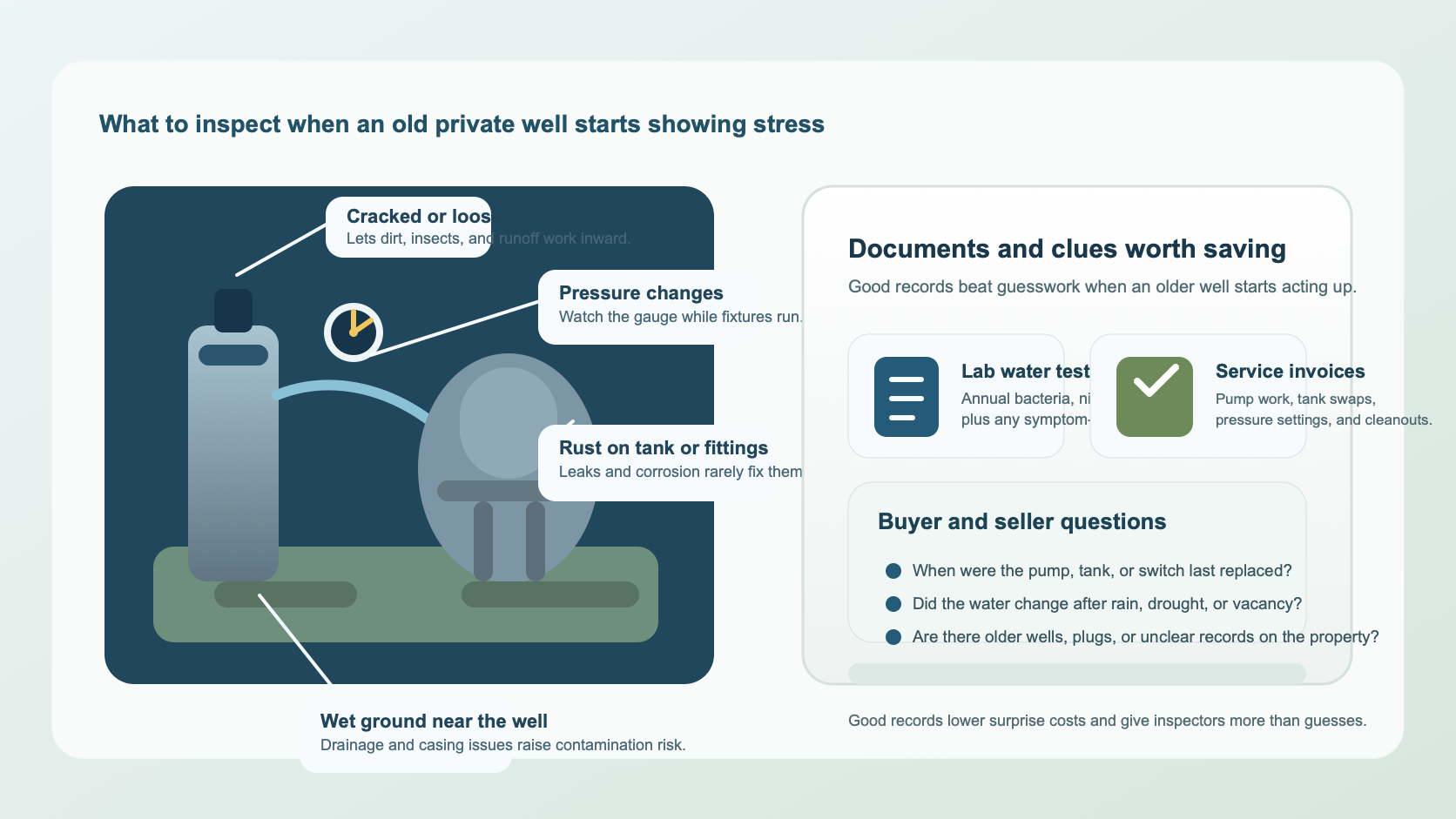
When an Old Well Stops Being “Just Old”
Age alone does not mean a private well has failed. Plenty of Texas wells stay productive for decades. The problem is that owners often normalize the early warning signs. Pressure gets weaker a little at a time. Sediment shows up after storms and then clears. The pump starts more often, but the house still has water. A seller knows the well is touchy, but there is no file with recent test results or service history.
That is how a manageable maintenance issue turns into an expensive surprise. An older well should be judged by behavior, condition, and documentation, not by age alone. If the system has become unpredictable, the next step is to inspect and document it before the problem forces the timeline.
Signs an Old Water Well May Be Failing
Warning signs to take seriously
- Pressure is weaker than it used to be or drops while water is running.
- The pump starts and stops too often or runs much longer before shutting off.
- Cloudy, sandy, rusty, or black-stained water shows up more often.
- Air sputters through faucets or the system loses steady flow.
- The pressure tank, fittings, or nearby plumbing show active rust or leaks.
- The ground around the well head stays wet, muddy, or collects runoff.
- There are no recent water tests, no clear repair history, or no confidence about what is actually on the property.
Some of these warnings point to well components. Others point to sanitary risk, record gaps, or declining production. An old well does not need every symptom to be a problem. One persistent pattern is enough to justify a real review.
Texas-Specific Reasons Older Wells Get Riskier
Texas private wells deal with long dry periods, hard water minerals, heavy rain events, and rural property layouts that are not always kind to drainage. A well that performed fine for years can start showing stress when drought lowers production, scale builds up in the system, or surface water repeatedly reaches the well area. Older casing, older caps, and older pressure equipment also tend to reveal themselves when weather swings get sharp.
That is part of why an older system needs both physical inspection and context. If a well is losing production, nearby well depths and local groundwater conditions matter. If the water changes after rain, the well head and drainage matter. If the house is going under contract, the record trail matters just as much as the hardware.
What to Inspect and Document First
Start at the surface. The well cap should be secure, sanitary, and not visibly damaged. The casing should not show obvious gaps, impact damage, or corrosion. Water should drain away from the well head, not pool around it. If the well sits in a low spot, near livestock activity, or near chemical storage or septic components, that risk should be taken seriously.
Then watch the pressure system while water is actually running. Look at the gauge. Listen for rapid starts or long runs. Check for rust, wet fittings, or tank seepage. If pressure has been inconsistent, compare what you see with our guides to low water pressure from a private well and cloudy or sandy well water in Texas.
Finally, gather the paperwork. The most useful older-well file usually includes recent lab results, pump and tank invoices, driller paperwork, and any prior inspection notes. If the property has not had a recent annual review, our annual private well inspection checklist is a practical reset point.
Do Not Skip Water Testing
Older wells can fail mechanically and still produce water. That is why testing matters. At minimum, annual testing should include total coliform bacteria, E. coli, nitrates, pH, and total dissolved solids. If the water changed after flooding, if there is surface runoff risk, or if color and odor shifted at the same time, the system deserves a broader issue-specific panel.
TurnkeyWells does not provide medical advice. If the water may be unsafe, use certified lab testing, follow local health department guidance, and work with qualified water well or water treatment professionals. Do not rely on taste, smell, or one quick look at the sink to decide the water is fine.
What a Professional Usually Checks
A qualified water well professional typically looks beyond the faucet symptom. The check may include pump behavior, pressure settings, tank condition, visible electrical controls, flow consistency, sediment patterns, and whether the well head is protected from surface entry. If the system has a history of repeated repairs, the question becomes whether another repair is buying time or just delaying a more expensive decision.
That is where records help. If the same switch, tank, or pump issue keeps coming back, the pattern matters. If the well is older and production appears to be declining, nearby well depth and drilling context matter too. A Pre-Drill Intelligence Report can help when the existing well may be nearing the point where replacement or a second opinion on local well conditions becomes part of the conversation.
Buyer and Seller Due Diligence on an Older Well
For buyers, an old well is not automatically a deal killer. What matters is whether the condition is understood, tested, and documented. Ask for recent water tests, service history, and any known problems. Ask whether there are older wells, plugged wells, or unclear records tied to the property. An option period is a bad time to discover the seller has stories but no documents.
For sellers, the cleanest move is to get ahead of the issue. Gather the records before listing. If pressure, sediment, or recurring repairs have been part of the story, organize the facts. The TREC Form 61-0 guide covers the disclosure side, but the inspection and water-test package is what keeps the physical condition conversation grounded in something real.
Where TurnkeyWells Fits
TurnkeyWells is not the drilling or repair contractor. The role is to help Texas property owners, buyers, sellers, and agents understand the records, the likely risk points, and the next step. A Free Well Check can help identify what public well information exists for the property. When an older well may be nearing a bigger decision, TurnkeyWells can help organize the issue and connect customers with qualified local help when field work is needed.
Old wells rarely fail out of nowhere. They usually give clues first. Catching those clues early is how you avoid a bad closing surprise, a rushed repair, or a replacement decision made with too little information.
Take the Warning Signs Seriously Before the Well Quits
If an older Texas well is getting less reliable, start with records, testing, and a practical system review. TurnkeyWells can help sort the issue, clarify next steps, and connect you with qualified local help when field work is needed.
Start with a Free Well CheckNeed help with an older well concern?
Contact TurnkeyWells and we can help review the issue and connect you with licensed local help.
Tell us what warning signs you are seeing, where the property is located, and whether this is a maintenance concern, inspection question, purchase, or listing situation. TurnkeyWells can help review the issue, inspection question, or maintenance concern and connect the visitor with a licensed water well professional in their area when field work is needed.
TurnkeyWells helps organize records, likely next steps, and local referrals. TurnkeyWells is not the drilling or repair contractor.
Repair Cost vs New Well Planning
If a well problem points toward major pump, casing, electrical, or replacement work, it helps to understand the cost of a new system before approving a large repair. The cost to drill a water well in Texas guide gives a statewide planning range for that comparison.