Texas Private Well Problems
Bad Tasting or Metallic Well Water in Texas
A metallic taste in Texas well water usually points to iron, manganese, corrosion, water-heater reactions, or a broader chemistry change that deserves testing before anyone shrugs it off as a harmless nuisance. Taste alone does not tell you whether the issue is cosmetic, plumbing-related, or part of a bigger well problem.
Quick Answer
What it usually means
Iron, manganese, copper, corrosion, or water chemistry changes are the most common reasons well water tastes metallic or simply tastes wrong.
What to ask first
Did the taste appear suddenly, only on hot water, only after a storm, or at the same time as staining, odor, cloudy water, or low pressure?
What to test first
Start with total coliform bacteria, nitrates, total dissolved solids, pH, iron, manganese, and any corrosion-related follow-up your lab recommends.
When to move faster
If the taste change is sudden, affects drinking and cooking water, follows flooding or repairs, or shows up with color or odor changes, get lab testing and a field inspection moving.
Why Metallic Taste Matters on a Private Well
People notice taste before they understand chemistry. A glass of water tastes like pennies, leaves an odd aftertaste, or suddenly makes coffee and ice taste off. On a Texas private well, that symptom usually means the water changed or something in the system is reacting differently than it used to. EPA guidance on nuisance contaminants connects metallic taste with common suspects like iron, manganese, copper, and corrosive water conditions.
That does not mean taste tells you the whole story. Metallic water can be mostly a minerals issue, a plumbing issue, or a warning that the raw water chemistry has shifted enough to deserve a real lab panel. The mistake is treating bad taste as too small to investigate until staining, odor, or a repair bill shows up too.
Most Common Causes of Metallic or Bad-Tasting Well Water
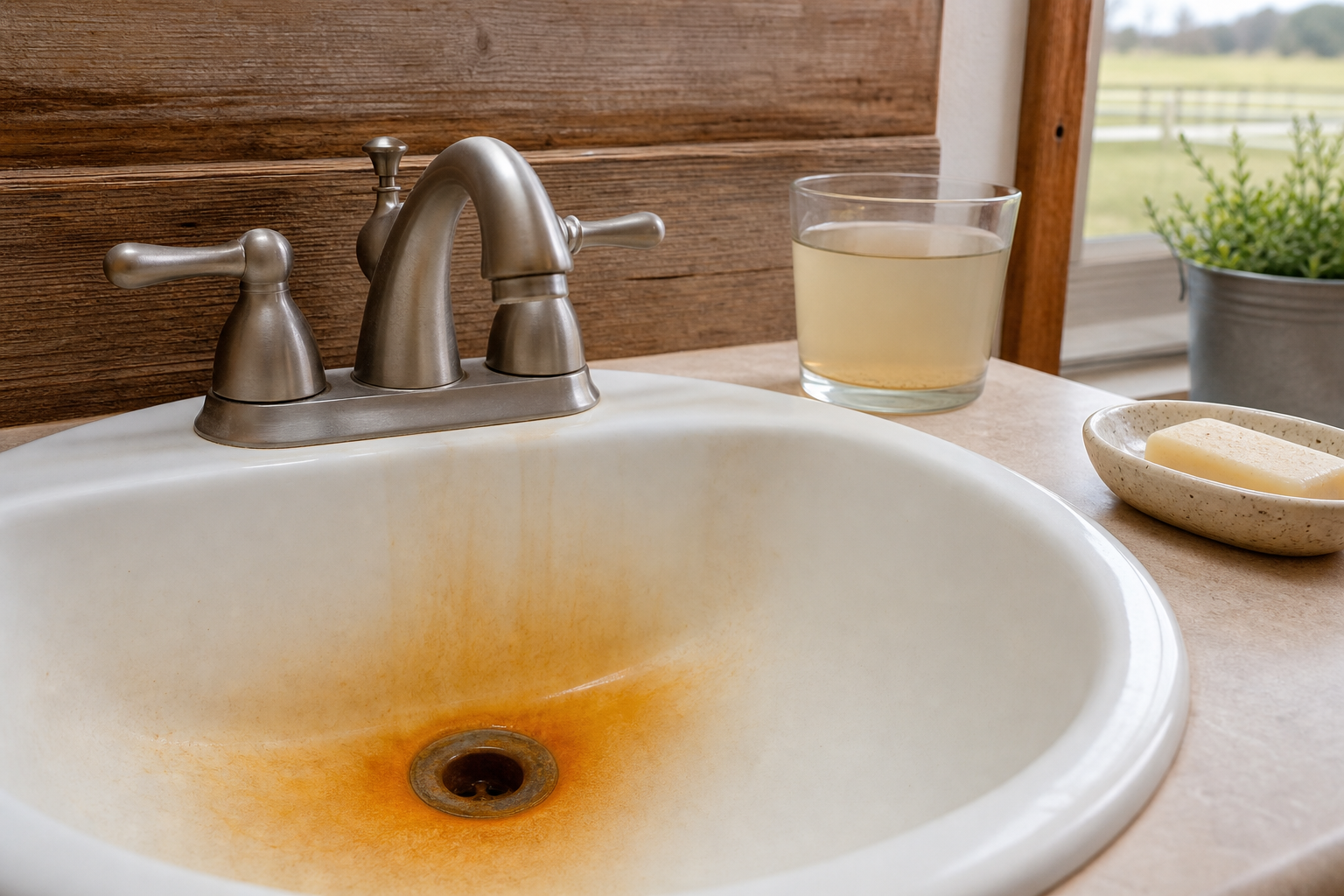
Iron in groundwater. Iron is one of the most common causes of metallic taste in well water. It also drives the rusty, orange, or tea-colored water that shows up in our guide to brown, rusty, or orange well water in Texas. If the water tastes metallic and also stains sinks, tubs, or laundry, iron belongs near the top of the list.
Manganese. Manganese can create a bitter or metallic edge and often overlaps with dark gray or black staining. In Texas private wells, manganese can be part of the same conversation as iron, but it is easy to miss if owners focus only on reddish staining.
Copper or house-side corrosion. If the water tastes metallic mostly at one sink, after it sits in the line, or mainly on the hot side, the plumbing and water heater deserve attention. Corrosive water can pull metals from pipes and fittings. That means the issue may be in the house-side system, not the aquifer alone.
Water-heater reactions. Some metallic or odd tastes are strongest in hot water. That can point to sediment, corrosion, or reactions inside the water heater rather than a raw well-water issue by itself. Test both hot and cold water before assuming the whole well went bad overnight.
Storms, flooding, or sudden chemistry changes. If the taste appeared after heavy rain, ponding near the wellhead, or flooding, move faster. A storm can introduce more than minerals into a private well system. Compare that timing with our page on well water turning brown after heavy rain in Texas if the taste changed with color or sediment.
Metallic taste is a symptom, not a diagnosis. It can point to nuisance minerals, plumbing corrosion, or a broader water-quality problem. The right next step is testing and inspection, not guessing which filter to buy first.
Texas-Specific Clues That Help Narrow It Down
Texas private wells deal with long heat, drought swings, vacant rural properties, livestock areas, storm runoff, and older well equipment that has been patched more times than documented. Metallic taste often shows up after one of three moments: the property sits for a while and then gets heavy use again, the water table or pumping pattern changes during hot weather, or an owner starts noticing taste because odor, staining, or pressure issues joined the party.
If the water also smells off, compare the symptom with well water that smells like rotten eggs in Texas. If it tastes bad and looks cloudy or gritty, review cloudy, muddy, or sandy well water in Texas too. Symptom overlap is common, and the overlap usually tells you more than the taste alone.
What to Test First
CDC guidance for private wells says owners should test at least once each year for total coliform bacteria, nitrates, total dissolved solids, and pH using a state-certified lab. When the water suddenly tastes metallic or otherwise wrong, start there and add issue-specific testing. For most Texas metallic-taste complaints, a practical first panel includes:
- Total coliform bacteria and E. coli if contamination is part of the concern
- Nitrates, especially where children or pregnant women may use the water
- Total dissolved solids and pH
- Iron and manganese
- Corrosion-related follow-up recommended by the lab or qualified water professional if copper or plumbing release looks likely
TurnkeyWells does not provide medical advice. For water-safety concerns, use certified lab testing, follow local health department guidance, and work with qualified water well or water treatment professionals.
When to Stop Assuming It Is “Just Taste”
Move faster if the metallic taste showed up suddenly, if the water also changed color, if pressure dropped, if the taste is strongest after storms or repairs, or if the well has thin records and no recent testing history. A metallic taste by itself does not prove contamination, but it also does not clear the water. If flooding or standing water reached the well area, CDC guidance after emergencies calls for disinfection and retesting before trusting the supply again.
This is also where a TurnkeyWells Free Well Check helps. Public records, nearby well context, and the property’s well history can tell you whether you are dealing with a long-running local pattern or a new symptom that needs faster field attention.
What a Well Professional Should Inspect
A qualified water well professional should inspect the cap, casing, pressure equipment, filters, treatment units, and water-heater setup while comparing hot and cold water behavior. They should look for corrosion, sediment, signs of storm intrusion, and whether the taste is strongest at one fixture or truly system-wide. If the bigger question is whether this is a well worth rehabbing or whether a replacement conversation is coming, the Pre-Drill Intelligence Report helps property owners compare nearby well conditions before a major drilling decision gets made on a hunch.
TurnkeyWells is not the drilling or repair contractor. We help property owners organize records, understand likely next steps, and connect them with a licensed water well professional in their area when field work is needed.
Buyer and Seller Angle
Bad-tasting water becomes a transaction problem fast. Buyers immediately wonder if they are inheriting a nuisance issue, a corrosion issue, or a broader private well problem with weak records behind it. Sellers need documentation showing what the water tested for, what the likely cause was, and whether the issue lived in the well, the treatment equipment, or the house plumbing.
That is why this symptom belongs in better due diligence around the TREC Form 61-0 Texas water disclosure guide. A metallic taste complaint with recent testing and a clear fix is one story. A metallic taste complaint with no records, staining, pressure changes, and no inspection trail is a different story.
Do Not Chase the Wrong Fix First
Owners often jump straight to bottled water, a random cartridge swap, or a whole-house filter quote before they know whether the real issue is iron, manganese, corrosion, or storm-related water-quality change. That is backwards. Testing first gives you a cleaner answer. Inspection tells you whether the problem lives in the well, the plumbing, or both.
When metallic or bad-tasting well water shows up in Texas, the smart move is to understand the chemistry, the equipment, and the property history before anyone pays for the wrong repair or treatment setup.
Get the Bigger Well Story Before You Treat the Taste Alone
TurnkeyWells helps Texas property owners review the issue, organize the next step, and avoid spending money on the wrong fix when metallic or bad-tasting well water shows up.
Start with a Free Well CheckNeed help with this water-quality issue?
Contact TurnkeyWells and we can help review the issue and connect you with licensed local help.
Tell us what the water tastes like, where the Texas property is located, and whether this is tied to a home, land purchase, listing, or active repair situation. TurnkeyWells can help review the issue and connect the visitor with a licensed water well professional in their area when field work is needed.
TurnkeyWells helps organize records, explain likely next steps, and connect customers with qualified local help. TurnkeyWells is not the drilling or repair contractor.