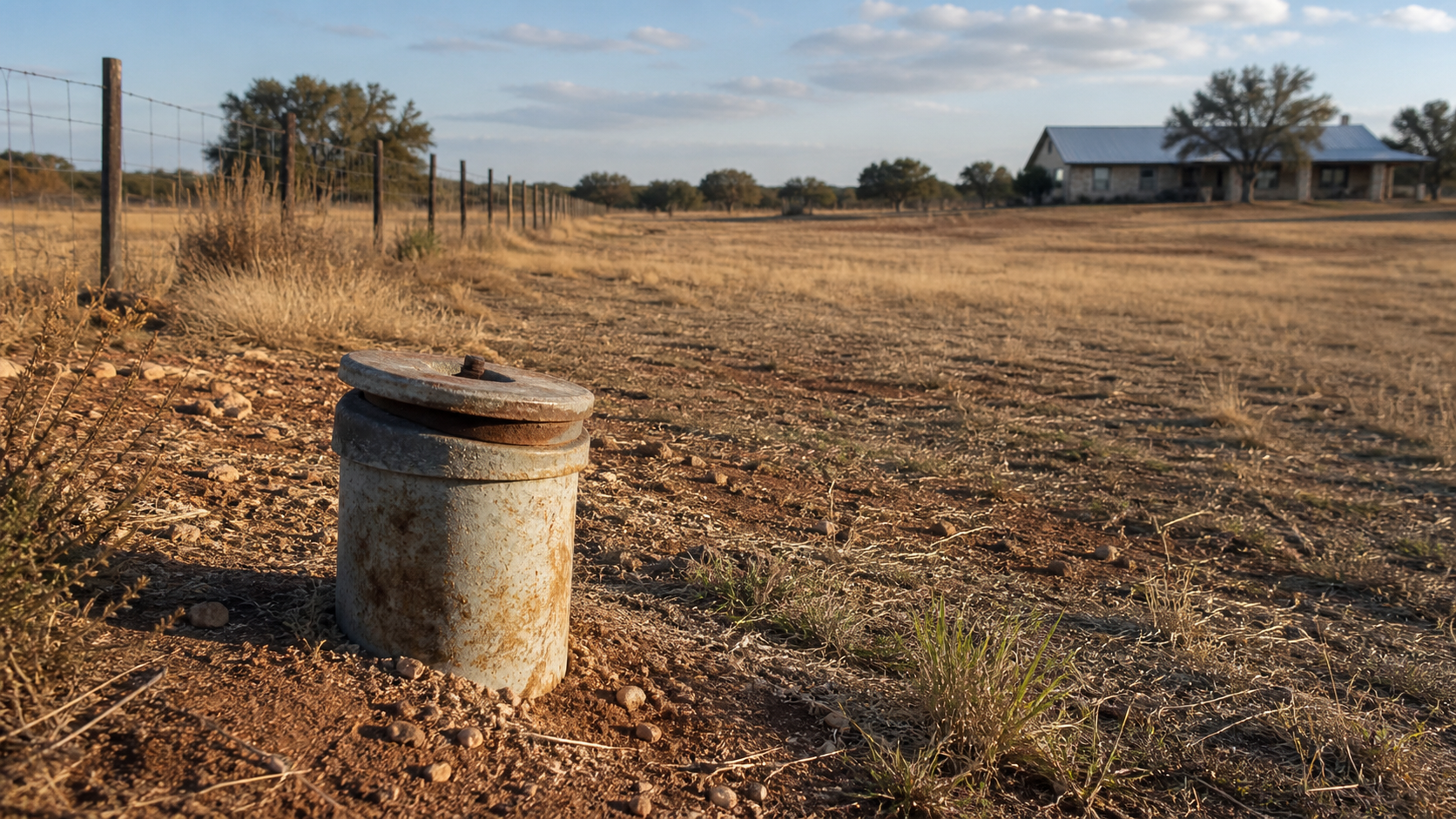
Texas Private Well Problems
Well Cap and Casing Problems in Texas
A loose well cap or damaged casing can give runoff, insects, surface debris, and dirty water a path toward your private well. On Texas acreage, that often shows up after heavy rain, mowing, grading, flooding, or years of weather and neglected maintenance around the wellhead.
Quick Answer
What it usually means
The sanitary seal at the wellhead may be compromised. A crooked cap, missing bolts, cracked vent screen, damaged casing, or poor grading can let contamination risks build around the well.
Most common signs
A cap that sits loose, visible rust or gaps, insects inside the cap, muddy water after rain, weeds or ponding at the casing, or a wellhead that sits too low to stay dry.
What to inspect first
Look at the cap fit, vent screen, bolts, casing height above grade, drainage around the well, and whether water quality changes after storms or ground disturbance.
When to stop using the water
If floodwater reached the wellhead, the cap is missing, or the water turns cloudy or dirty after rain, stop guessing and move toward certified lab testing and qualified field help.
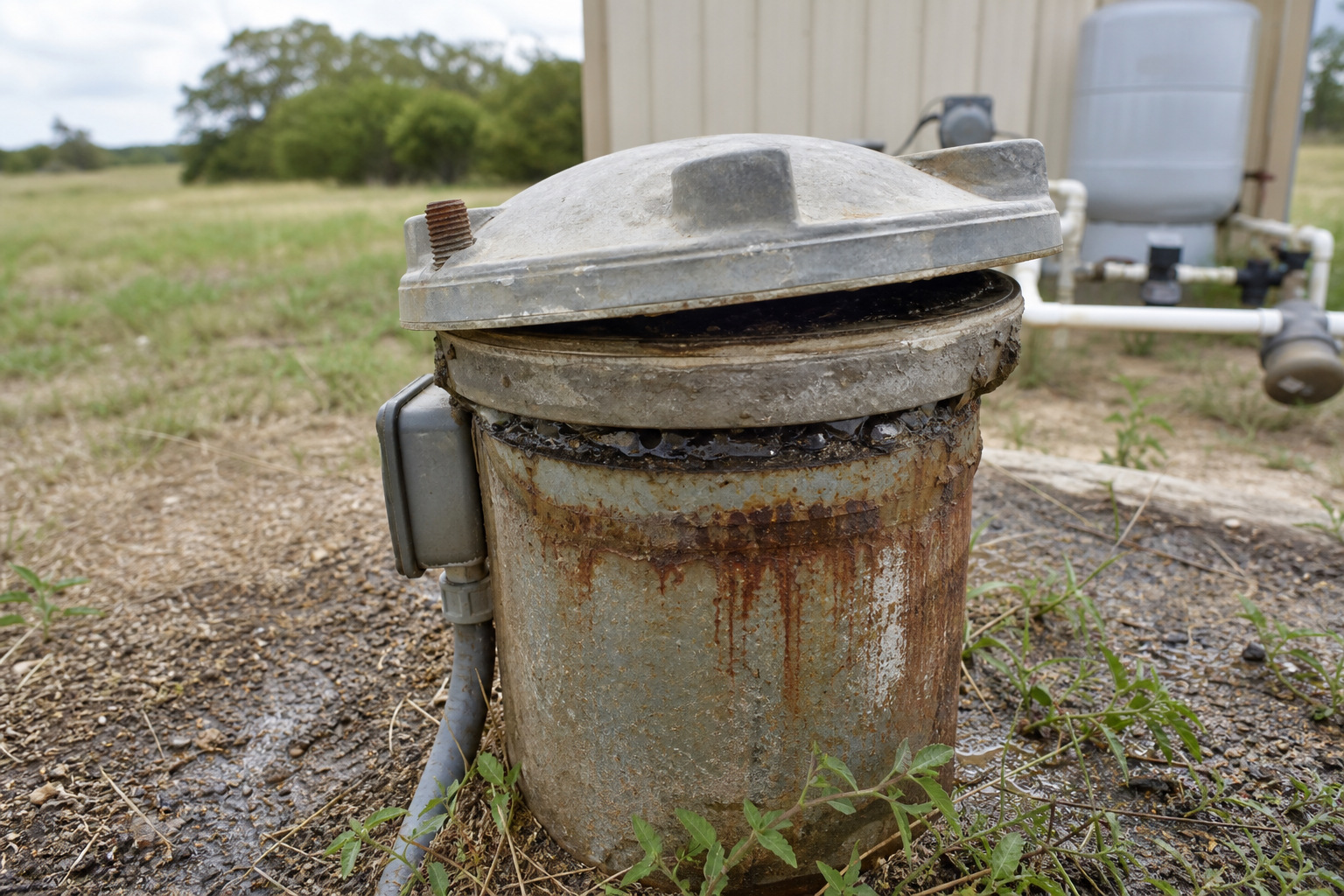
What the Well Cap and Casing Are Supposed to Do
The cap and casing are the first sanitary barrier at a private well. The casing helps protect the borehole where it comes up through the ground. The cap helps keep insects, runoff, dirt, plant matter, and small animals out of the opening at the top. When the cap fits badly or the casing is damaged, the risk is not cosmetic. The wellhead can lose the clean separation it needs from surface conditions.
That matters because contamination problems do not always start deep underground. They can start at the top where a storm, mower, pressure washer, or years of neglect leave the wellhead exposed. If the complaint is already showing up in the water, compare it with well water turning brown after heavy rain in Texas and keep a record of when the change started.
Common Signs of Cap and Casing Trouble
The cap looks loose, tilted, or incomplete. A sanitary cap should fit the casing correctly. If it is crooked, missing fasteners, rocking in place, or obviously not built for the well it is sitting on, that is a red flag. A homemade cover or bucket over the wellhead is not a real barrier.
There is rust, cracking, or visible separation. Surface rust alone does not prove the well is unsafe, but flaking metal, split seals, bent hardware, or gaps between the cap and casing deserve a closer look. Damage at the top of the casing is often where small contamination paths start.
The vent screen is broken or missing. Many owners never notice the vent until insects or debris show up inside the cap. A damaged vent screen can let bugs, wasps, and dirt into the wellhead assembly even when the rest of the cap still looks mostly intact.
The area around the well stays wet or collects runoff. If the ground slopes toward the casing, puddles around the well after storms, or the wellhead sits low in a traffic or drainage path, the sanitary risk gets worse. Texas clay, hardpan, and rural grading shortcuts can push dirty surface water exactly where it should never sit.
Do not treat this like a paint problem. A worn cap or damaged casing is about protecting the well from surface pathways. The real question is whether the seal, height, and drainage are still doing the job they were supposed to do.
What Usually Causes These Problems
Weather and age. Sun, heat, hail, freeze cycles, and years of exposure wear down seals, bolts, gaskets, and metal surfaces. Older acreage wells often have hardware that was never upgraded after the original install.
Mowing, grading, and property work. Tractors, weed trimmers, fencing projects, dirt work, and heavy equipment can bend or loosen a cap without anybody realizing it. A small impact at the wellhead can turn into a much bigger water-quality question after the next storm.
Poor original layout. Some wells sit too low, too close to drainage paths, or with little protection from ponding and surface splash. If the casing height above grade is marginal, even a decent cap may not be enough during heavy Texas rain.
Deferred maintenance after ownership changes. A seller may not know what belongs on the wellhead. A buyer may inherit a system with no records and no routine inspection history. That is why a page like annual private well inspection checklist for Texas homes matters even when the water still looks normal.
When to Test Water and When to Stop Using It
If the cap is missing, the casing is openly damaged, or floodwater covered the wellhead, stop assuming the water is fine just because the pump still runs. If water turns cloudy, sandy, or discolored after rain, or if there is any reason to think surface water entered the well, move toward certified lab testing. Total coliform bacteria and other issue-specific panels may be appropriate depending on the site history and local conditions.
TurnkeyWells does not provide medical advice. For water-safety concerns, use certified lab testing, follow local health department guidance where appropriate, and work with qualified water well or water treatment professionals. The goal is to confirm whether the wellhead issue stayed superficial or created a real water-quality problem.
Texas-Specific Context That Changes the Diagnosis
Texas private wells live through extremes. Hard rain after dry months can move sediment and dirty runoff fast. Rural properties may have livestock, shop pads, septic components, gravel drives, and low spots that push water toward the well. In some counties the well records are thin, and nobody is fully sure when the cap was last replaced or whether the casing height still matches current best practice.
That context matters during real estate deals too. A buyer sees rust and assumes the well is failing. A seller thinks it is just an old cap. The better answer usually comes from combining site inspection, water testing if needed, and the broader well file. The TurnkeyWells Free Well Check can help line up the property records and next questions. If the bigger decision is whether the current well should keep getting repair money or whether future drilling conditions matter more, the Pre-Drill Intelligence Report helps compare nearby well depth and planning context.
What a Well Professional Should Check
A qualified water well professional should inspect the cap fit, vent screen, fasteners, casing condition, casing height above grade, and the drainage pattern around the well. The visit should also confirm whether insects, sediment, staining, or runoff marks suggest actual entry at the wellhead. If the water changed after storms or site work, the inspection should tie the physical wellhead condition to the right testing plan instead of guessing from appearance alone.
That field review can also reveal whether the problem stops at the top of the well or points to a deeper construction or sanitary issue. Replacing one cap is easy. Fixing low casing height, grading failures, or broader wellhead sanitation problems is a different conversation and should be scoped honestly.
Buyer and Seller Angle
Cap and casing problems matter in a Texas sale because they raise obvious questions about maintenance, water quality, and whether the well was protected correctly for years. Buyers do not want to discover after closing that the wellhead was inviting runoff and insects every time it rained. Sellers need better documentation than “the water seems fine” if visible wellhead defects are part of the showing.
This belongs in stronger due diligence around the TREC Form 61-0 Texas water disclosure guide. If you are preparing a property for market, our page on what sellers should fix before listing a property with a well is a good companion. A repaired cap, clean grading, and water-test results tell a better story than a rusty wellhead and vague answers at inspection time.
Do Not Wait for a Small Wellhead Problem to Become a Water-Quality Problem
A crooked cap or low casing does not always mean the well is already contaminated. It does mean the top of the system deserves attention before the next storm, sale, or water-quality complaint turns a visible maintenance issue into a bigger repair and testing bill. Texas owners usually save money when they catch the sanitary barrier problem early.
TurnkeyWells helps property owners review records, understand the likely next step, and connect with qualified local help when field work is needed. Get the cap, casing, drainage, and well file lined up before you assume this is just surface rust.
Get the Bigger Wellhead Story Before You Ignore a Cap or Casing Problem
TurnkeyWells helps Texas property owners organize records, understand what a wellhead defect may mean, and connect them with qualified local help when field work is needed.
Start with a Free Well CheckNeed help with this wellhead issue?
Contact TurnkeyWells and we can help review the issue and connect you with licensed local help.
Tell us what you are seeing at the wellhead, where the Texas property is located, and whether this is a home, land purchase, listing, or active repair situation. TurnkeyWells can help review the issue, organize the next step, and connect you with a licensed water well professional in your area when field work is needed.
TurnkeyWells helps organize records, explain likely next steps, and connect customers with qualified local help. TurnkeyWells is not the drilling or repair contractor.