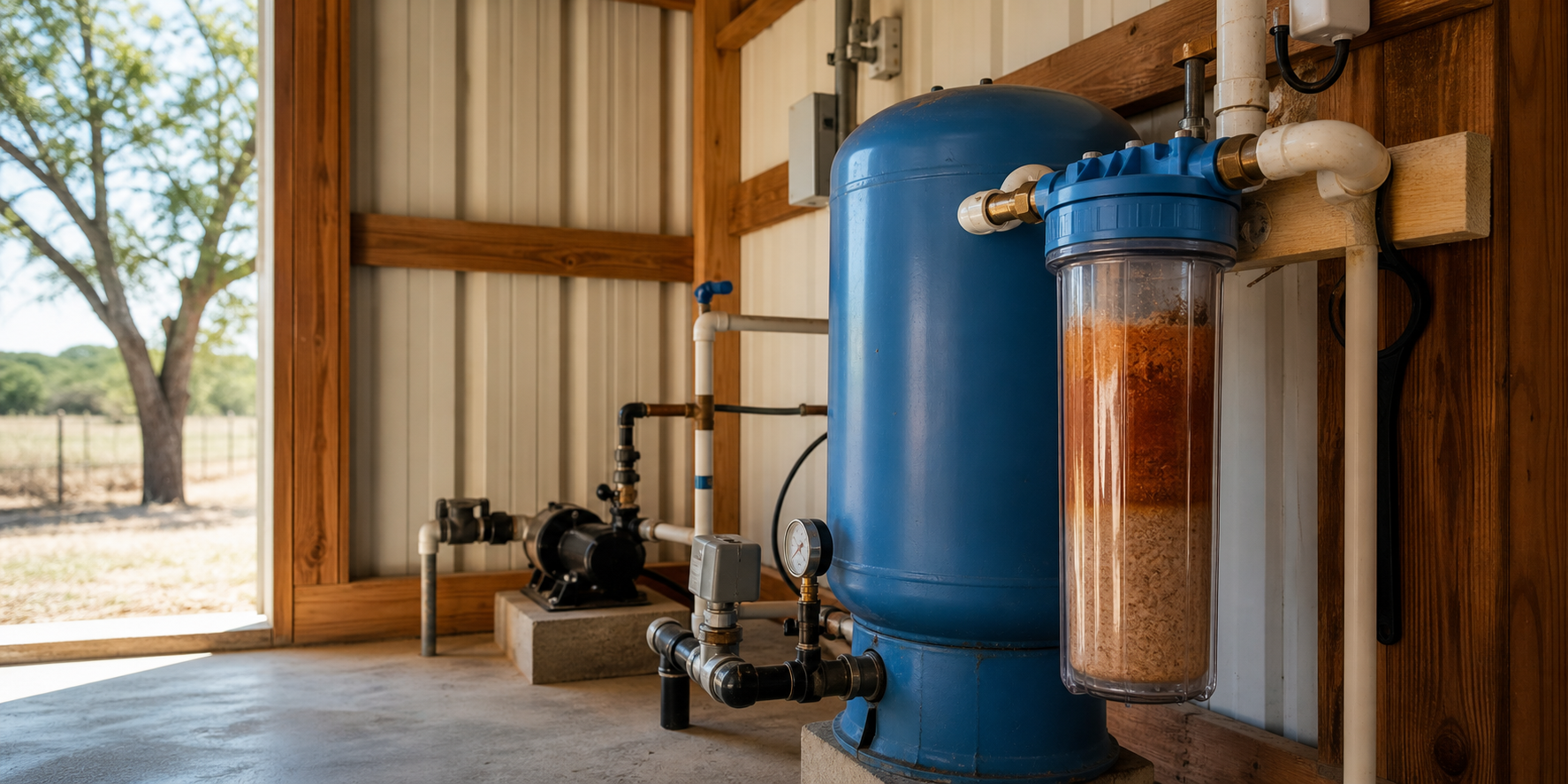
Texas Private Well Component Problems
Sediment Filter Keeps Clogging on Well Water in Texas
If you put in a fresh cartridge on Saturday and the shower is limping again by Thursday, the filter is not the whole story. On a Texas well, a fast-clogging filter usually means the house is seeing more grit, rust-colored debris, or stirred-up water than it used to, and the reason is often upstream of the cartridge itself.
Quick Answer
What it usually means
Usually it means the cartridge is catching more load than normal, either because the water changed or because the filter choice never matched the real job.
Most common symptoms
Pressure fades, the cartridge browns out fast, the bowl fills with grit, and the house gets a short burst of better flow every time a new filter goes in.
What to inspect first
Write down how long a fresh cartridge lasts, what micron it is, whether the water ever looks cloudy without the filter open, and what changed right before the problem showed up.
When to stop swapping cartridges
If a new filter is cooked in a few days, or if the water still looks gritty or muddy, stop treating this like a supply-run problem.
What the Filter Is Trying to Tell You
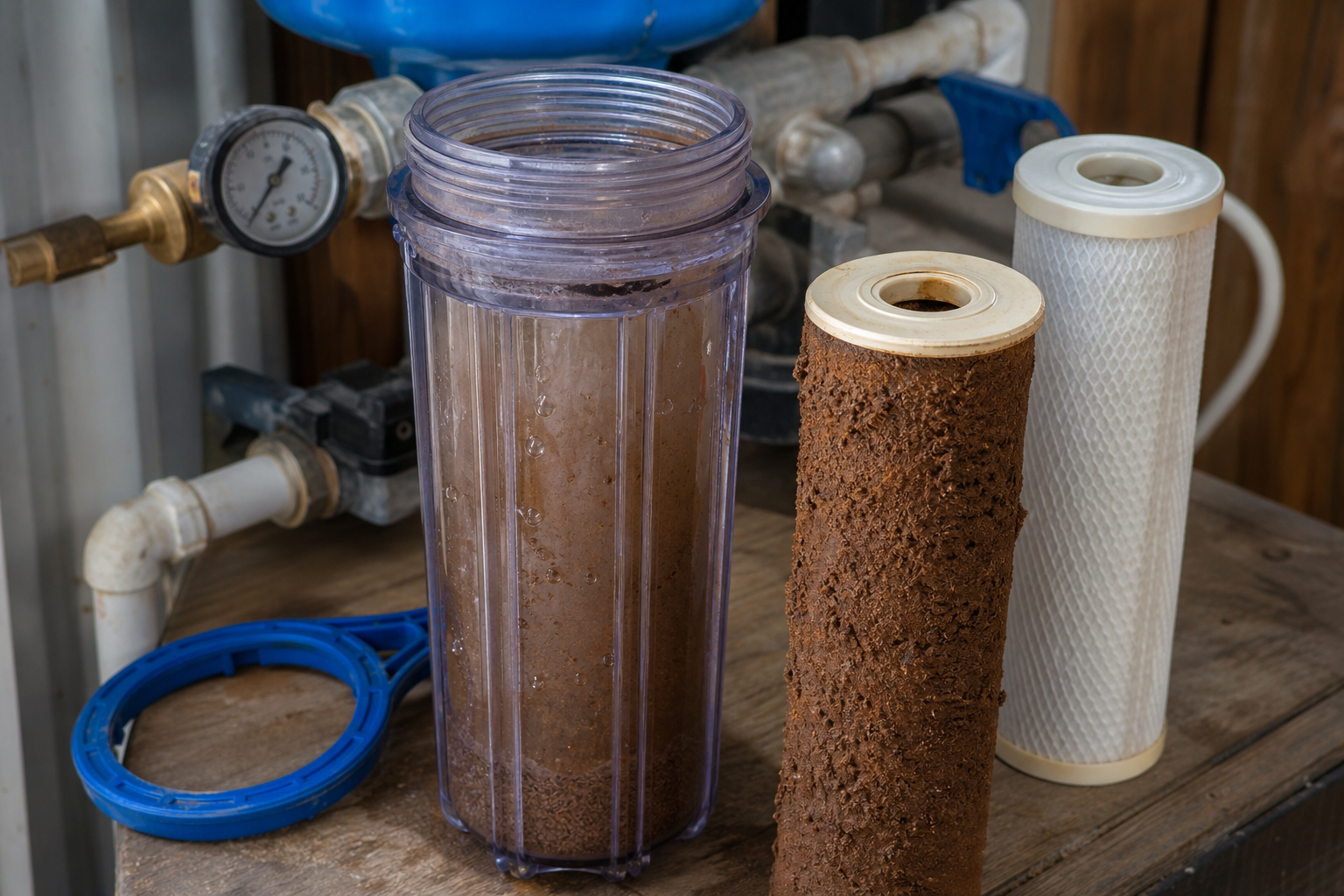
A sediment filter exists to be sacrificed. It is there so the cartridge gets ugly before your faucets, softener, ice maker, and fixtures do. So a dirty filter is not shocking by itself. The warning sign is pace. When the cartridge used to last months and now lasts days, or when pressure nosedives every time the bowl gets dirty, the system is telling you something changed.
Most of the time the change falls into one of two buckets. Either more debris is reaching the house than before, or the filter stage was undersized or too fine for the water all along. Owners lose money when they answer that kind of change by buying a bigger stack of cartridges instead of figuring out what started feeding the filter harder.
Common Reasons a Sediment Filter Keeps Clogging
Sand or fine silt is making the trip to the house. That can happen when the well has always produced some grit, when the pump setting got disturbed, when the well is drawing harder than it used to, or when recent work changed the way the system behaves. If you can feel granular material in the bowl or see it pile up at the bottom, take that seriously.
The water got churned up by a recent event. Owners often notice this after a pump pull, a long vacancy, aggressive watering, or a heavy-rain week. If the filter problem shows up alongside muddy or cloudy water, compare the pattern with cloudy or sandy well water in Texas and well water turning brown after heavy rain.
The cartridge is simply too tight. Moving from a looser sediment cartridge to a very fine one can feel like a smart cleanup move right up until the pressure falls apart. Some systems need staged filtration or a different treatment decision, not a heroic little cartridge asked to do all the work.
The mess is rusty, slimy, or mixed. Not every ugly filter is telling a pure sand story. Orange buildup, slime, or greasy-looking load can point toward iron debris or other water-quality issues that a sediment bowl can catch without truly explaining.
A filter that clogs fast is a clue, not a diagnosis. The useful question is what the cartridge is catching, why the load increased, and whether the pressure loss starts at the filter alone or reflects a wider well-system problem.
Texas Conditions That Make This Problem Worse
Texas acreage adds its own nonsense to this problem. Some systems sit quiet for long stretches, then get hammered by guests, livestock, irrigation, or a house sale. Some wells run through drought, then get hit with runoff. Some equipment rooms are neat. Some are a museum of quick fixes. Two owners can both say “the filter keeps clogging” and be talking about completely different failures.
That is why the work history is useful. A stable older system that slowly dirties cartridges is one thing. A property that suddenly starts wrecking filters right after drilling, pump work, storms, or a long vacancy is another. If the larger question is whether the well still fits the property long term, the Pre-Drill Intelligence Report helps compare nearby well conditions before the conversation jumps to a new well or major rebuild.
What to Inspect and Test Before You Replace Another Cartridge
Useful first-pass notes
- Write down how many days or weeks a fresh cartridge lasts before pressure drops.
- Save one used cartridge or take photos so a professional can see whether the load looks sandy, slimy, rusty, or mixed.
- Check the cartridge micron size and whether the filter was changed to a finer or cheaper model right before the trouble started.
- Note whether the water is cloudy only at first use, after rain, after irrigation, or all the time.
- Record any recent pump work, new well work, long vacancy, freeze event, or plumbing changes near the pressure tank and filter housing.
Testing is worth doing too. Cartridge color alone is a lousy chemist. If the same water also stains fixtures, smells off, or raises a safety concern, do not let the filter bowl become the whole diagnosis. TurnkeyWells does not give medical advice. For water-safety concerns, use certified lab testing, follow local health department guidance where appropriate, and work with qualified water well or water treatment professionals.
What a Professional Usually Checks
A good well professional will want more than “it clogs a lot.” They will usually ask what the raw water looks like before the filter, how the system holds pressure, whether grit is reaching toilet tanks or faucet aerators, whether the housing is sized sensibly, and whether the well shows clues of drawdown, screen wear, casing trouble, or a disturbed pump setting. If the cartridge is only hiding a source problem, changing brands will not solve it.
They may also sort out whether the damage is happening because the filtration order is wrong. On some systems the sediment stage is too small, in the wrong spot, or asked to protect other equipment that should not be leaning on it so heavily. Owners often keep feeding the cheapest part while the more expensive equipment behind it absorbs the punishment.
When This Becomes a Buyer or Seller Problem
Fast-clogging filters become a closing issue because they suggest an unfinished story. Buyers need to know whether they are inheriting ordinary maintenance, a water-quality problem, or a well that throws enough grit to beat up fixtures and treatment equipment. Sellers need something stronger than “we just change it a lot” if they want to keep the conversation calm.
This is the kind of thing that belongs in better due diligence around the TREC Form 61-0 Texas water disclosure guide. A filter setup with invoices, dates, and a stable explanation reads one way. Repeated clogs, cloudy water, and no clear reason the load got worse reads another. Buyers already reviewing the whole well file should also look at problems after drilling a new water well when the sediment story ramped up soon after recent drilling or pump work.
Where TurnkeyWells Fits
TurnkeyWells helps property owners review records, line up the right questions, and decide whether the clogging filter points to normal maintenance or a deeper system concern. A Free Well Check is the practical first step when you need a cleaner read on the well records, while the broader nearby-well context can come from the Pre-Drill Intelligence Report.
TurnkeyWells helps organize records, next steps, and qualified local referrals when field work is needed. TurnkeyWells is not the drilling or repair contractor. The point is to stop throwing cartridges at a problem that may be waving at a larger repair bill.
Get the Bigger Sediment Story Before You Buy Another Box of Filters
TurnkeyWells can help Texas property owners review the issue, organize the well records, and connect them with qualified local help when field work is needed.
Start with a Free Well CheckNeed help reviewing this sediment-filter issue?
Ask TurnkeyWells to review the issue and connect you with licensed local help when field work is needed.
Tell us what the Texas property setup looks like, how fast the filter is clogging, whether the water is cloudy or sandy, and whether this is tied to a sale, new drilling, pump work, or a long-term maintenance problem. TurnkeyWells can help review the issue, organize the next step, and connect the visitor with a licensed water well professional in their area when field work is needed.
TurnkeyWells helps organize records, next steps, and qualified local referrals. TurnkeyWells is not the drilling or repair contractor.