Texas Buyer and Seller Due Diligence
Shared Well Agreement Before Closing in Texas
What buyers and sellers should verify before one well serves two properties on paper
A shared well can work just fine until a Texas deal gets serious and nobody can produce the agreement, explain access, or say who pays when the pump fails. The real risk is usually not the word shared. It is the missing file behind it.
Quick Answer
What it usually means
One well, pressure system, or service line supports more than one home or tract, and the legal and practical rules may be thinner than the buyers expect.
What buyers should ask first
Who owns the well, who can access it, who pays for repairs and power, and whether either side can drill a replacement if the arrangement breaks down.
What raises risk fast
A handshake deal, weak pressure, no recent testing, vague easement language, or a seller who cannot produce the agreement and service history.
Texas paperwork angle
The shared-well story should line up with TREC Form 61-0, title documents, inspection notes, and the actual system on the ground.
Closing checklist in plain text
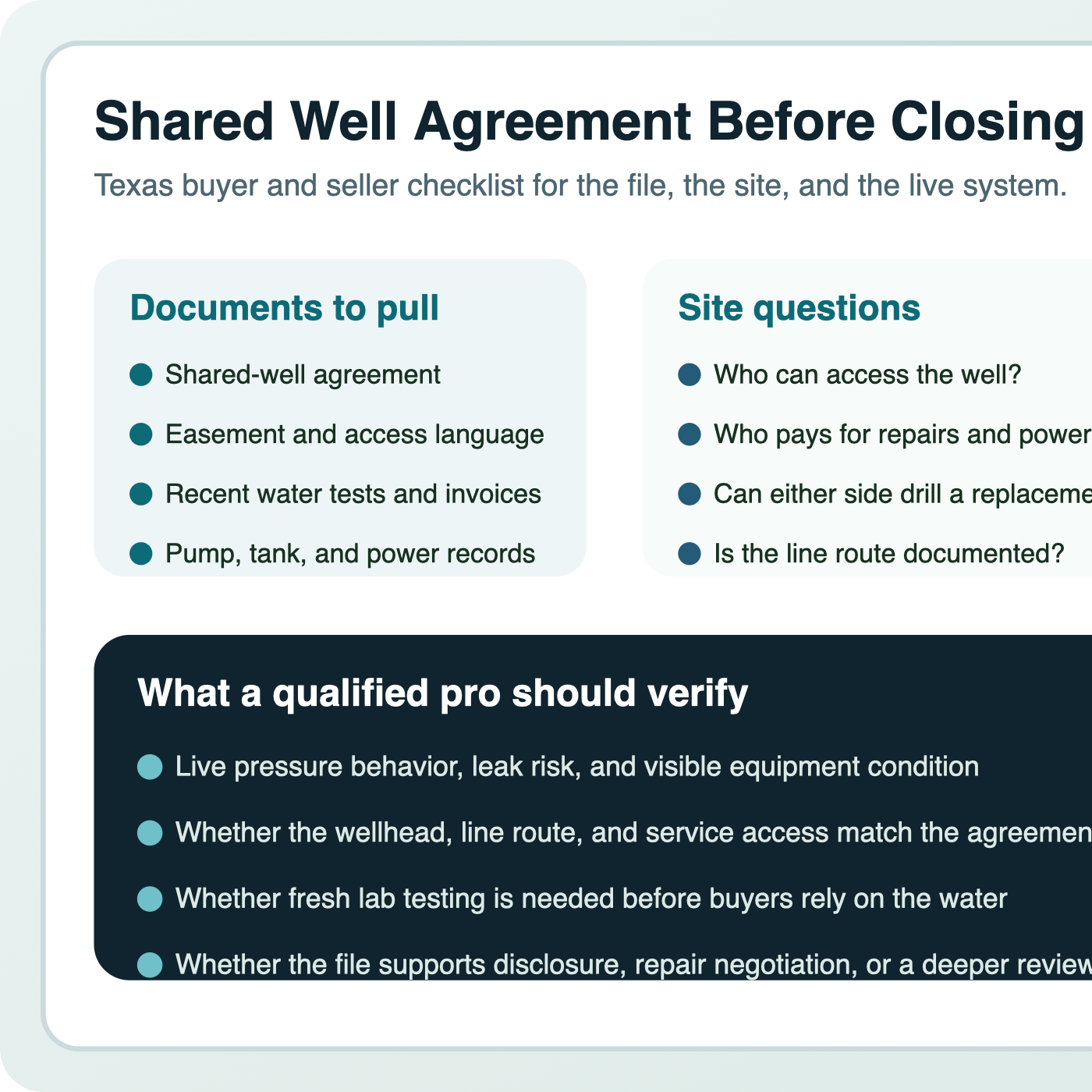
This text version mirrors the core shared-well checklist so mobile visitors do not have to rely on the graphic alone.
Documents to pull
Gather the shared-well agreement, easement language, service invoices, water tests, and any written rule about who pays for power or repairs.
Site questions
Confirm where the well sits, who can reach it, whether the service line route is understood, and whether one side depends on access through the other property.
Red flags
Be cautious when the arrangement is verbal, the water has not been tested recently, the pressure is already weak, or the seller cannot explain what happens if the system fails.
Pro checks
A qualified water well professional should inspect the live system, look for obvious equipment or access problems, and clarify what still needs testing or field review.
Why Shared-Well Deals Get Messy Late
A shared well can feel simple when two neighbors have cooperated for years. It feels less simple when a buyer, lender, inspector, title company, or agent asks for the written agreement and nobody can find it. Closing pressure exposes the difference between a system that works in practice and a system that is documented well enough to survive a property transfer. That is why the issue is not just mechanical. It is legal, practical, and disclosure-driven at the same time.
Most buyers are not scared by the idea of a shared well by itself. They get nervous when the arrangement sounds informal, the access route crosses another tract with no clean explanation, or the seller cannot say who pays when the pump, pressure tank, or service line needs work. A rural Texas deal can survive those questions if the file is honest and organized. It gets shaky when everyone is guessing.
What Buyers and Sellers Should Pull First
First-pass shared-well file checklist
- Ask for the shared-well agreement, easement, deed language, or any recorded access document tied to the arrangement.
- Gather recent pump, pressure tank, power, plumbing, and water-testing records instead of relying on verbal history.
- Confirm whether one owner pays everything and gets reimbursed, or whether each side has a documented split.
- Identify whether both sides can access the well and equipment area without creating a trespass or gate-access problem.
- Ask what happens if the shared well fails, either side stops cooperating, or one owner wants a separate well later.
- Write down what is confirmed, what is assumed, and what still needs title, inspection, or field review before closing.
If the seller cannot produce much of this, the transaction should not drift forward on optimism alone. The file needs stronger evidence, not better storytelling.
What to Inspect on the Live System
Shared-well deals are often sold as a paperwork question, but the hardware still deserves attention. Buyers should know whether the pressure is stable, whether the wellhead and equipment area look maintained, and whether the visible plumbing makes sense for the number of properties using the system. When the arrangement is already stressed, the physical system often shows it with weak flow, improvised plumbing, or obvious repair deferral.
This is also where TurnkeyWells issue guides on private well inspection before closing, low water pressure from a private well, and seller record gaps become useful. A missing agreement is one problem. A missing agreement plus weak pressure or missing service history is a much bigger one.
Texas-Specific Questions Worth Checking Before Closing
Texas rural properties already carry well, groundwater-district, and disclosure questions before you add a shared arrangement. Once two tracts rely on one well, buyers should understand whether the current setup matches the title file, whether the seller’s disclosure tells the same story, and whether the arrangement leaves the buyer stuck if the neighbor stops cooperating. This is where the TREC Form 61-0 guide helps. The form should not be answering the shared-well question for the first time on closing week.
Water quality deserves attention too. If the shared well serves multiple households and no one can produce a recent test, buyers should not accept taste or appearances as proof. For water-safety issues, use certified lab testing, local health department guidance where appropriate, and qualified water well or water treatment professionals. TurnkeyWells does not provide medical advice.
What a Professional Usually Checks
A qualified water well professional can help evaluate the visible system, the pressure setup, the access reality, and whether the mechanical arrangement looks reasonable for the story the parties are telling. That does not replace title review or legal advice, but it can reveal whether the physical system already looks strained, improvised, or overdue for a more serious repair conversation.
If the bigger concern is what happens when the shared arrangement ends, the Pre-Drill Intelligence Report helps buyers understand nearby well context and whether a separate replacement well may be realistic later. That becomes important when the shared well is being treated like a permanent convenience even though the long-term exit plan is unclear.
Buyer and Seller Strategy
For buyers, the right move is to slow down the fuzzy parts of the file. Ask for the agreement, the access proof, the power and repair split, and the current testing record. If the arrangement is mostly verbal, treat that as a real risk item instead of a country-living quirk. For sellers, the best move is not to downplay the shared setup. Gather the documents, explain the routine honestly, and disclose what is known before the buyer discovers the uncertainty from someone else.
Some shared-well deals close cleanly with better paperwork and updated testing. Others need a credit, a repair discussion, or a title-side fix. The point is not to kill the deal. The point is to replace vague neighbor lore with a file that can survive ownership change.
Where TurnkeyWells Fits
TurnkeyWells helps organize the records side of the question, frame what still needs inspection or title review, and connect property owners with qualified local water well professionals when field work is needed. TurnkeyWells helps with due-diligence clarity, records organization, and next-step planning. TurnkeyWells is not the drilling or repair contractor.
Common Shared-Well Closing Questions
Can a shared well still be acceptable if the neighbors have never had a problem?
Maybe, but the lack of conflict is not the same thing as a strong file. Buyers still need the agreement, access terms, testing history, and a clear repair plan before ownership changes.
What if the shared-well agreement is missing?
That is a real due-diligence problem. The parties may need title review, updated paperwork, field inspection, or a different negotiation before closing can feel safe.
Does TurnkeyWells become the contractor on the shared well?
No. TurnkeyWells helps review the issue, organize the records, and point buyers or sellers toward qualified local help when field work is needed.
Sort Out the Shared-Well File Before the Deadline Does It for You
If a Texas deal depends on one well serving more than one property, TurnkeyWells can help review the issue, organize the records, and show what needs to happen next before the closing table gets expensive.
Start with a Free Well CheckNeed help reviewing a shared-well file?
Ask TurnkeyWells to review the issue and connect you with licensed local help when field work is needed.
Tell us what the Texas property setup looks like, whether the concern is the agreement, the easement, access, repair cost sharing, water quality, or the closing timeline. TurnkeyWells can help review the issue, inspection question, or maintenance concern and connect the visitor with a licensed water well professional in their area when field work is needed.
TurnkeyWells helps organize records, next steps, and qualified local referrals. TurnkeyWells is not the drilling or repair contractor.